EDIT: When did pockets come into popularity in Western Europe/America and what drove the necessity? from /u/gaqua
Amy Vanderbilt's Complete Book of Etiquette (1957, 1st edition was 1952) contains the following advice on the contents of a man's trouser pockets:
All trousers hang better when suspenders are worn and when a minimum is carried in the pockets. The carefully groomed man limits his trouser pocket contents to his small change and his keys. The keys should be in a flat key case. A used handkerchief, folded as flat as possible, can be returned to his hip pocket, but his wallet there may make an unsightly rear bulge (and may be an invitation to pickpockets who are not deterred by a button). A distinguished man, former President Miguel Aleman of Mexico, noted for his excellent taste in clothes, once told me that he carried an absolute min- imum in his suit pockets so his clothes would fit as they were tailored to fit. He pointed out that a man who must take along with him the familiar assort- ment of papers, checkbooks, pens, pencils, photographs, credentials, and the wealth of small-boy items he manages to collect would make a better appearance if he carried most of them in a brief case rather than on his person.
I wouldn't claim this to be comprehensive information for what all men of all social classes in this era carried in their pockets, but it is at least a snapshot of what the people who read Amy Vanderbilt's book might carry. She also goes into considerable detail about acceptable jewelry for a man, on pages 154-156 (diamond stickpins are no longer acceptable, for instance...).
Archive.org has the full text here: https://www.archive.org/stream/amyvanderbiltsco00vandrich/amyvanderbiltsco00vandrich_djvu.txt
Edit: One thing to add, in the 1950's ~45% of the U.S. population smoked, so presumably you could add a pack of cigarettes or cigarette case and lighter or matches to the above items for some men.
Edit 2: Wow, thanks for the Gold friendly stranger!
That's a huge timeline - the "modern era" (*I would say from like the 1970s onwards) would be pretty much the same minus the phone - keys, wallet, change, etc.
The contents of a pocket (or presence thereof) would be dictated by the day-to-day lifestyle of the individual and his or her position in society. For example, even today the President is likely to have different pocket contents than you or I.
So can I add an addendum slightly related? When did pockets come into popularity in Western Europe/America and what drove the necessity?
In the book "The Man Who Never Was" by Ewen Montagu, he describes the preparations for Operation Mincemeat (the one where they let a corpse with misinformation drift ashore in Spain in WWII 1942).
When deciding what to put in the soldier's pockets, he had his staff turn out their own pockets to see what a typical officer would be carrying. The book does not include the raw data of the "pocket survey", but does list the final manifest for the soldier that they felt was typical for an officer while travelling.
On his body:
Wallet in breast pocket containing:
In his pockets:
The theater tickets and the officers' club bills were important because they had dates on them which was to impress on the Germans that the information was fresh.
This is a question that is framed in such a way as to net extremely specific, or highly speculative answers. It would be like asking what a man should order for dinner; the range of answers will be dependent upon an enormous number of variables. For instance, your question spans a broad range of time. Even specializing it down to men in WE/A doesn't help much. The contents of a man's pockets would be dependent upon his occupation, individual habits, hobbies, level of prosperity, social circle, and needs. Clothing can give a hint: mens' waistcoats gained a small pocket for a watch when pocket watches surged in popularity in the mid 19th century. However, not every man carried his watch in a waistcoat, not every waistcoat had a watch pocket, and not every man had the inclination, means, or need to carry a watch at all.
Telling you why this is difficult to answer without more refinement doesn't help you very much, unfortunately. However, I can tell you what one man in particular carried in his pockets on a particular day within your date range. The Library of Congress has within its archives the contents of Abraham Lincoln's pockets from the night of his assassination. 30 objects are included in the collection, including the individual items enclosed in his wallet. It should be noted that, since he knew he would be attending a play with his wife that evening, it's possible he tailored the contents of his pockets to better suit the evening's plans.
From the link:
"The items consist of one pair of gold-rimmed spectacles with sliging temples and with one of the bows mended with string; one pair of folding spectacles in a silver case; an ivory pocket knife with silver mounting; a watch fob of gold-bearing quartz, mounted in gold; an oversize white Irish linen handkerchief with "A. Lincoln" embroidered in red cross-stitch; a sleeve button with a gold initial "L" on dark blue enamel; and a brown leather wallet, including a pencil, lined in purple silk with compartments for notes, U.S. currency, and railroad tickets. The wallet held a Confederate five-dollar bill and eight newspaper clippings. The clippings were from papers printed immediately before Lincoln's death, containing complimentary remarks about him written during his campaign for reelection to the Presidency. The Confederate five-dollar bill may have been acquired as a souvenir when Lincoln visited Petersburg and Richmond earlier in the month."
If you read on, you'll see that several of the items were presented to his eldest son after Lincoln's death because of their every-day, familiar association with the man and his habits. Those items included both pairs of spectacles, the 5-pound Confederate note, and a watch fob. This "snapshot" of the contents of Abraham Lincoln's pockets is interesting, but it's important to bear in mind that he was a sitting President of the United States. His access to material goods likely exceeded that of an average man.
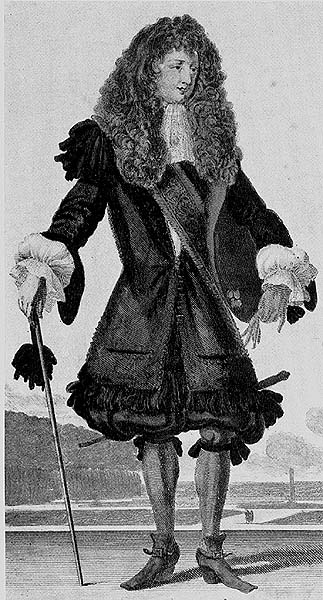
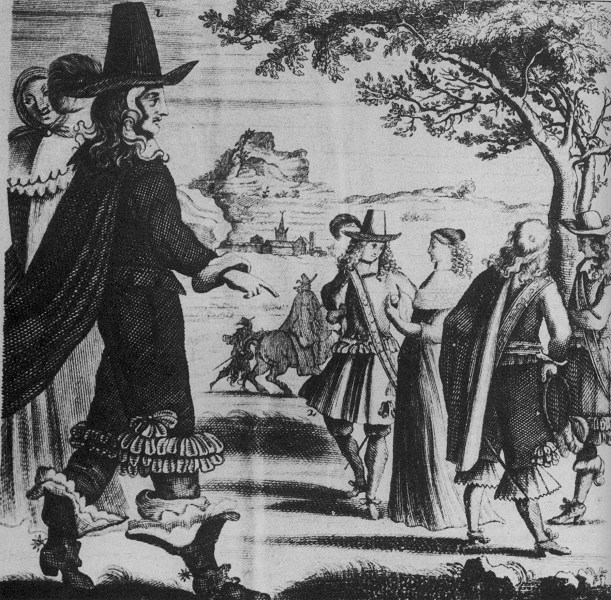
As to your edit, pockets seem to have become fairly common by the third quarter of the 17th century in Western Europe. Basically, the decline of the doublet opened the door for the visible jacket pocket. "Gunnister Man", a late 17th century man found preserved in a peat bog in the 1950's wore (among other things) a long coat called a "justaucorps" that included wide horizontal pocket slits with buttons. However, they were sewn shut despite being complete and otherwise functional. Contemporary illustrations of fashionable mens' clothing from the 1670's (France and England) also show this type of pocket, yet illustrations from just a decade before do not. There is no hard and fast starting point for pockets in male clothing, though it seems they became a prominent feature (functional or not) by the early 18th century for men of fashion. I'm not sure what, if anything drove the "necessity". As with many elements of human dress, it is possible that the desire to have pockets as a decorative element came before the realization of their utility.