This came about as a tangent from the "bad historical questions" thread:
How did archaeology and ethnohistory inform our understanding of nonviolent resistance in Spanish missions in North America, and how widespread was the practice?
Specifically, I'm interested in 18th century missions in the region that would today be Texas, but I'll take anything! I remember a little from high school about the bloodier conflicts, such as the Comanche destruction of Santa Cruz, but I'm wondering what the larger picture is that I'm missing, and how we got that info?
Thanks in advance!
This answer is modified from a previous post I wrote in another history community. Here we go...
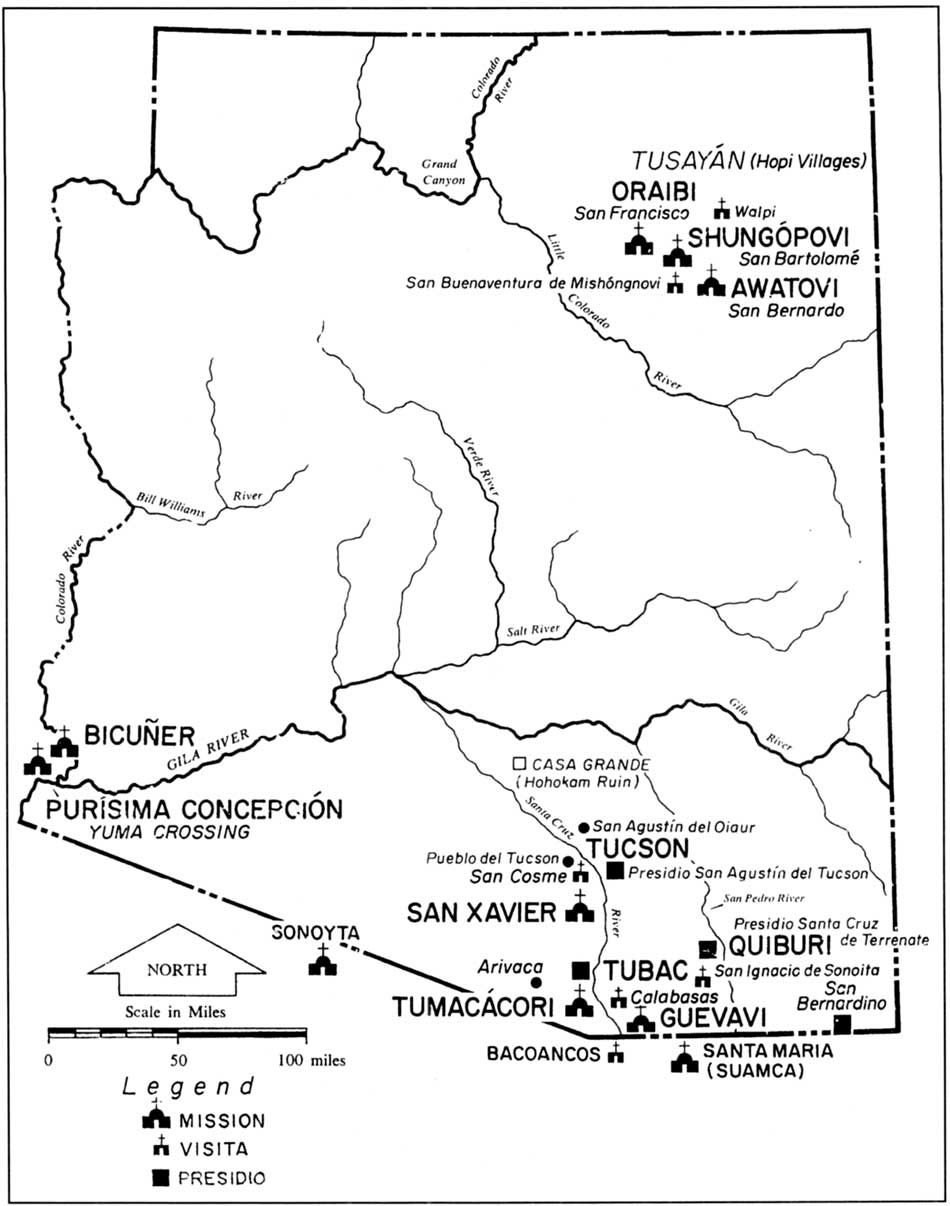
After the excesses of cruelty seen in the initial years of contact, the 1573 Comprehensive Royal Orders for New Discoveries placed missionaries at the forefront of exploration/pacification of new lands. Franciscans and Jesuits became conquistadores of the spirit along the northern borderlands in Florida, Texas, New Mexico along the Rio Grande, southern Arizona, and Alta California (links for fun maps). In the fight to complete the conquest, the Crown believed missionaries could pacify land at less cost, and with a greater impact, than soldiers. The missions provided a spiritual harvest, as well as a vital frontier presence against encroachment from other European nations. The southwestern colonies protected lucrative mining enterprises in Northern Mexico, and Florida provided a safe haven/support for ships crossing the Atlantic. For this protection, New Mexico lost the Crown 2,390,000 pesos in the 17th century alone. Florida cost four times as much (Weber).
Though covering a wide geographic range, the total number of missionaries remained small; never more than 70 at a time for Florida, and < 50 for New Mexico. Alta California represents a unique case given the late expansion to confront Russian merchants in San Francisco Bay, and reveals a bit about the ideal Franciscan mission demographics. In Alta California
the mission typically housed two friars (the majority from Spain), a mission guard of six soldiers (most of whom were mestizos or mulattos of Spanish, African, and/or native ancestry from northern Mexico), and a thousand or more baptized Indians or neophytes (Lightfoot, p. 5)
Isolated on the fringe of the known world, the remote colonies featured interactions not always possible in the heart of the empire. Here, on the ragged edge, survival depended on negotiation and accommodation from all parties. Even something as rigid as the castas racial system relaxed on a frontier where calidad (social status) could be defined by occupation and wealth, not just ancestry and skin color (Weber, p. 327-8).
Of course, one person’s frontier is another’s home. Analysis of Native North Americans in mission communities requires one to walk a tightrope of sorts. On the one hand, missions are viewed as primarily carceral institutions completely under European control and designed to extinguish indigenous cultures. Any evidence of persistence and acculturation reinforces the narrative of European actors and Native American re-actors/victims. Conversely, focusing only on resistance “in nearly every part of daily life is counterproductive and only serves to reinforce the idea of a bounded, carceral mission landscape” (Panich & Schneider, p.21). The tightrope, then, is to describe how Native Americans actively negotiated Spanish colonialism on their own terms. We must examine how Native Americans incorporated, or decided against incorporating, missions into the indigenous system of power, belief, exchange, subsistence, and residence (Panich & Schneider, p. 10).
The everyday acts of mission inhabitants show how autonomy was negotiated along the northern frontier. Here “Indians accepted one aspect of Spanish colonization in order to facilitate their rejection of another” (Restall). Missionaries likewise accepted one aspect of Native American rebellion, while stressing obedience on another, typically public, front.
For example, official regulations required baptized Native American inhabitants of the missions to live on the premises, and procure a pass for permission to leave the mission. Escaped neophytes could be pursued, returned to the mission, and subject to corporal punishment. In North America, however, mission authorities often realized the impossibility of enforcing this law. Depending upon place and time, mission Indians negotiated absence from the mission to forage for traditional foods, maintain familial connections, and continue religious practice away from the eyes of the friars.
Mission policy required neophytes to integrate European crops into existing native agricultural practices. Bluntly stated, they should eat like Christians. Mission inhabitants resisted this demand by complementing their mission diets with foraged foods consumed in private residences. This small act of rebellion indicates access to the surrounding landscape, ongoing knowledge of local resources, and small-scale trade conducted outside the control of mission authorities. Remains of acorns, seeds, fruits, fish, shellfish, waterfowl, and game have been found in mission residential structures from Florida to California. This private rebellion was known to mission officials, who often decided not to press an issue they couldn’t enforce. At Mission San Antonio in California the fathers noted “in private, in their own houses, they prepare their seeds which are of good quality and in abundance such as acorns, sage, chia, pine nuts and others” and remained “very fond of the food they enjoyed in their pagan state” (Panich & Schneider, p.15).
Liberty from the missions also allowed the continuation of religious ceremonies. In New Mexico, Cochiti oral history tells of moving dances and rituals to the hinterlands away from the missions. In Texas and California, this act of resistance was well known to the friars, who were powerless to prevent the practice. Fermín Francisco de Lasuén, president of the Alta California missions, wrote “if we absolutely denied them the right to go to the mountains, I am afraid they would riot” (Panich & Schneider, p. 17). Lightfoot estimates five to ten percent of the total Alta California neophyte population became runaways at some point. As a compromise on official regulations, Alta California instituted paseo (approved leave of absence), and granted mission inhabitants furloughs for five to ten weeks a year. This small measure of autonomy underscores the constant compromise between neophytes and the Spanish missionaries. Native Americans negotiated, in both official and covert ways, freedom of movement and space to continue religious practice.
The separation of public and private lives is echoed throughout the mission system in North America. At Mission San Buenaventura in California oral tradition indicates weddings consisted of two marriage ceremonies; one public Catholic ritual, and a private native ceremony held inside the neophyte residences. The public/private dichotomy in San Buenaventura included a variety of religious ceremonies and sacred dances. Some dances were officially permitted for performance before the entire mission community, while others were hidden, performed in inner plazas/alleys or within residential structures. Archaeology and ethnohistory show Native American neophytes, from the highest rank alcaldes to poorest orphan, constantly negotiated this double life of public accommodation while maintaining private autonomy. Archaeologically, we find evidence of a private life in the foods, tools, ornaments/clothing, and ceremonial paraphernalia that indicate the continuation of native practices and identity, even among devout Catholics who publicly rose to high social status in the mission hierarchy (Lightfoot).
Wrapping Up
In the small acts of resistance and accommodation a rich story of life in the missions emerges. We see evidence for vital communities negotiating for autonomy and continuing to adapt. Alcaldes who used the mission system to gain public social status negotiated a far different private world where outlawed indigenous traditions continued hidden from the eyes of the padres.
Too often the narrative of conquest focuses on illness, violence, and death. Yes, there was death, and oppression, and disease, but this was not a terminal population waiting for the end. Here, in the missions, history, ethnohistory, and archaeology combine to highlight rich evidence of life: a mission abounding with gambling, games, dances, feasts, hidden performances, and religious ceremonies (Lightfoot).
For More Info
Hackel Children of Coyote, Missionaries of Saint Francis: Indian-Spanish Relations in Colonial California, 1769-1850
Kessell Spain in the Southwest: A Narrative History of Colonial New Mexico, Arizona, Texas, and California
Lightfoot Indians, Missionaries, and Merchants: The Legacy of Colonial Encounters on the California Frontiers
Panich and Schneider, editors Indigenous Landscapes and Spanish Missions: New Perspectives from Archaeology and Ethnohistory
Restall Seven Myths of the Spanish Conquest
Riley The Kachina and the Cross: Indians and Spaniards in the Early Southwest
Weber The Spanish Frontier in North America