Mostly referring to the Great War here. I know more about the Second World War than the First to the point that I don't consider Soviet military tactics to have been "human wave" as such - they were, after all, desperately trying to push the Nazis out - but I know considerably less about their previous wars during their truly Imperial timeframe. When you read about battles such as Tannenberg and the Masurian Lakes in 1914 for instance, you hear a lot about how their units were poorly equipped and supplied and about how all the other major powers, particularly the Germans, considered them to be pushovers and scarcely worthy of great power status. Were the Russians truly pushovers? What contributed to the supposed low quality of their military? How could they have rectified these issues to produce higher quality soldiery?
If the Russian Empire was a pushover in WWI, it wouldn't have taken three years of extensive campaigning by the Germans and Austrians to finally topple that empire. And if the Russians were pushovers, what's that make the Austrians? Because whenever Russia and Austria clashed, Austria usually got the worst of it.
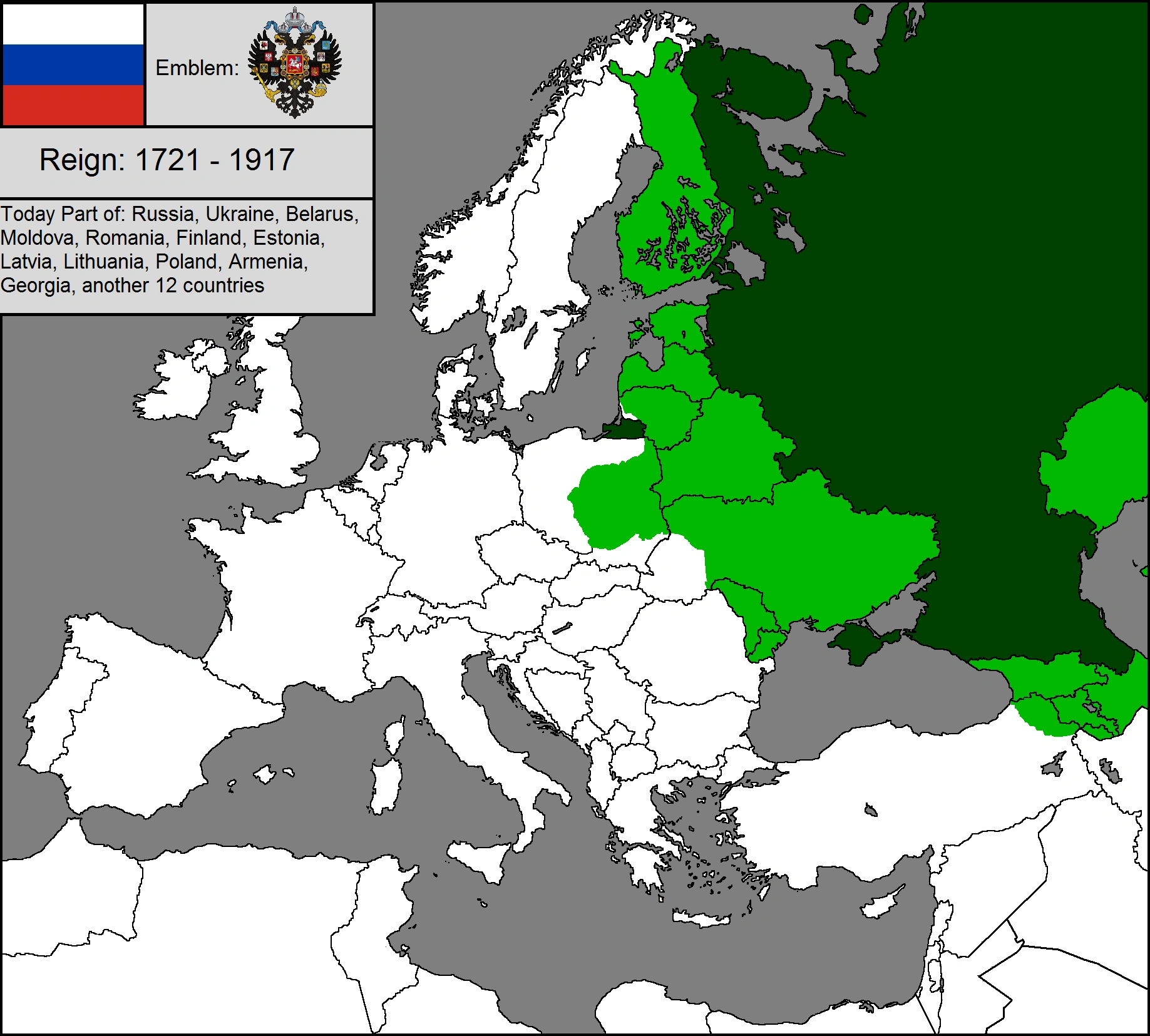
But it's important to view this from the perspective of the Russian Empire. The Russian Empire of 1914 was enormous, covering nearly 22 million square kilometers and including 180-odd million people in 1916. That's three time the size of the German Empire's population and something like 40 times the German Empire's total area. It's a truly mind-boggling amount of space. Even if you acknowledge that the vast majority of the Russian Empire was little more than sparsely populated hinterland with no real military value, the area west of the Urals still accounted for a significant percentage of the empire's territory -- about 25% of modern Russia's area, so probably around 30% of the Russian Empire's area. And it's also the most heavily populated.
In addition to just being enormous, in terms of both manpower and area, the Russian Empire's sheer size and the rather large amount of space between the empire's great cities meant that an enemy invasion wasn't as immediate a threat to Russia as it was to, say, Germany. Kaliningrad, by road, is about 960 km from St. Petersburg (the Russian Empire's capital; Lenin moved the capital back to Moscow in 1918). Moscow is even further (1250km) and it's almost directly east into the Russian interior.
For comparative purposes, Warsaw is only about 570 kilometers from Berlin. A Russian army group in Warsaw, therefore, is a far more immediate threat to Germany than a German army in Koenigsburg is to Russia. And that's not even getting into the fact that Germany, being much more densely populated, is disproportionately affected by lost territory when compared to Russia. If Russia loses a thousand square kilometers it's painful but not insurmountable. If the German Empire lost a thousand square kilometers that would've dramatically degraded their ability to wage war.
Now consider the other half of distance -- time. It takes time to move your armies across space. The Russians could afford to trade space for time. Germany never had that same strategy option. If Germany decided it needed another week before it was able to commit to a battle, it was probably going to lose a major city. Russia? Russia could give up a few hundred small towns of little consequence and not have this impact the war effort terribly.
Manpower is similar. If you have three times the population, you probably have three times as many men fit for military service. If your enemy is also fighting on another major front (whereas you're only really involved in a comparatively small action on the Caucasus front), you can afford to suffer frankly horrific casualties.
WWI is unusual for Russia in that, of the three great invasions of their country from Europe, it's the only time their usual tactic of trading land for time and leveraging their greater manpower didn't actually work. That tactic stalled the Wehrmacht and ultimately broke their back. It rather decisively destroyed the Grande Armee of Napoleon. The German Empire is somewhat unique in that it's the only invasion from the west that actually succeeded in defeating Russian armies faster than Russia could raise them. Which was probably more because the German Empire didn't over-extend itself nearly as much as the other two, but that's neither here nor there.
As for producing higher-quality troops, I think it's important to remember that quantity is a quality all its own. That's something that is frequently overlooked, especially where Russia is concerned.
That being said, Russia wasn't able to properly equip its troops until relatively late in the war. Russia was so behind in rifle production (the rifle is essentially the most basic thing you need to produce and if Russia couldn't meet demand for that, more complicated things like machine guns and airplanes would've been even farther behind) that they wound up placing orders for about three million rifles to American and British manufacturers. The decision was made in 1915 and that would prove too late, however. The stories about Soviet conscripts having to share rifles? Those stories are better attributed to the Russian Empire. The Soviets were much better about producing enough rifles for their men.
All in all, the Russian Empire's military was a sluggish, ill-equipped juggernaut. But if it could mobilize and direct its enormous military power at a single target, it was going to win. The Schlieffen Plan was all about knocking Russia out of the war before that could happen (remember, the plan originally called for a holding action against France and a ruthless campaign against Russia; this was reversed after Russia's lousy performance against Japan in 1905). The Soviets in WWII are a good example of what happens when Russia is able to mobilize basically everything it owns for the war (and, of course, receive absolutely astounding amounts of military aid via Lend-Lease).