I'm reading the book "German Aces Speak", and one of the pilots mentions that often times Soviet pilots would attempt to ram their planes into other aircraft when they ran out of ammo. Was this a common or encouraged tactic? Did anyone else use this tactic? Was it assessed to be effective i.e. Soviets could build and replace their aircraft faster than the Germans? Did anyone survive to try this multiple times?
I have heard of this happening. It's a tactic called 'aerial ramming' though unsurprisingly it was rare as it would be a very difficult manoeuvre to pull off in addition to the danger it poses to the pilot carrying it out. It was more common in WWI when planes weapons were more unreliable. It happened with some British and Polish pilots deliberately clipping the tails of German planes with their wings or propellers during the battle of Britain, though I'm unsure about the soviets I have no doubt they employed it as well. It would be used when ammo was spent but he destruction of the German plane was essential or when the ramming pilot's plane had already been badly damaged. It was an extremely dangerous tactic often resulting in the deaths of all pilots involved. I have found a few examples here:
On 15 September 1940, Flight Sergeant Ray Holmes of No. 504 Squadron RAF used his Hawker Hurricane to destroy a Dornier Do-17 bomber over London by ramming but at the loss of his own aircraft (and almost his own life) in one of the defining moments of the Battle of Britain. Holmes, making a head-on attack, found his guns inoperative. He flew his plane into the top-side of the German bomber, cutting off the rear tail section with his wing and causing the bomber to dive out of control. The German crew died in the crash, while the injured Holmes bailed out of his plane and survived. As the RAF did not practice ramming as an air combat tactic, this was considered an impromptu manoeuvre.
The article this extract is from is here: http://everything.explained.today/Aerial_ramming/
There was the Sonderkommando Elbe, which utilized stripped-down fighters to ram Allied bombers in April of 1945. The idea was that trading a single fighter with one pilot for a fully-crewed bomber was a net win for the Germans. When used to ram the tail surfaces, cockpit, or engines the damage could be quite severe. Also, since he was over friendly territory the German pilot may be able to bail out and repeat the tactic in the future.
As promising as this tactic sounds, there were several flaws. First, it was implemented so late in the war that there were sufficient Allied escort fighters to ensure that the damage was not significant enough to discourage future raids. Secondly, new German pilots at this point of the war had little in the way of training so their skills were not at the same level of earlier German pilots (or those of their Allied opponents). Lastly, by its nature the Sonderkommando Elbe was a small experimental force. Their single raid did bring down some bombers, but not nearly enough to stem the tide of the Allies. Even had they had a 100% success rate, it would have been a small victory too late in the war to significantly influence future events.
I found a video of the History Channel's Dogfights that dramatizes the raid in question.
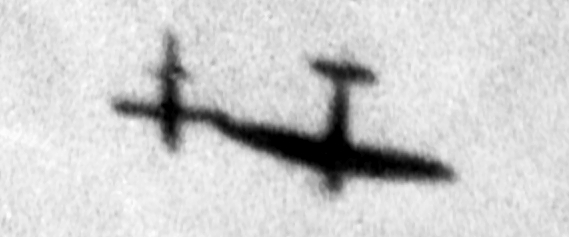
There were other incidents (as /u/visigone mentions), and Wikipedia describes a number of incidents (which of course should be taken with the usual grain of salt taken with any Wikipedia article). A possibly interesting corollary was the practice of intercepting V-1 attacks with planes. While the aim was to use air flow to influence the V-1's path and make it "topple" I have read in a few places that contact was made between wingtips mid-air. Two possible disqualification of these incidents from your criteria is that the V-1 was unmanned, and that any contact was accidental rather than purposeful.
Was it assessed to be effective i.e. Soviets could build and replace their aircraft faster than the Germans?
Soviet aircraft production outstripped German production throughout the war. This table has the Soviets easily beating the Germans in aircraft production overall, with very close losses in 1940 and 1944. The gaps in 1939, 1941, 1942, and 1945 were larger--but not enough to make ramming a "common" tactic. It wasn't unknown, but once Soviet fighters improved (in both performance and armament) it became easier to have a single fighter shoot down an enemy plane rather than relying on ramming it.