You know the ones. Built from stone, walls, keep in the middle.
This is a hard question to answer because it's hard to know what you think of as a stereotypical European castle. Towns with stone walls predate recorded history, possibly by thousands of years. This is one from the third millennium BC. Buhen in Ancient Egypt had a lot of castle-like features, including a moat and multiple lines of defense.
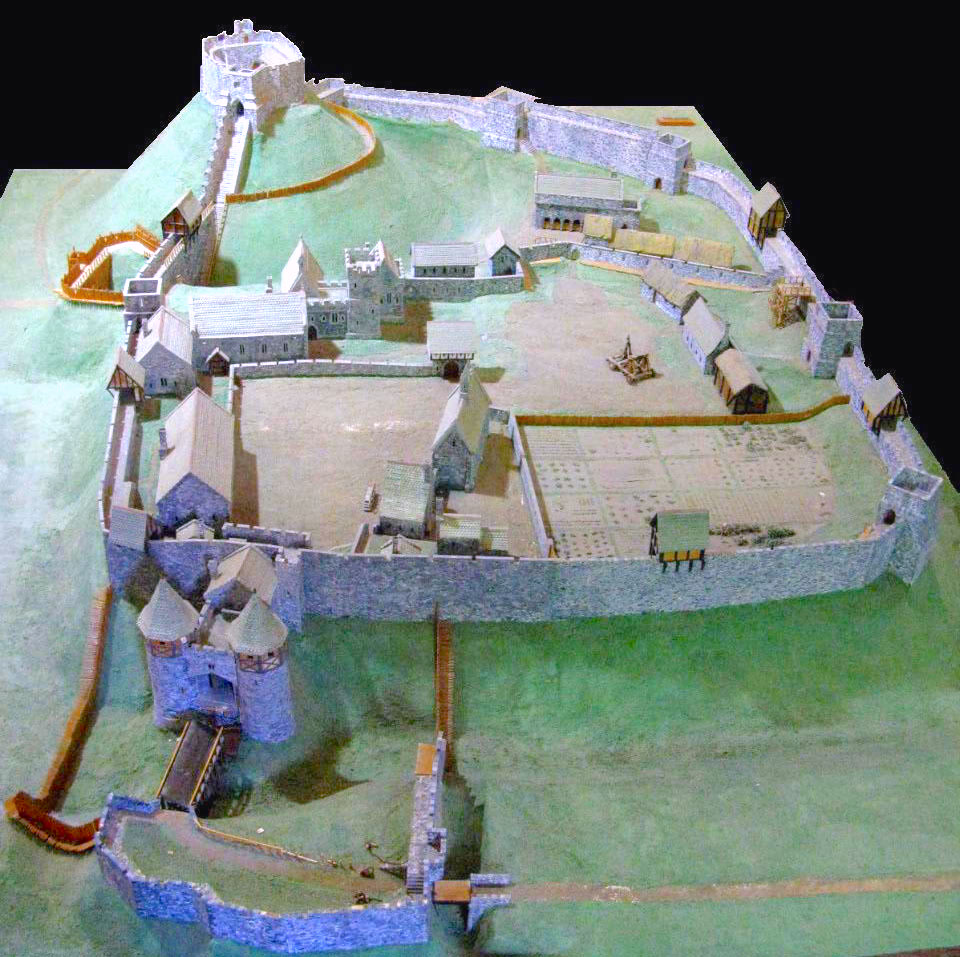
What could be called the "golden age" of castles ranged from the Norman conquest of England in the 11th century to the invention of cannon, which made tall and thick stone walls less useful than thick ramparts made of Earth. The motte and bailey, which seems to be what you're describing, originated before the Norman conquest but were built in massive numbers in the 12th century. This is a typical late example.
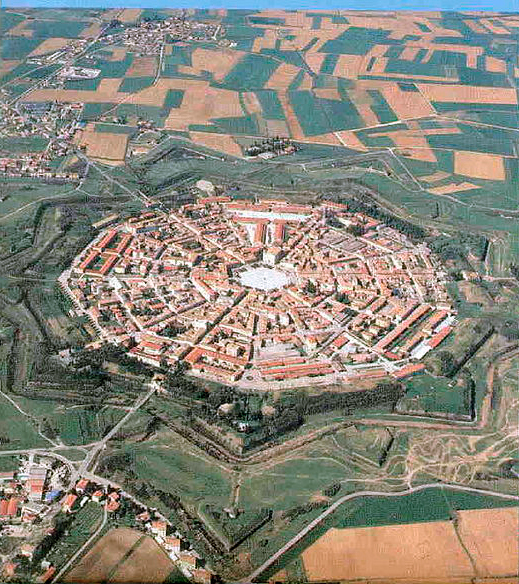
Fortified towns continued to be militarily relevant into the 19th century, and arguably became more beautiful and sophisticated than ever from the late 16th into the 18th but these are not what most would call a castle. And, of course, militaries still use fortifications today.
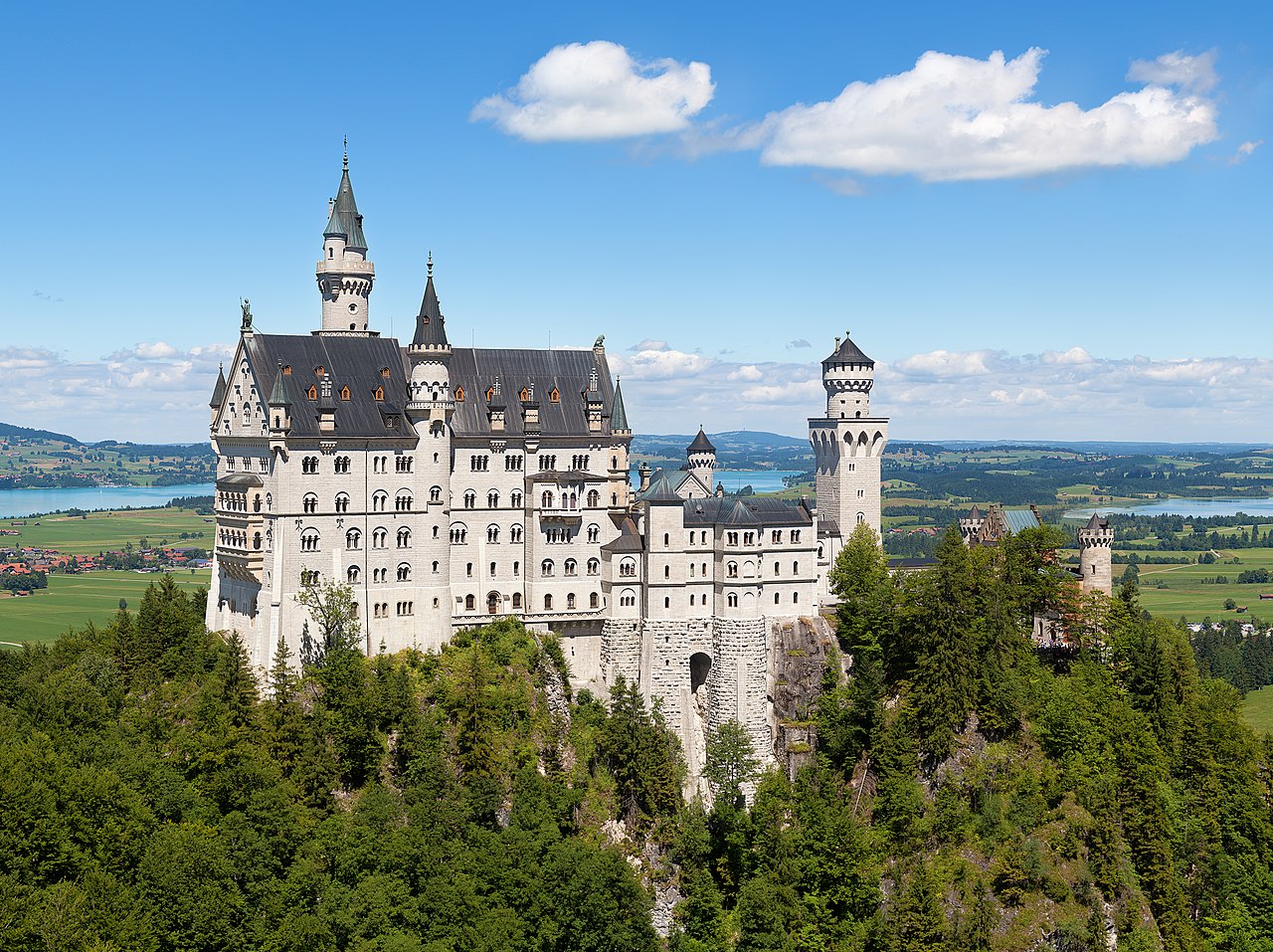
Side note: a lot of the famous castles that inspire depictions in fantasy were actually built in the 19th century as conscious Romantic imitations of earlier castles. Neuschwanstein, in the photo, is the most famous, but most of rural Europe is dotted with castle-like houses built mostly by the aristocracy but also sometimes by rich industrialists. There are even several of these in Southern Ontario, where I live. The two I linked to are tourist attractions now.
(Mods: this is my first attempt to do a proper /r/Askhistorians style answer. I know I didn't provide academic sources, but I hope that this is a simple enough question that my use of photo examples will suffice as a substitute. If not, tell me what I can improve for future answers. I don't have a formal education in history but I hope I'm enough of a history buff to be able to contribute usefully here)