So, first of all, forgive me if this is the wrong sub to post this in. Please feel free to point me in the direction of the proper sub, I'm just absolutely dying to have this question answered.
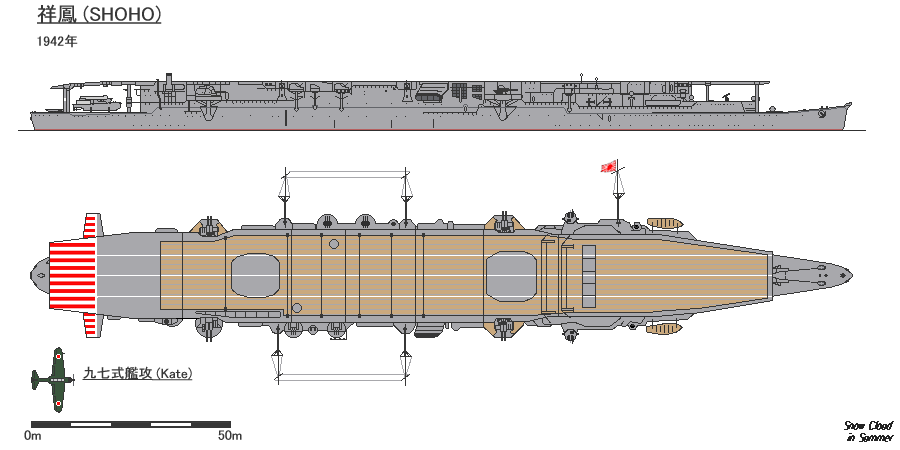
Me and a few friends have recently been playing World of Warships, and we've become very curious about the "stubs" on the back end of the runway on old aircraft carriers.
The Zuiho had these (seen in the diagram here). Multiple other aircraft carriers have had versions of them, some smaller, and many aircraft carriers don't have them at all.
My friends and I have searched pretty much everywhere we can think of to find an answer to this. The wikipedia doesn't answer it, we couldn't find any books on google scholar that gave the information. Our best lead was finding an image that is almost certainly a diagram for a model of the aircraft carrier, that has the structures labeled. We tried to decipher the japanese (I believe it's Katakana), but to no avail.
Could anyone help out, either with knowing the answer, or pointing us in the right direction to find it? The curiosity, and difficulty of finding an answer, has consumed us. I think we've together spent probably around 8 hours searching for answers, to no avail.
The platforms are outriggers designed to aid Japanese pilots in landing their aircraft. Unlike the US practice which relied upon a human Landing Signals Officer, the Japanese pioneered a novel system of landing lights on the side of the aircraft to guide the aircraft down to a safe landing. This system, first developed in 1932, was somewhat similar to the postwar British optical landing system and was quite advanced. Google Book's preview of Sunburst by Mark Peattie has a good diagram and description of the landing process on pp. 68-69. The red and white coloring of this aft portion of the ship aided orientation and the outriggers (aka "stubs") helped the pilot gauge the direction of the ship while he was trying to be inside the landing lights' safe zone and the nose of the aircraft obscured his view of the flight deck.
Going through the diagrams in Shattered Sword and the pictures on Combined Fleet I recall they are basically 2 purposed.
The first is as the point of no return for the landing approach. If the pilot couldnt use the light/visual landing system, or when he got too close. Then by the time he was there and no "wave off" had been given or he hadnt aborted it was the sign to level off and go for the arresting wire. And since the fuselage could obscure much of the narrower IJN aft flight decks it was useful to have the outrigger in place.
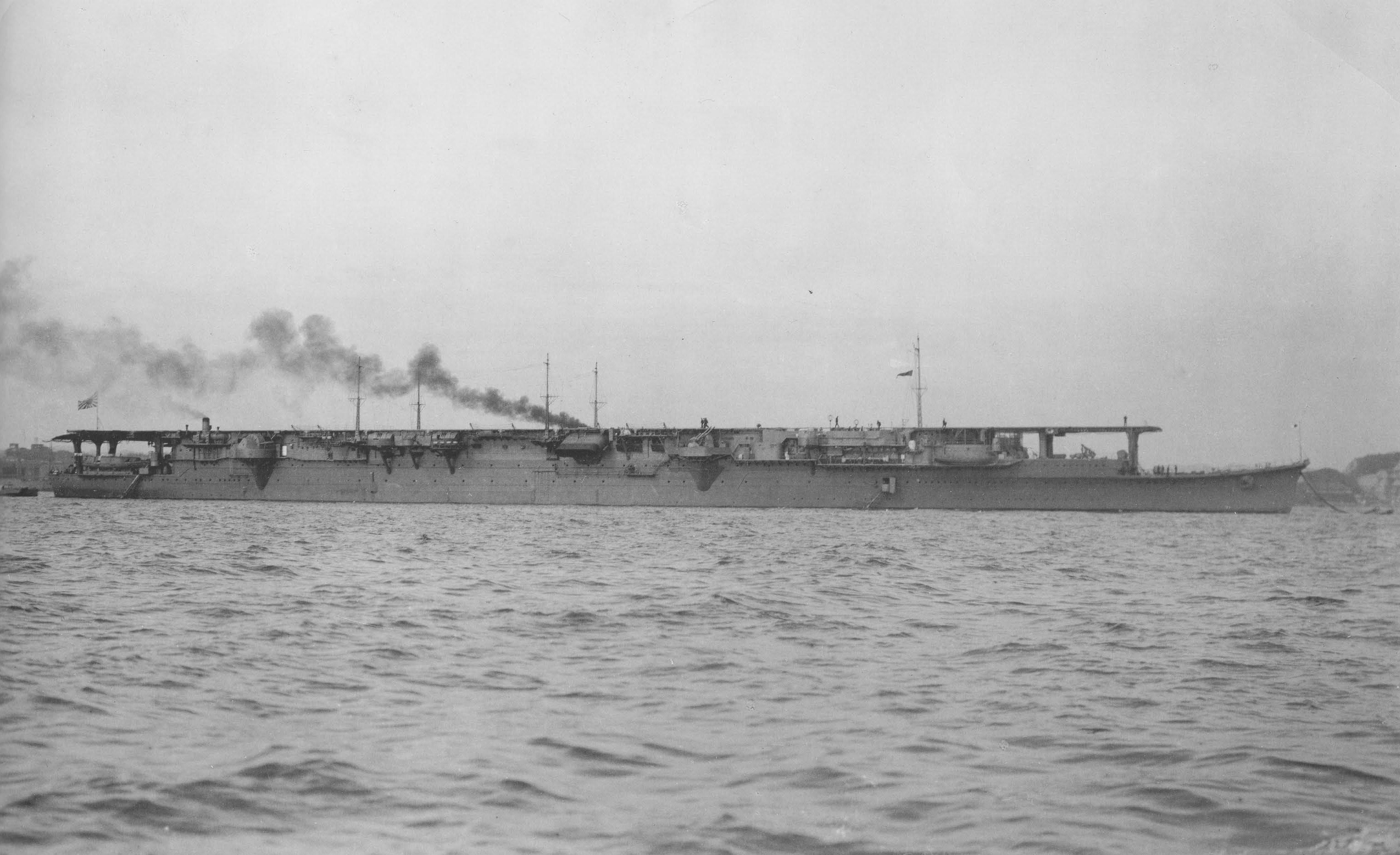
Additionally its underside seems to have been used as part of the winch and crane system for launching the ships boats. Many IJN carriers had their boat decks aft under the flight deck, Kaga being an exception.
We see that here on Shoho:http://ww2db.com/images/ship_shoho9.jpg
And again: http://ww2db.com/images/ship_shoho11.jpg
We can also see an up close pic of the same area on Soryu: http://ww2db.com/image.php?image_id=1865