Alright, so I am not american, but in my english class, when it's around Thanksgiving we learn about the Pilgrims and their voyage, their interactions with natives, the feasts, etc. Every single f*cking year it's the same story and I am fed up with it lol.
So what is the real story behind this "legend"?
I kniow it's a lot of questions, no need to answer all of them, but I am pretty interested in this stuff. Thank you for your answers!
What were the reasons behind them leaving England except for religion? Or was that it?
The Pilgrims, to be more specific, were seperatist Congregationalists. While the Puritans thought the Church of England need to be "purified" (hence the name), the Congregationalists thought the Church of England was too far gone to be saved and that they had to separate themselves from the Church (hence "separatists"). They first left for Netherlands, which was Protestant and friendly to their religious independence. But ultimately, they wanted a place were they could practice their religion and be English, rather than Dutch. So they started looking into acquiring land in England's territorial claim across the Atlantic.
Why are they so significant compared to other colonists? They weren't the first or were they?
They were hardly the first. They arrived in Massachusetts in November 1620. Jamestown had been up and running since 1607. That was the same year that the ill-fated Popham / Sagadahoc Colony was established in Maine, only to be abandoned in a year. Before that was infamous Roanoke. This is actually two separate attempts to establish an English colony in what is now North Carolina. The first was established in 1585 and quickly abandoned, the second is the "Lost Colony" itself, established in 1587 and abandoned sometime before 1590 (we only have a very rough idea of what happened to the colonists).
As for why the Pilgrims are significant today, I'll get to that in a moment.
Are they really the ones who founded the original 13 colonies? What's the story here?
They founded one of the colonies that would be part of the "Thirteen Colonies" but again, they weren't the first. Jamestown is England's first permanent colony in what became the Thirteen Colonies. The Pilgrims established the Plymouth Colony in 1620, which merged with the Massachusetts Bay Colony in 1691, so that post-merger Massachusetts is one of the Thirteen Colonies, rather than Plymouth.
How did they interact with natives? Why did the natives help them?
The English had been poking around the area for years before the Plymouth colonists, including slavers coming up from Jamestown. Between 1616 and 1618, an epidemic struck southern New England, and to a lesser extent other areas of the Atlantic coast of North America as far south as Virginia. We don't know what this disease is, other than the fact that it wasn't smallpox. Leptospirosis is a major contender, in which case it might be either an indigenous strain of the disease or one introduced from Europe.
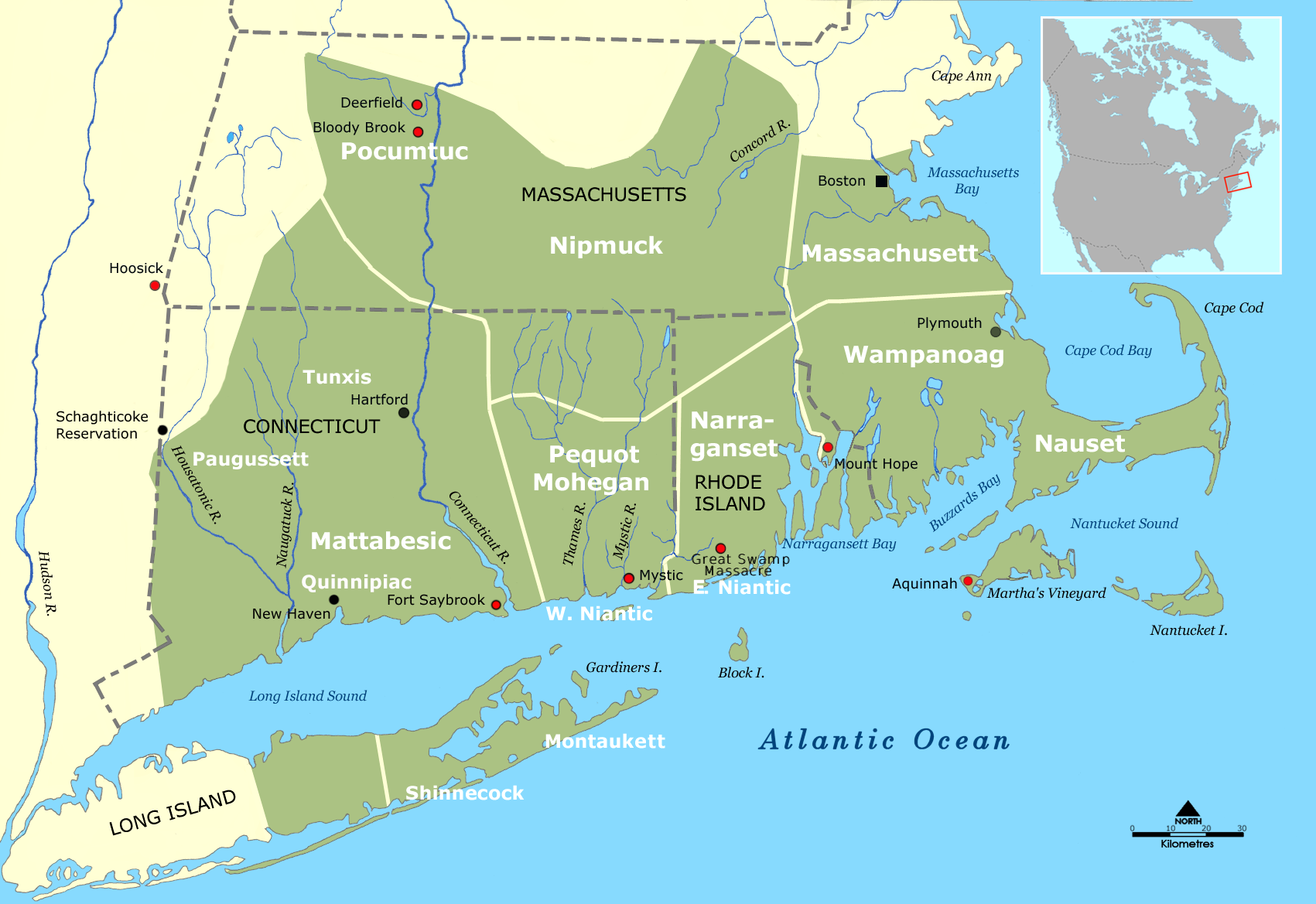
Regardless of the origins of the disease, the Wampanoag in what's now southeastern Massachusetts (map) were hit particularly hard and some of their towns were completely wiped out, either directly from the disease or because the death toll reduced to the population of the town below sustainable levels and the people moved elsewhere. This was the fate of Patuxet.
When the Pilgrims arrive, they made landfall near Patuxet. The leader of the Wampanoag - usually called Massasoit though that's actually his title, his name was Ousamequin - was concerned that his western neighbors, the Narrangasetts, would take advantage of his people's current weakness as they recovered from the epidemic. Formerly, he would never had allowed the English to set up a permanent base in the area. Their traders could stop by as they sailed back to England from Virginia, but they couldn't stay. Now, however, he saw value in having some English allies and a permanent link to English trade goods. He offered the Pilgrims the old Patuxet village and its surrounding lands, which became Plymouth.
I read Squanto went to England 6 times before that, so was he like their friend or something?
Tsiquantum (Squanto) had been back and fourth across the Atlantic six times (so three round-trip voyages). This is due to being captured by slavers, freed, captured from slavers again, freed again, getting a ride back to the wrong part of North America, and needing to go back to England before he got on a boat heading to the right place to bring him home.
He was from Patuxet originally, so his community was wiped out while he was gone. He wasn't the first Native to greet the Pilgrims though. Massasoit sent another - Samoset - who had learned English from traders to make official introductions and invite them into an alliance with the Wampanoag. As part of that alliance, Tsiquantum joined the Pilgrims, helping them establish themselves in the area diplomatically and economically. Being the liaison between the two sides gave him a considerably amount of power and influence. Ousamequin never quite trusted him (which is why he sent Samoset originally) and sent Hobomok to Plymouth as well to keep an eye on Tsiquantum. Tsiquauntum died shortly after Hobomok arrived.
If they all died off, would it make a difference on history?
Too speculative to say. It would come down to things like "Would Ousamequin establish the same sort of relationship with other colonists" and "Would the Winthrop Fleet establish a Puritan colony in Massachusetts if the Congregationalists hadn't already done so a decade earlier?"
Was their colony part of the British Empire? How did the British react to people like them?
They weren't British, since the United Kingdom wouldn't exist for nearly another century. They were English, considered themselves English, established their colony so they could retain their English culture, and declared themselves as subjects of the king in their founding charter. As for what people back in England thought of the whole thing, I can't say.
Finally, why do Americans celebrate their first harvest like it's the second coming of Christ and why do I have to listen to the story every single year?
Because of the Civil War. There's now real "first thanksgiving" and the Pilgrims were rather late to the game anyhow. Regardless, Lincoln establishes the late November Thanksgiving as a national holiday (FDR bumped it up a week to squeeze in more Christmas shopping during he depression). The Pilgrim Thanksgiving wasn't originally tied to Lincoln's Thanksgiving, but eventually became entangled in due to dominance of northeast-US culture (not only immediately post-Civil War but also in late 19th Century / early 20th Century marketing) and having the convenient narrative of two "enemies" (Native Americans and colonists) coming together in a spirit of cooperation (nevermind that the Wampanoag weren't actually invited to the party in real life; they showed up because they heard celebratory gunfire coming from Plymouth and thought the Pilgrims were either under attack or were attacking someone else).