In Why the West Rules--For Now, the author mentions that by the 1830's geologists were aware that the "miles-long, curving lines of rubble found in parts of Europe and North America..." were formed by ice sheets pushing debris (as opposed to the Biblical flood). Can anyone name locations of such rubble which I could google images of? I'm used to seeing glacial erratics in the Sierra Nevada's in California, but these sound a bit more dramatic... Thanks!
Hello!
Token Geologist here!
The kind of feature you describe sounds like it might be terminal moraines. Those are litterally aprons of glacially plucked and polished debris at the southernmost extent of glacial advances. They aren't necessarily always well preserved, as later peri- and post-glacial events can rework those deposits.
You'll find a map of their distribution (for the last glaciation in the Wisconsinian) in N America here.
You'll find a section through the terminal moraine in New York here: https://www.sciencebase.gov/catalog/item/51db4a09e4b02290dff9fa4b - poorly sorted silty/sandy mud with unsupported cobbles.
And what the surface topography of these deposits looks like here: https://secure2.pbase.com/dougsherman/image/93270852
It basically looks like a bunch of stuff was dumped in irregular mounds where the glacier stopped. Furthermore, the material is very poorly sorted, with a large silt/mud fraction, which makes for poor drainage (hence the lakes and ponds).
Hi, this sounds more like a geology rather than history question. It would be worth x-posting to /r/AskScience
Here is a whole slew of moraine feature photos And info associated with the Cordilleran Ice Shield in the State of Washington.
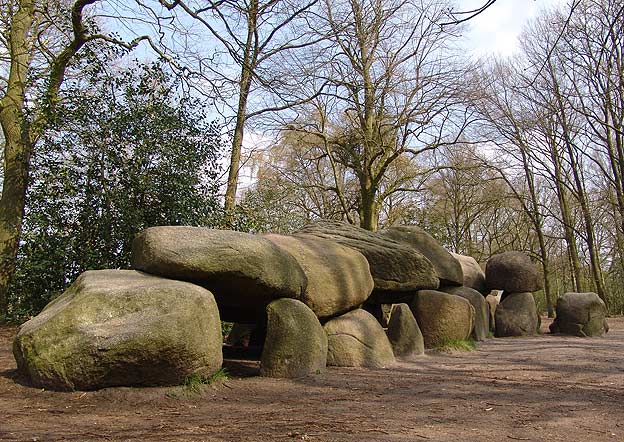
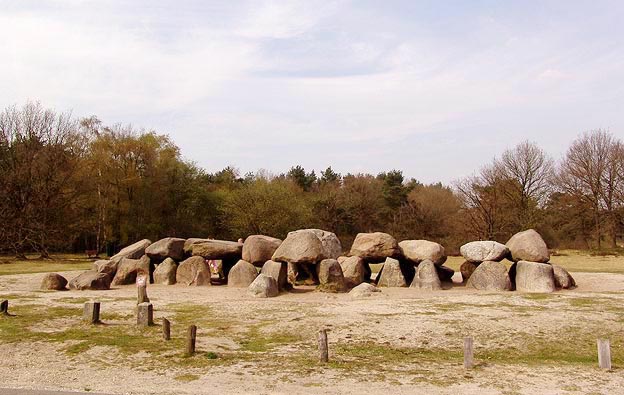
One of the most dramatic remnants of the debris left by glaciers in the last Ice Age are the hunebedden ("giants' beds") found in the north-eastern Netherlands. These are large structures - once the props of larger grave mounds - built by prehistoric man out of the giant monoliths they found scattered about the fields and forests of the area. The Netherlands are very flat and the soil consists entirely of sand and clay, so the rocks appear extremely foreign to the landscape.
Less dramatically, you can still see the effect of glacial geology in the Dutch landscape at the Utrecht Ridge, a 50km arc of low hills that was originally a terminal moraine created by a glacier some 150,000 years ago.