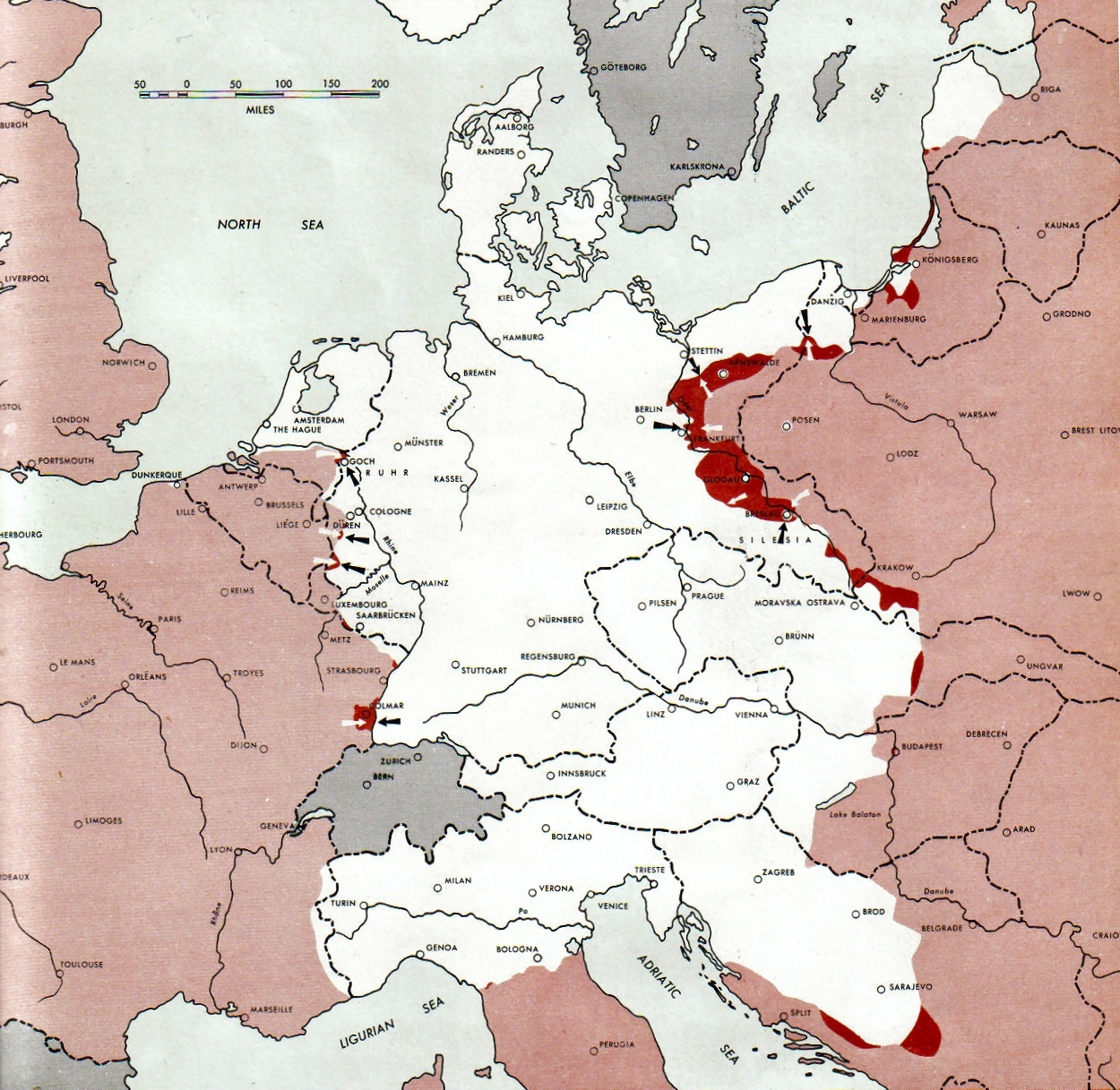
I was reading about the bombing of Dresden on wikipedia and found this map of the situation in February. It looks like the Soviets are about to take Berlin! How come they moved so slowly towards Berlin at this point while they and the western allies moved so quickly in other areas?
It was a combination of factors, but principally ferocious resistance, overstretched logistics and environmental factors. I should point out that the map you've linked is somewhat misleading. The penultimate Soviet attack, the drive to the Oder, commenced on Jan. 12 from bridgeheads over the Vistula River (in the vicinity of Warsaw) and reached the Oder River just east of Berlin, by Feb. 8. Between February and March, the Soviets widened the penetration, overrunning Pomerania and Silesia, and improving their logistics for the offensive against Berlin proper.
As Max Hastings points out in the 24th chapter of Inferno: 1939-1945 (a good general history of the war, which is why I recommend it here), "One-third of all German losses in the east took place in the last months of the war, when their sacrifice could serve no purpose save that of fulfilling the Nazi leadership's commitment to self-immolation."
More than 1.2 million German soldiers and a quarter-million civilians died on the Eastern Front between October 1944 and the end of the war. It was in that month (October) that Heinrich Himmler had vowed, "Our enemies ... will step onto a field of human mines consisting of fanatical uncompromising fighters; every block of city flats, village, farmstead, forest will be defended by men, boys and old men and, if need be, by women and girls."
And so it was. At places like Budapest and Kolberg, German soldiers fought on past the point of sensibility and to the limits of human endurance. It was all in vain, of course. The Soviet Union had, at the start of January, almost 7 million front-line fighters from the Baltic to Yugoslavia, and there was no prayer that the Germans would win the final fight.
As Hastings and others have pointed out, Zhukov could have forced his central penetration over the Oder as early as February, but doing so would have contained risks. It would have been vulnerable to counterattack, and it might have sustained losses that would have slowed the advance overall. It made sense to spend the time consolidating gains rather than gamble double-or-nothing on a narrow advance.
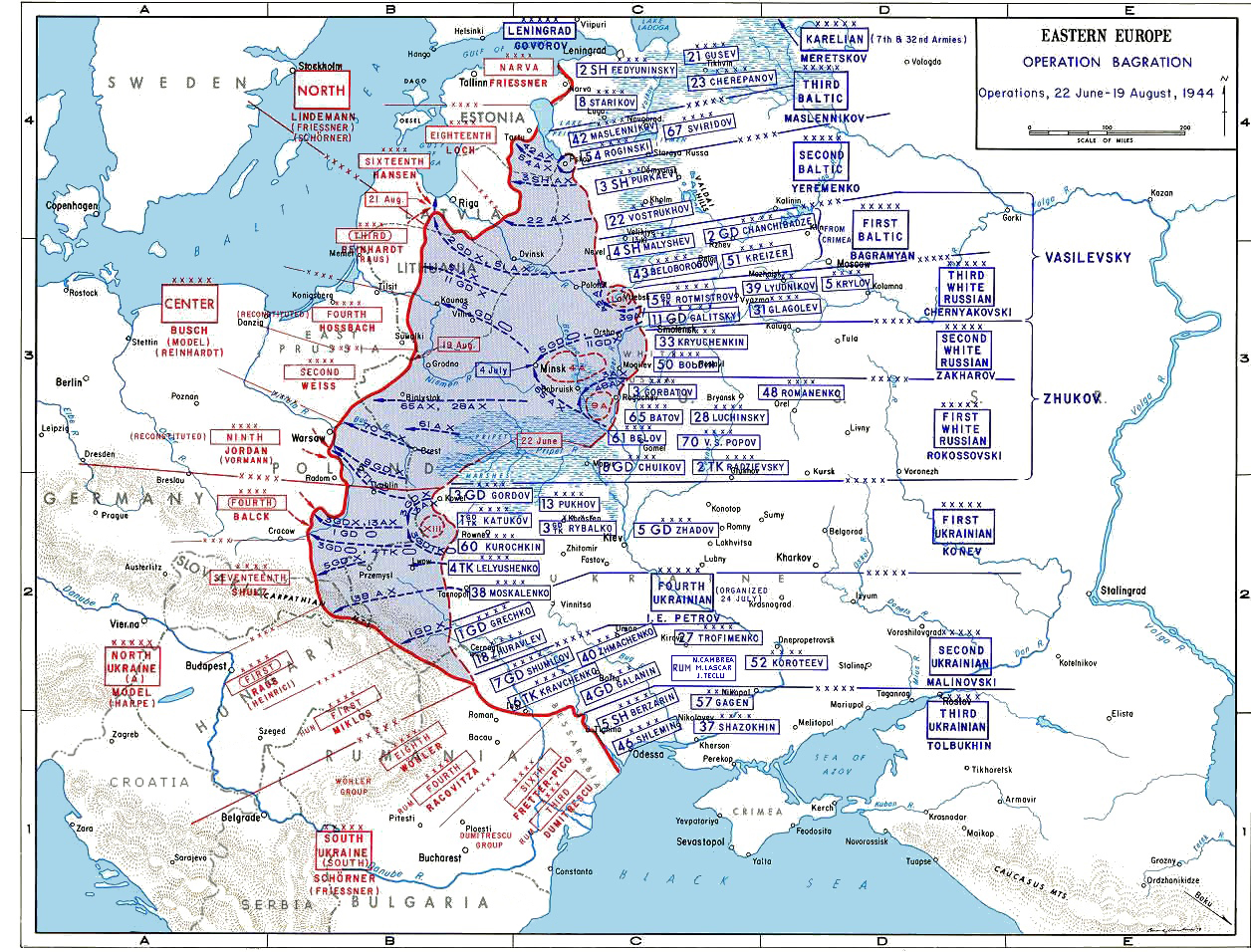
The logistics problems of the Soviet advance were not inconsequential. On June 22, 1944, the Soviet Union launched the greatest offensive the world has ever seen. Operation Bagration was the Red Army's D-Day, and it brought 1.3 million men, 2,200 tanks and more than 25,000 pieces of artillery from Smolensk to Warsaw by August. This was Operation Barbarossa in reverse. The invasion of Normandy was a sideshow in comparison.
But just as the Germans faced logistical difficulties advancing into the Soviet Union, so did the Soviets face problems going the other direction. One of the most famous is the rail gauge difference between Russia and the rest of Europe that requires materiel to be transshipped between trains at the border. Another is that Poland and Belarus had been fought over two (or three) times in the preceding five years. There was the invasion of Poland, then Barbarossa, then the Soviet counterattack. Each time, the rail and road network was damaged and degraded, particularly where it passed through towns which, again, were centers of resistance by the Germans against the Soviets.
On Lend-Lease trucks, the Soviet Union could sustain its forces, but like the Americans and British in the west, it could not adequately supply food, ammunition, and fuel to keep advancing at a rapid pace. Railroads had to be repaired and extended, roads repaired and supply dumps prepared.
Making matters worse were the environmental conditions. Autumn and spring rains hampered Soviet advances, just as they did German ones during Barbarossa. Winter cold was a factor, too. While Soviet forces were prepared for it, it still had a detrimental effect on equipment and movement.
All of these factors combined to slow the Soviet advance in the ending months of the war, and we see the same thing on the Western front in the period between August 1944 and March 1945. Armies advanced faster than logistical support, weather difficulties and German resistance combined to slow the advance during this penultimate stage. By late spring and early summer, the Allies east, west, and south had resolved their logistical problems, German resistance had been degraded to the breaking point, and the return of good weather meant conditions were ripe for rapid advance and an end to the war.