I know the movie isn't accurate at many points, but I was wondering how true this part would have been.
Ah, 300, one of my favourite documentaries.
Anyway, would the Achaemenid Persians have had a black emissary? This is one of those questions in which the answer is "there are no references in the sources, but when you take the evidence together it is certainly possible".
First of all, when you mean "Black", you of course mean the inhabitants of Sub-Saharan Africa with a specific skin colour and facial features. Such ethnic groups are certainly present in the region today. One example would be the Nubians of southern Egypt:
http://www.oneworldonejourney.com/wp-content/uploads/2012/01/Nubianman.jpg
Likewise there were those who live in the Sudan:
http://www.paulbanksphoto.com/files/GALLERY%201/Gallery-01_45.jpg
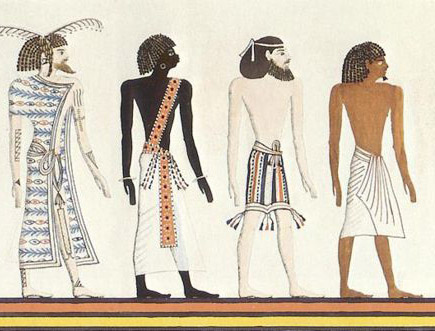
Their appearance is not so different from peoples living at the time of ancient Egypt:
https://upload.wikimedia.org/wikipedia/commons/c/cb/Egyptian_races.jpg
Those generically called Nubians or Aethiopians certainly travelled around the Mediterranean, and served as mercenaries. The ancient Greeks were quite familiar them and displayed them on their vases in the service of the Persians:
http://www.payvand.com/news/07/mar/African-levy-Achaemenid.jpg
Herodotus also records them as being a part of the Persian army during his account of Xerxes' invasion of Greek:
The Ethiopians were clothed in the skins of leopards and lions, and had long bows made of the stem of the palm-leaf, not less than four cubits in length. On these they laid short arrows made of reed, and armed at the tip, not with iron, but with a piece of stone, sharpened to a point, of the kind used in engraving seals. They carried likewise spears, the head of which was the sharpened horn of an antelope; and in addition they had knotted clubs. When they went into battle they painted their bodies, half with chalk, and half with vermilion. The Arabians, and the Ethiopians who came from the region above Egypt, were commanded by Arsames, the son of Darius and of Artystone daughter of Cyrus. This Artystone was the best-beloved of all the wives of Darius; and it was she whose statue he caused to be made of gold wrought with the hammer. Her son Arsames commanded these two nations.
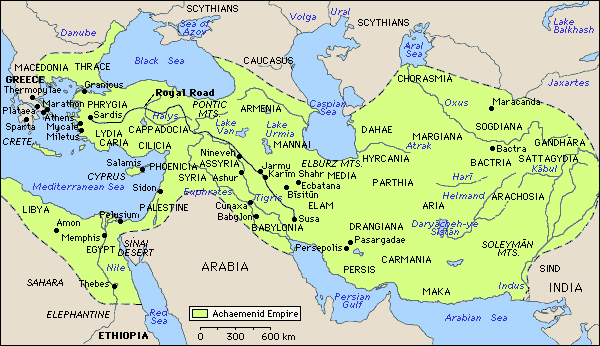
When you remember that the Achaemenids conquered Egypt, this would have put them in the direct contact of those living to the South:
http://www.iranchamber.com/history/achaemenids/images/achaemenid_empire_map.gif
The appearance of black soldiers should not come as not surprise. Could one of these soldiers have made a name for himself, rise up the ranks and serve the Persian court directly? Could a prominent Nubian noble have come to court as part of a treaty or to pay homage, and then become a permanent fixture? They are not ideas one can readily dismiss.
Sources
Ancient Persia: A Concise History of the Achaemenid Empire, 550-330 BCE, by Matt Waters
The History of Herodotus: http://classics.mit.edu/Herodotus/history.html
Technically it is not impossible. Egypt down to the first cataract was part of the Persian Empire at this point, and Egyptian soldiers served in Xerxes' army; no doubt some of them would have been black. In addition, Xerxes' predecessor Kambyses campaigned against Ethiopia just two generations before the invasion of Greece. If he took hostages or captured prisoners before he met with final defeat, these men or their descendants may have found their way into the Persian army when Xerxes raised his invasion force. Herodotos actually records the presence of Ethiopian soldiers in Xerxes' army when it is gathered in Asia Minor.
However, it is unlikely that these people would have been used as emissaries to the Greeks. There was a language barrier between Persians and Greeks, and so Xerxes tended to use his Greek or Greek-speaking subjects to communicate with his enemies. Often there were migrants, local lords or tyrants-in-exile available to serve this purpose (for example, Xerxes was accompanied on the march by the exiled Spartan king Demaratos). While messengers are often simply identified by Herodotos as "heralds" without any further description, we may assume that these were people who spoke Greek, and this is certain in the few cases where we do learn of their identity. After the battle of Salamis, Xerxes' right-hand man Mardonios used king Alexander I of Macedon as a go-between:
Mardonios presently sent a messenger to Athens, Alexander, a Macedonian, son of Amyntas. Him he sent, partly because the Persians were akin to him; Bubares, a Persian, had taken to wife Gygaia Alexander's sister and Amyntas' daughter, who had borne to him that Amyntas of Asia who was called by the name of his mother's father, and to whom the king gave Alabanda a great city in Phrygia for his dwelling. Partly too he sent him because he learned that Alexander was a protector and benefactor to the Athenians.
-- Hdt. 8.136.1
Later on, Mardonios also used a Greek named Mourychides, who is identified merely as "a man from the Hellespont" (Hdt. 9.4.1). The practice is continued in later times; when king Artaxerxes II wanted to communicate with the Ten Thousand after the battle of Kounaxa in 401 BC, he sent Phalinos, a Greek drillmaster in Persian service, to parley with them (Xenophon, Anabasis 2.1.7).
In case no convenient emissaries were available, the task would presumably be carried out by high-ranking Persians. Xerxes was surrounded during his march by a parade of brothers, cousins and other relatives, who formed the inner circle of the royal entourage; the Mardonios mentioned above was simultaneously Xerxes' cousin and his brother-in-law. These were trusted men, all wealthy beyond the imagining of the Greeks, whose presence carried sufficient weight for them to act as suitable emissaries for the king. The Spartans atoned for their murder of the Persian emissaries (when they kicked them into a well, as shown in 300) by sending two prominent Spartans to Susa to be executed in return (Hdt. 7.134-137). This suggests that the men they killed were not simply Greeks from Ionia or the Hellespont, but actual Persian nobles sent from the king's court.
As an aside, there are several notable scenes with emissaries in 300, one of which features the famous boast that the Persian arrows "will blot out the sun". According to Herodotos, this was not actually said by a Persian messenger, but by "a man from Trachis" (the region Thermopylai is in), presumably a local inhabitant who was deeply impressed with the sight of the Persian army (Hdt. 7.226).
Edit: here's a longer post I wrote yesterday about the historical accuracy of 300.