While casually browsing through Wikipedia, I noticed something terrifying and remarkable: In the year 1950, ALONE the United States lost not one, not two, not three, no not even four, but FIVE atomic bombs to accidental (non-nuclear) detonations resulting in dozens of deaths- including a brigadier-general- uranium being scattered over wide areas, and presumably a significant expense.
How on earth did the US manage to lose this many nuclear bombs in such a short space of time? What did the Soviets thinks of this? And the public? What about the poltical consequences. And surely there must have been one hell of a reckoning for the airforce?
Oh, and the article in question, I'm just pasting it in since formating on mobile is the tricky: https://en.m.wikipedia.org/wiki/List_of_military_nuclear_accidents
In the early 1950s the US was scrambling to expand its nuclear arsenal dramatically. This was the beginning of an exponential growth curve of nuclear weapons, which did not abate until the early 1960s.
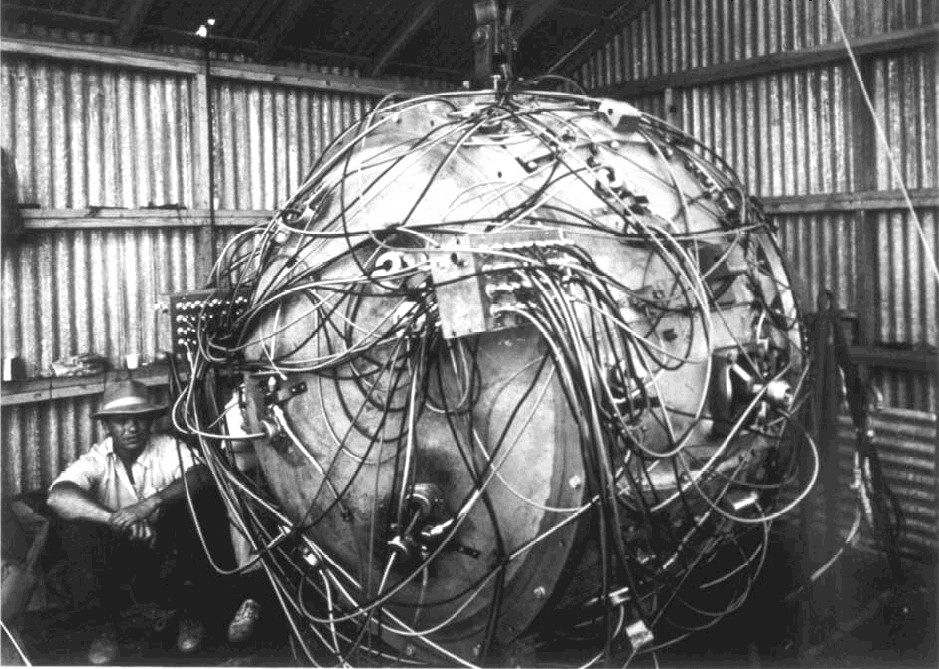
The weapons themselves were still relatively crude, most being — at best — improved versions of the same weapons used in World War II.
From the standpoint of quality assurance and engineering, what happens is what would be expected. You have a product. It is an inherently dangerous product to begin with (a complex tangle of high-explosives, precision electronics, and radioactive materials). You do not have the leisure or ability to go through many different versions prior to "release," nor do you even know what kinds of questions you ought to be asking about the safety (I mean, some were obvious even in 1945, but many of them are genuinely complex problems). You also have some complex organizational issues — the people who are receiving some aspects of the new technology don't have a lot of experience with them. (The military only rarely had "custody" of nuclear weapons at that point in time; this changed over the course of the 1950s.)
So the stage is set for a lot of mishaps, especially if you put these sorts of technical devices in situations where mistakes have big consequences (like flying them around on planes — once they stopped doing that regularly, the number of accidents dropped dramatically).
As for the consequences. I am not sure the Soviets did know about it. The public generally did not — very little information on this sort of thing was released, and when information about accidents was known (e.g. when they accidentally dropped them on houses, which happened a few times), there were lots of reassurances that this sort of thing was very rare (which was not always true, but sometimes those making the assurances were not even aware of the actual accident rates).
As far as I know there was very little reckoning. The history of nuclear weapons safety and accidents is a complex one and the general message is that very few careers suffered for it. The secrecy, in part, helped this, and those within the USAF were generally in deep denial about how serious the issue actually was. Eric Schlosser's Command and Control is an excellent book on this issue.