Was just sitting today and thinking about what Nazis ate, and what food they liked.
Ok, as far as I can tell from the literature available to me the haute cuisine of Nazi Germany, as in the cooking available in hgih class establishments to patrons willing to pay a lot of money for it, stayed pretty much the same as it had been beofre in Germany (with some exceptions that resulted because of shortages due to the progression of the war).Generally, that meant high end meals borrowed from French cuisine with some German stuff mixed in served a la russe with lots of high end wine. Göring particularly took part in the extensive consumption of such feasts, using his position as Reichsjägermeister (basically, the Reich official hunter) and his huge woods he took off of other people to supply these feasts with wild game and other meats.
Very generally though, the rule of the Nazis did have an impact on what people ate. Since basically from day one, the Nazi regime had decided that it was going to wage war, one of the most important unofficial slogans of Nazi food policy was "Never again turnips". During the Winter of 1917 in Germany, hunger had broken out and people had been forced to resort to eating pretty much only turnips since those are winter vegetables. Seeing as how keepin the German populace fed was going to be a huge issue during the war, especially with the British's potential to once again institute a blockade, the Nazis tried to actively encourage different eating habits within the German population and to become autarky when it came to supplying food.
It is important to know here that before the economic crisis in 1929, German living standards had been rising, which included an increased consumption of white bread, better cuts of meat, butter, milk and coffee. Because it was foreseeable that the war would bring enormous problems on that front with it, the Nazi regime started in the 1930s to try to change the Germans' eating habits. Whole wheat bread, margarine, potatoes, traditional German meat dishes made from worse cuts of meat, and chicory coffee resp. putting chicory in coffee were all either heavily substituted and therefore cheaper or encouraged by propaganda, cooking classes in the BDM, the Nazi party youth organization for girls, and so on. The famous stew sunday, the Nazis instituted also served this purpose. By giving out cheap stew made of less desirable ingridients, the idea was to basically get the Germans used to eating worst food than they had before. Similarly, the Nazis had a long and drawn out campaign against the consumption of imported fruits with eating oragnes being presented as basically working for the enemy etc.
This is also because in war time rationing, it is not just the calories that are decicisive to a populace working in the war economoy but also taste resp. at least some semblance to prior fat consumption. The Soviet Union is a prime example during WWII. The Soviet regime could supply its populace with food the population of no other nation would have happily eaten, simply because the Soviet populace was not used to the same standard of living when it came to food as someone from Britain, Germany or the US.
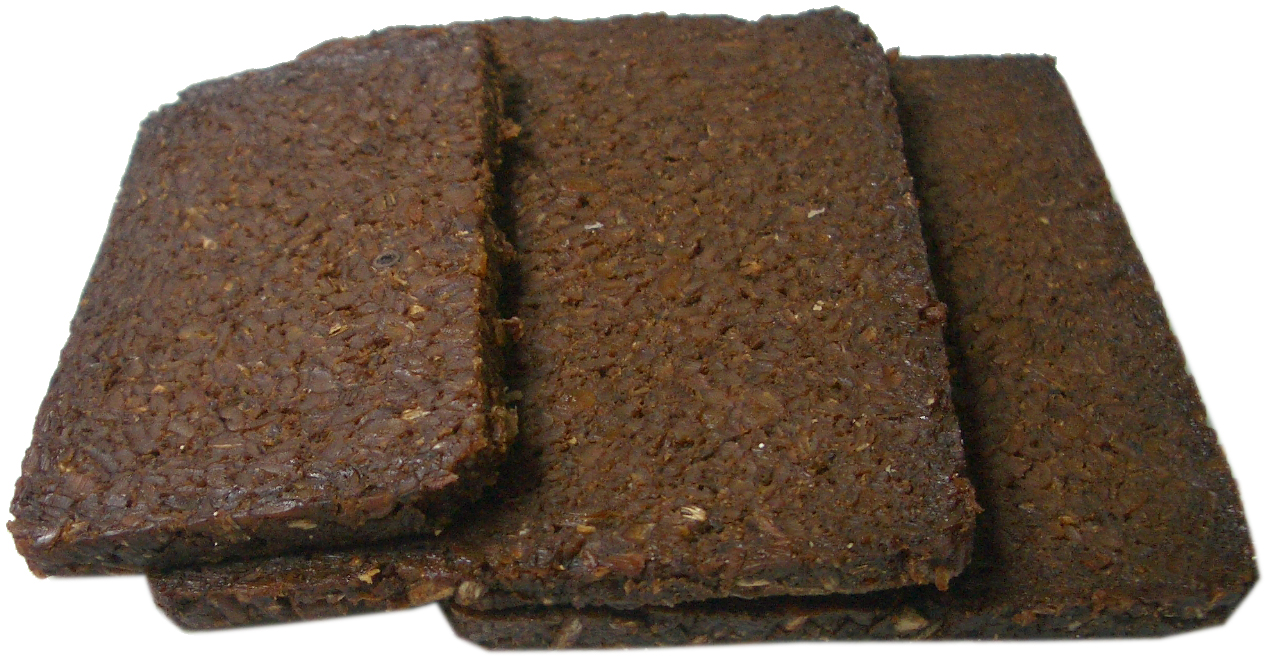
The idea of for example not eating white bread also had some ideological impetus in some corners. Eating whole wheat bread (or even Pumpernickel, the kind of bread only German speakers like) was seen as "Germanic" because it strengthened character and was in the tradition of the German tribes that beat decadent Rome etc. etc.
During the war, these problems became of course imminent and also lead to the usage of previously un-tried things. In 1940 for example, when Coca Cola US stopped delievering Coke syrup to Nazi Germany, one of the managers of Coca Cola Germany came up with the idea od Fanta. Short for fantastic, the original Fanta was made from whey and apple pomace, i.e. the stuff literally nobody else wants.
Similarly, the Nazi regime started to heavily invest in flash frozen food production because they saw it as a potential to feed their populace. Frozen food production was on the rise in 1930s Germany and also used in the war but the problem with it was that the method of freezing food was only developed in the 1920s and the Nazis' frozen food must have tasted rather awful.
They also started to invest heavily in production of cube soup, skimmed and fat reduced milk, which were all new additions to the German diet at the time.
One aspect I have not mentioned so far is that while the German population was in terms of calories the second best fed in WWII after the US, this came at a price for somebody else. Albeit the fact that the original Hunger Plan by Herbert Backe of the Agrairain ministry and the Wehrmacht, which foresaw the hunger death of more than 30 million Soviet citizens, was never fully implemented, the 3.3 million Soviet Pows who starved to death, the famine in Ukraine, and the famine in Greece were all the result of the Nazi regime basically taking their food to feed the German populace. Jews in the Reich were denied the same rations and from 1942 onward Jewish babies and children were not to receive anymore milk or meat even. Forced Laborers from all over Europe were fed appaling stuff. For Soviet forced laborers there existed "Russian bread", a mix of sawdust, leaves, and wood baked into something resembling bread. So while, the Germans were spared from eating turnips until the end of the war in 1945, ohters in Europe paid a heavy price for the German being kept fed.
SOme historians, most notably Christian Gerlach, also argue that it was the food situation of the German Reich that accelerated the Holocaust. Initially at Wannsee the planning was to comb Europe from West to East for Jews. Yet mere months later, Aktion Reinhard, the systematic mass murder of the Jews of the General Government kicks into gear. Gerlach explains this by showing that at the time the Nazi regime had to cut back on rations and in order to save food, they started to murder the people they had slated to be annihilated quicker than they originally planned.
Sources:
Lizzie Collingham: The Taste of War. The Battle for Food in World War 2.
Ursula Heinzelmann: Bratwurst & Beyond: A History of Food in Germany.
Gesine Gerhard: Nazi Hunger Politics: A History of Food in the Third Reich.
Alex J. Kay: "Germany's Staatssekretäre, Mass Starvation and the Meeting of 2 May 1941", in: Journal of Contemporary History, 41/4 (October 2006), pp. 685–700.
Christian Gerlach: Krieg, Ernährung, Völkermord. Forschungen zur deutschen Vernichtungspolitik im Zweiten Weltkrieg.
Gesine Gerhard: "Food and Genocide: Nazi Agrarian Politics in the Occupied Territories of the Soviet Union", in: Contemporary European History, 18/1 (2009), pp. 45-65.
As a follow up, I'd be curious of the same question in relation to alcoholic beverages such as beer.
I can't say much about the Nazi's haute cuisine, but they had a definite stance on what people should eat every day. This lead to some rather awkward institutions like the Reichsvollkornbrotausschuss (or Reichs-committee for whole grain bread).
First of all, the Nazi ideology is a totalitarian ideology. This means that the Nazis aimed to govern every aspect of life, even on the most personal level. One of their goals was the improvement of the Volkskörper (what could be translated as body of the people, plus having some racist connotations). In this regard, there were some reservations against academic medicine as being "jewish", which lead to the search for and support of alternative concepts: Homeopathy and Neue Deutsche Heilkunde (new german medicine) as a "german" counterpart to academic medicine, Vollwertkost (whole food) as a prevention of illness.
In this context, Reichsärzteführer (Reichs-leader of physicians) Leonardo Conti declared: "The fight for whole grain bread is a fight for the health of the people" ("Der Kampf um das Vollkornbrot ist ein Kampf für die Volksgesundheit"). One of the prominent philosophers in regard to the diet reforms was Max Bircher-Benner, inventor of the Birchermüsli (bircher cereal) which still is a thing you can buy in german stores.