Throughout history, since the Han, China has always followed periods of unity, then it fractured and a new dynasty took control. Today, China is essentially totally united under the People's Republic.
However, in Europe, the only long-lasting state that held the majority of Europe's population is the Roman Empire, although at times some regimes managed to hold much of Europe for a short time period. Despite this, Europe has essentially always been totally disunited. Why is it that the vast area of China could easily be united under a single rule, whereas this almost never happened in Europe?
The use of the term "easily" is somewhat misplaced. The perception of Chinese past unity is greatly impacted by a modern view of China. The Qin dynasty first united several kingdoms into "China," but this first China only corresponds to a portion of modern China. The Qin were followed by the Han. When the Han dynasty fell, so did a unified China. The period was followed by a long period of independent kingdoms. Along these lines, the fall of dynasties often meant that the political confines of "China" would change. Following the deposition of the last Chinese dynasty something similar occurred. The early 20th century saw much of China divided among "warlords." After the communist victory, the use of a shared Chinese identity was a means of drawing together many disparate people with various cultural and political experiences.
Source: Cambridge History of China
I don't know if I'd say uniting China was "easy," just as I wouldn't call the unification of India anywhere near easy or even complete.
China, for most of its history, has been preoccupied with beating out the nomadic tribes. Nazis could conquer a lot of Europe because they had developed a very advanced arsenal. This amounted to the number of cavalry in the ancient world. If, say, the Huns didn't have to deal with the natural barriers that Europe enjoys against the northern plains, then we might be talking about a similar situation with an analogous "common enemy."
The Crusades united Europe. Napoleon had similar effects on federating Germany and Italy. WW2 against the Nazis resulted in the European Union.
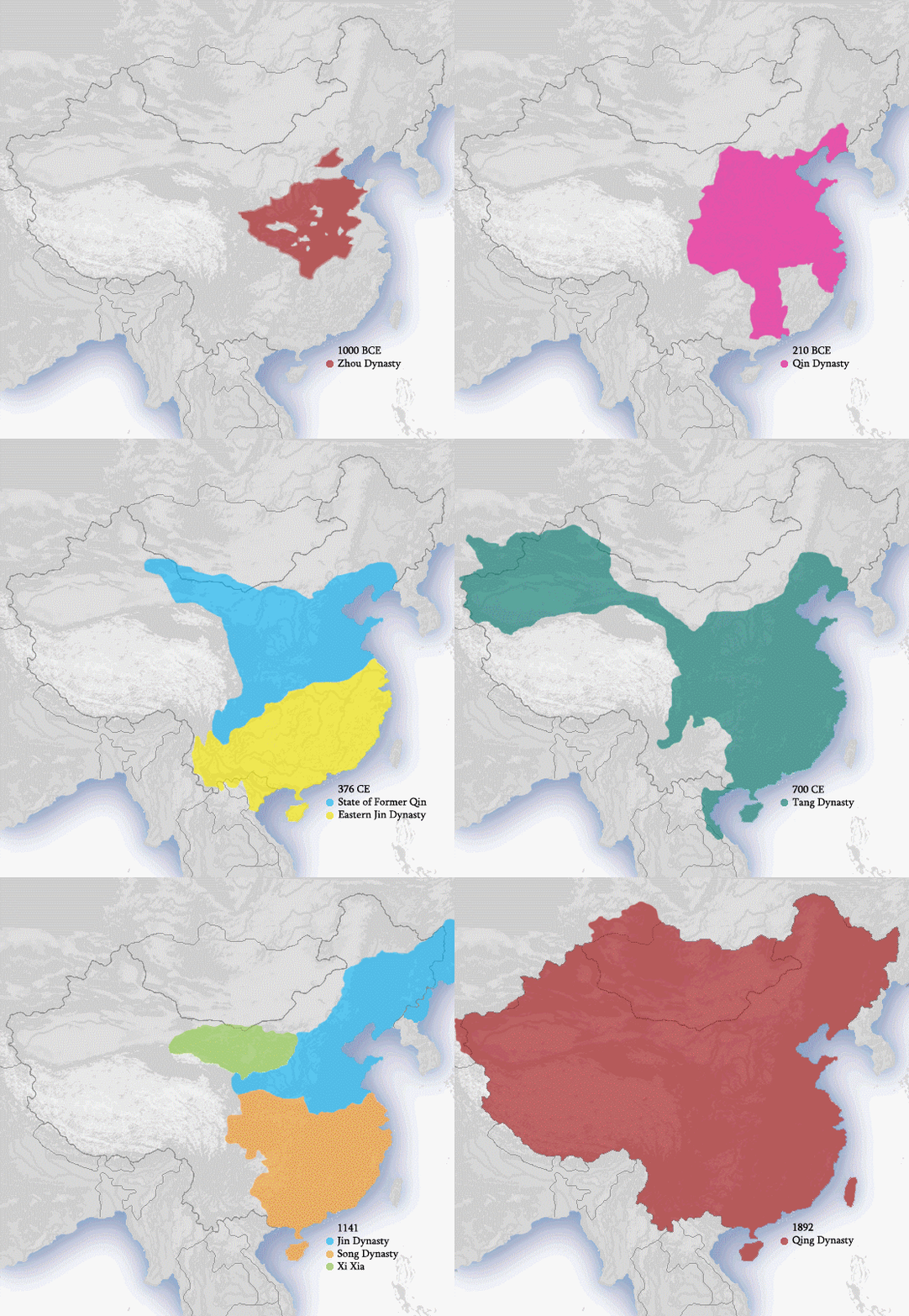
To say that China was "unified" at various points is a bit misleading, as it elides the fact that what constituted "China" changed, primarily growing, over time. It's only really in retrospective that a continuous line of "official" Chinese dynasties representing the unification of "all under Heaven" (天下) is established. It was only over time that what constituted 天下 grew to include most of what we now consider to be "China", primarily by conquering, colonizing, assimilating, and otherwise taking over the peoples that were already in these areas. Wikipedia hosts a neat animated animated gif that sort of shows this, though it doesn't really separate 天下 from other territories. I recommend China's Imperial Past by Charles Hucker as a great introductory overview of Chinese history that covers much of these events, though obviously with such a broad span of history to deal with it doesn't go super in-depth on any of it.
Additionally, what constitutes "China" today is not even completely agreed upon, as well. When you say:
Today, China is essentially totally united under the People's Republic.
The PRC would not agree with this statement, since the government there very much believes that the Republic of China (aka Taiwan) is an inherent part of "China", whereas the Republic of China has previously laid claim to the entirety of Qing Dynasty territory which included Mongolia and Northern Vietnam (both claims since rescinded). The island of Taiwan itself was not even under nominal Chinese rule until the Ming Dynasty, as well, but is now considered (by some) to be a part of "China".
Even within the PRC there is debate about whether all of the PRC territory is "rightfully" Chinese, for example in Tibet, Inner Mongolia, and Xinjiang province there are some who believe that these areas should be independent from Beijing and that neither the people living there nor the territory are really "Chinese".
So the answer to your question is that "China" was not easy to unite, as the process took almost two thousand years, and it's not clear that it's actually united even now.
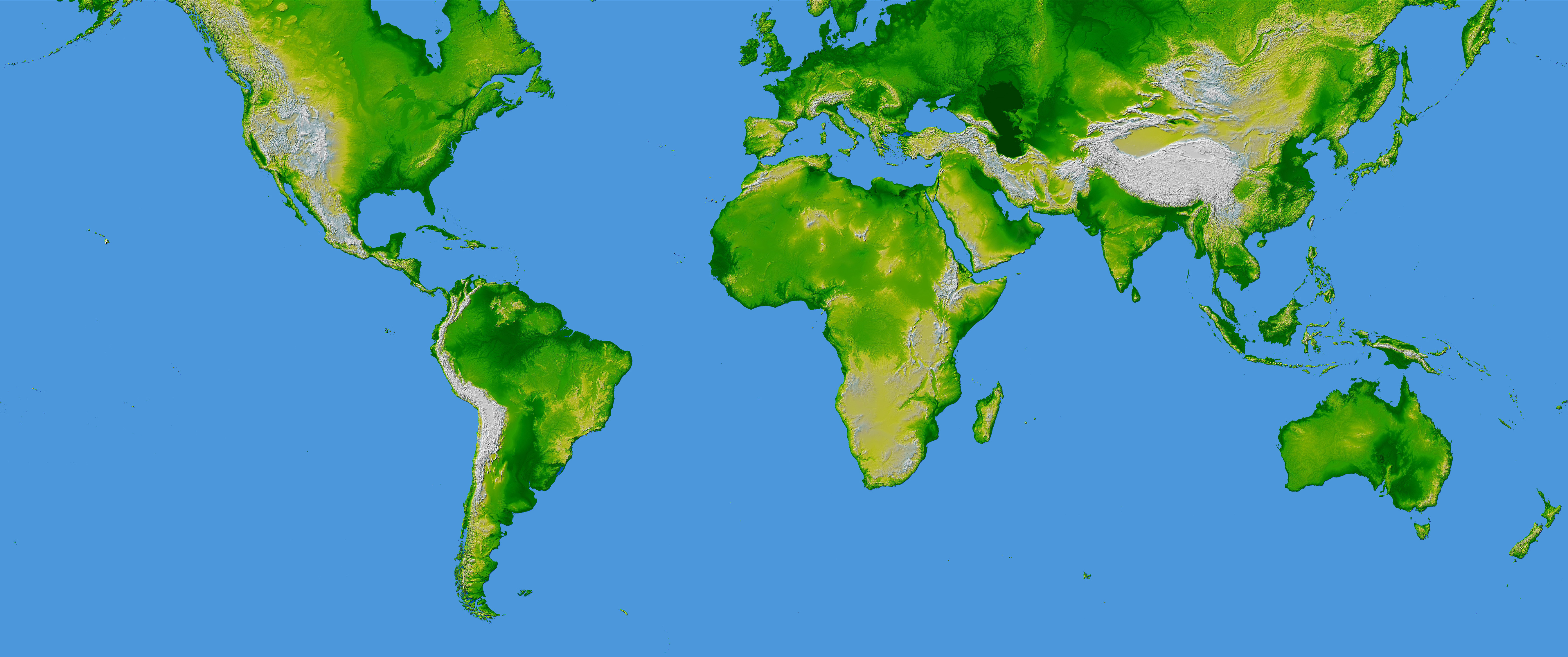
I guess I have a followup question, and I'm hoping an expert can tell me if I'm on the right path - looking at a topographical map of the world as here, we can see that what you might call the "core Chinese territory" is relatively uninterrupted by Mountains. For the areas I mean by that, please see this dynastic comparison from Wiki. In Europe, by comparison, there are many clearly visible discrete sub-regions, the ones separated by water such as Britain (analogous in Asia to Japan), and areas cut off by mountains such as the Iberian peninsula, the Carpathian basin and the area corresponding roughly to modern Italy.
Qing and modern China are both far larger than the above core region, however would it be fair to say that the development of China as a political and cultural entity was "easier" to construct on account of geographical factors? Has there been much ink spilled on such ideas, and if so, where would I look to find out more?
As others have said, China was never united easily and the provinces/territories/kingdoms that were united into "China" were far from the furthest reaches of what China would become. You can see a simplified evolution of the territory in this gif but it only shows the zenith of each era and not the turmoil between transitions. It was not nearly as simple as "unity, fracturing, new dynasty with total control".
Caveat aside, state entities in China were rather large compared to Europe and the idea of taking and holding huge swaths of land was possible enough that it was accomplished occasionally. In The Origins of Political Order Francis Fukuyama attributes it in large part to the nature of the Chinese landmass. While China (and Russia, which paralleled China in this regard) have mountainous regions they also had a lot of planescape that was easy to project power across. If you could raise a strong army you could move it a considerable distance before reaching territory that posed unique challenges (desert, mountains, arctic tundra, etc). There also wasn't any threat of massive naval invasion either. This was obviously not the case with Europe.
I find this to be an interesting question and am somewhat disappointed with the few answers. As a follow up question: Could someone shed some light on the following aspects, which are just talking points.
Is it simply because of language? As I understand it, the various Chinese dialects are all more similar to one another than the various languages that are most prevalent in Europe.