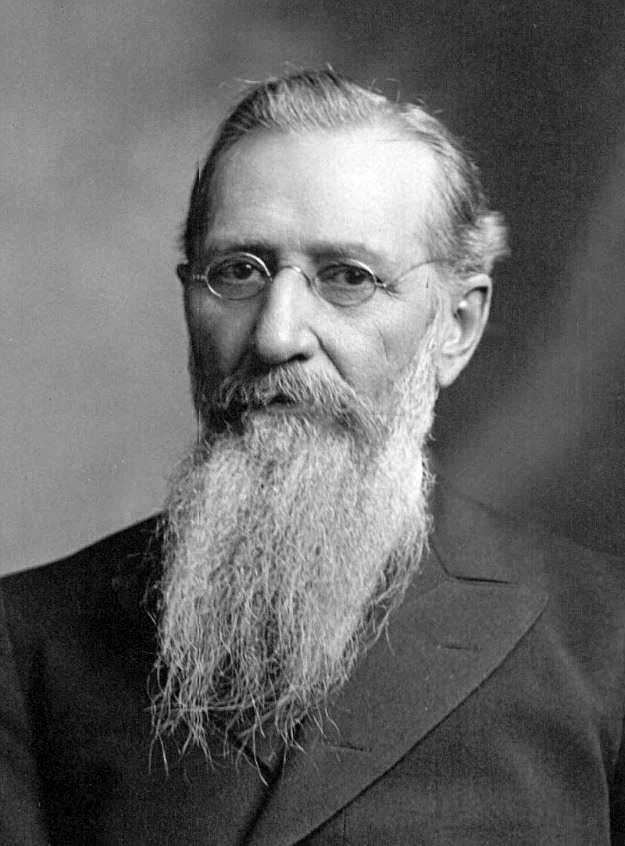
Modern day Mormons are discourage from sporting facial hair, according to Mormons I've known. However, historical church leaders, such as Brigham Young, Lorenzo Snow, and Jospeh F. Smith sported large beards. When, how, and why did the current view on facial hair develop in the LDS church?
As /u/rick7475 pointed out the modern membership doesn't have an actual beard ban. One exists for students at church schools and for missionaries. It also exists for temple workers and for men in high positions what are called General Authorities and Regional Authorities. It does not extend down to local authorities (Stake Presidents and Bishops), although social and cultural pressure may be felt by men to mimic their religious leaders.
That said, how did the style change? Well LDS facial hair styles tended to follow national trends. When Joseph F Smith testified before congress in the Reed Smoot hearings, he may have had one of the longest beards in the room, but he didn't have the only one. And mustaches and/or spectacular side burns were found on most of the men there. Mormons in the 19th century and early to mid 20th century followed national trends. They went smooth faced because the country went smooth faced.
Come the 1960s and there was an active counter culture in the US where facial hair again became common and popular. Certain elements within the LDS church felt very threatened by these elements men like Ezra Benson, Cleon Skousen and Ernest Wilkinson saw the hippies as being tied to communism, civil rights activism, civil disorder, and worse. Wilkinson was in a position to do something about it. As the president of BYU, and well connected to the church Apostles, he could take action. He created a secret student spy ring to report on any potentially disloyal and dangerous students and professors. This would eventually evolve into an official entity, what is today the Honor Code Office. He also created the first dress and grooming standards with the intent of "stomping on" any "beatles (sic), beatniks, and buzzards." Wilkinson also started worthiness interviews where students had to report their behavior to local church leaders.
Once such rules were in place they were adopted in other places (like the missionary service) and they've been in place ever since. Basically in a counter move to 1960s hippies BYU froze their grooming and dress standards in the 1950s, and with minor updates they've stayed in place ever since. This has since trickled over to become a de facto social standard for the church as a whole since then.