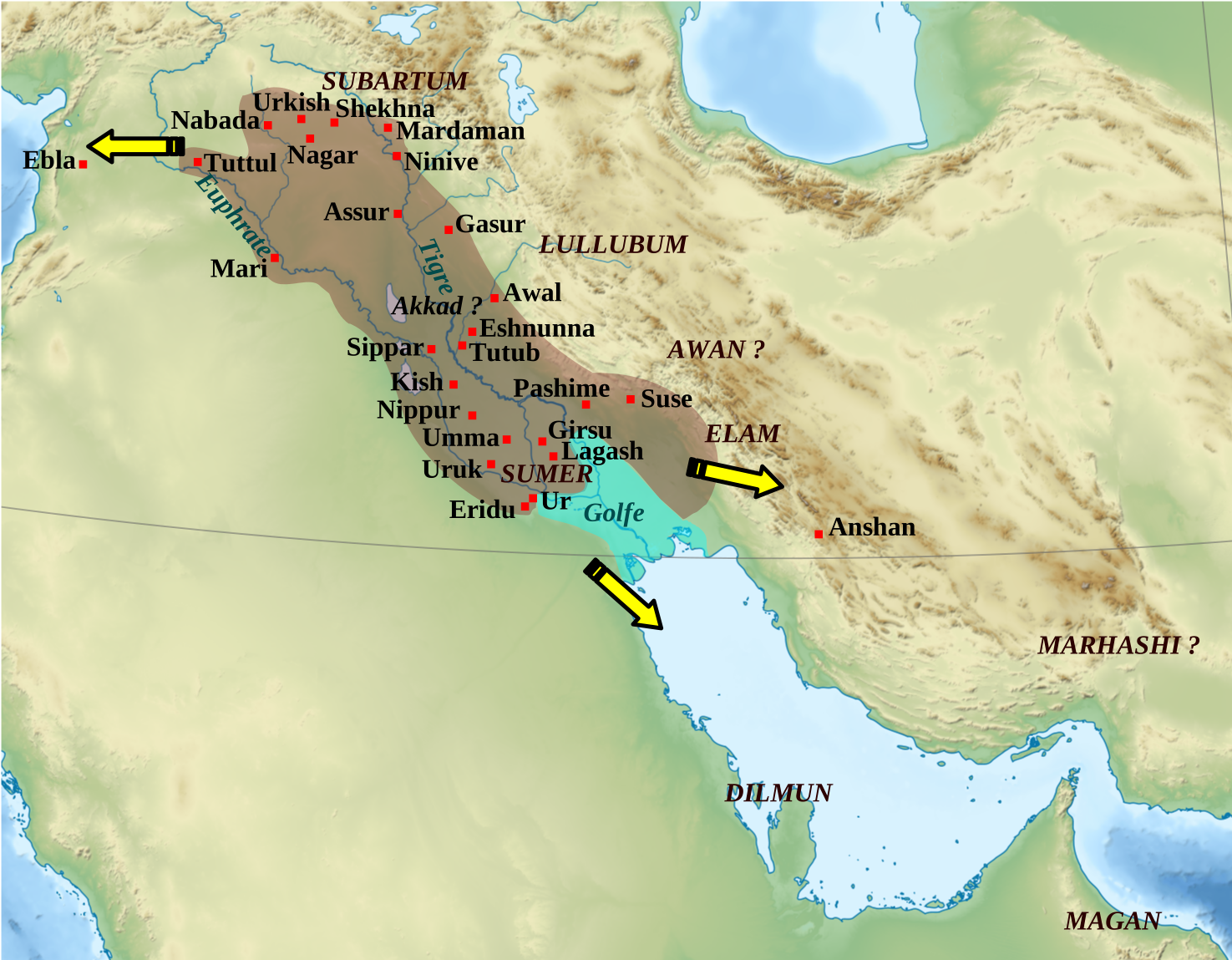
So the answer to your questions is sort of yes and sort of no, but mostly no. There wasn't anything like a modern nation-state, and there was a lot of division, but at times there were larger groups ruling all or most of the area. The word "Sumer" would generally refer to the geographic area or maybe to the culture associated with that area rather than to a nation. For the record, I'm referring to the period of roughly 3500 BCE - 2000 BCE.
The city-states of Sumer had things in common in terms of language, religion, and culture, but most of the time they were not united under a single Sumerian ruler or government. There were individual city-states like Ur, Uruk, Eridu, Nippur, Kish, etc. that often fought each other for power and dominance. Those city-states would sometimes come to prominence over their neighbors, but not the entire region. If you hear people talking about these periods of prominence they will most likely refer to the city-state by its name, rather than to Sumer as a whole.
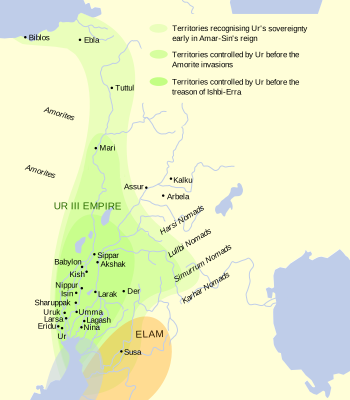
That said, there were times at which the entire region was united under one, more centralized rule. From 2288 - 2175 Akkad ruled a large area that even stretched beyond Sumer. The former rulers of the independent cities became governors that reported to Akkad. After Akkad (and some time with no single major power), the Third Dynasty of Ur came to rule a very similar area. Ur-Namma, founder of this dynasty, used the title "King of Sumer and Akkad".
So back to your original question, while there were times of unification, most of the time the region was divided. The word "Sumer" would refer to the geographic area more than any single government, ruler, or political entity. If you wanted to refer to a state you would use the name of the central city like Akkad or Ur rather than the overarching term Sumer.
All of this (aside from the linked images) comes from the third edition of A History of the Ancient Near East ca. 3000 - 323 BC by Marc Van De Mieroop. I can mention some other books if you want, but that's the one I looked at for references and dates.