In earlier periods, before large-scale movement of marble was possible (I would probably date that to the Hellenistic period), each society used its best, locally-available stone. Egyptians, for example, used granite, basalt, limestone, and sandstone, among many others, with much success to build large monumental buildings. The civilizations of Asia Minor used local limestones (with which I am personally less familiar). Really, in Greece, marble is only commonly used at sites near quarries (i.e. Athens, Naxos, Delos, Paros) until the 5th century BC, when the trade in stones is more established. Even then, marble is mostly used for decorative elements like metopes and friezes. Temples and other monumental buildings are often built from local limestones. Marble is not commonly used on the Italian peninsula until the Augustan period, when the quarries at Luna and Carrara open.
Source: Ph.D. in ancient Greek and Roman art history
Im going to talk about the use of marble in a specific context, that is, monumental inscriptions. That is my specialty and I don't want to embarass myself talking about sculptures and architecture, but there are certain overlaps so I hope it will be informative nonetheless. Furthermore, I can only talk about why Romans (as in citizens of the Empire, including Greeks) used marble, not why other cultures don't to that extent (I think the Taj Mahal is completely covered in marble, though, and India seems to have a proud and ancient tradition of marble carving and masonry).
With that out of the way, marble was the finest and most sought after material for Roman stonemasons and their customers not only in architecture and sculpture, but also in artifacts intimately connected with them - that is, inscriptions. All kinds of Roman monuments had inscriptions that informed about the builder or the honoured. Tables inlaid into the wall of a building would state the person responding for building/maintaining/repairing it, statue bases, triumphal arches and other honorary inscriptions would state the honoured, the occassion and the dedicant (or just the dedicant if it was a statue of a god or the like) and so on. This includes every type of architecture, even down to individual parts like a column or capital sponsored by one who didn't have quite as much money to spend. Then you have inscriptions that are the monument, or a big part of it, as in tombstones or sarcophagi.
For a long time, during the republic up until Augustan times, tuff/peperino (up until the time of the Gracchi almost exclusively, since it was both widely and easily available from local sources as well as easy to work with using the common technique of the day), travertine or other sand- and limestones were used. Marble seems to only have been introduced as building material in the mid-2nd century (earlier imports was mainly plundered statues, reliefs and the like), with the temple of Iuppiter Strator being built of imported marbele by Q. Caecilius Martellus in 146 B.C.^1 Pliny mentions the introduction of marble for private building (a practice he criticizes as excessive) in the 1st century, through Lepidus, who was the first to use mable from Numidia for the lintels of his doors, and some years later Lucullus was the first to introduce the black marmor called Lucullan after him (today called Nero antico); while Mamurra, some time in the later first century, was the first to cover the walls of his house in marble. [Plin. n.h. XXXVI, 6-8] So it seems to have been only comparatively late that marble was introduced as a material for building in Rome at all, especially for private consumption, but then in increasing quantity over the course of the first century. This is a question of availability and transport. With the conquests in the east and south, the marble quarries of the hellenistic world, who already had somewhat of a tradition sind the 5th century, became available. Concerning inscriptions, there are almost none to be found in the Latin world before the end of the first century, though there are considerably more in the Greek world (with easier availability).
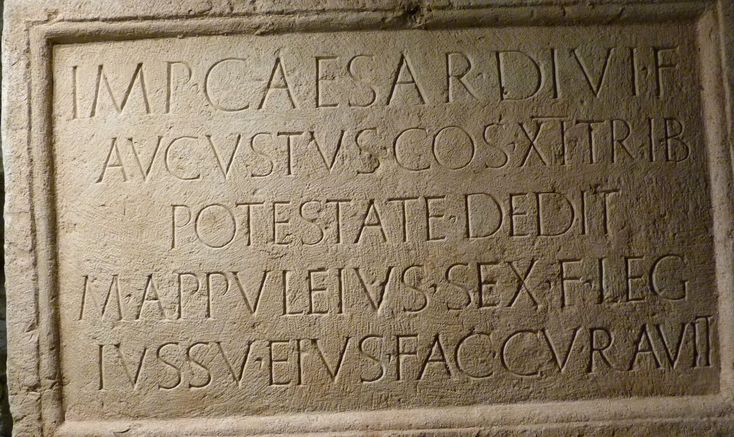
Now with the beginning of the Augustan age, two important things change. As /u/Elagabulus1986 has already pointed out here, the marble quarries at Carrara and Luna had begun from the mid first century on, and this made high quality (the marble of Carrara is still highly prized and quarried to this day) marble easier available. Together, the reign of Augustus brought a momentuous change in the use of inscriptions in the Roman world. Before the year one, there are about 3.000 inscriptions for all of Roman Republican history. In the five following centuries, there are (much) more than 300.000! One large factor in this is the use of inscriptions as a tool of propaganda and self-representation. In republican times (outside of the field of funerary and 'practical' inscriptions), it was only customary to present yourself in the actual context of the work you did while serving in a public office. Augustus did much more. When he put up a building inscription, he was presented with his full name and all his titles, while a Roman magistrate would just mention the office he was currently holding. Augustus presented himself not as a magistrate in service of the republic - he presented himself as a monarch. This building inscription shows this quite clearly, 'Imperator Caesar Augustus, son of the Divine (Iulius), consul for the 11th time, with the tribunician powers, gave this. Marcus Appuleius, son of Sextus, legate, oversaw the carrying out of this by his (Augustus') order'. Not only is he presented like a monarch, he has others do the actual work for him while claiming the credit! I can't go into too much detail on this, but essentially, Augustus played a huge role in transforming how Romans used and saw inscriptions by using them as an omnipresent tool of self-presentation and propaganda (one of the longest inscriptions that we know of are the so-called res gestae divi Augusti, essentially a giant literal wall of text telling everyone how great he was by enumerating all the good things he did). Unsurprisingly, this trend caught on like wildfire in a Roman society in which elite competition played such a huge role. And marble was one of the main materials for monumental public inscriptions.
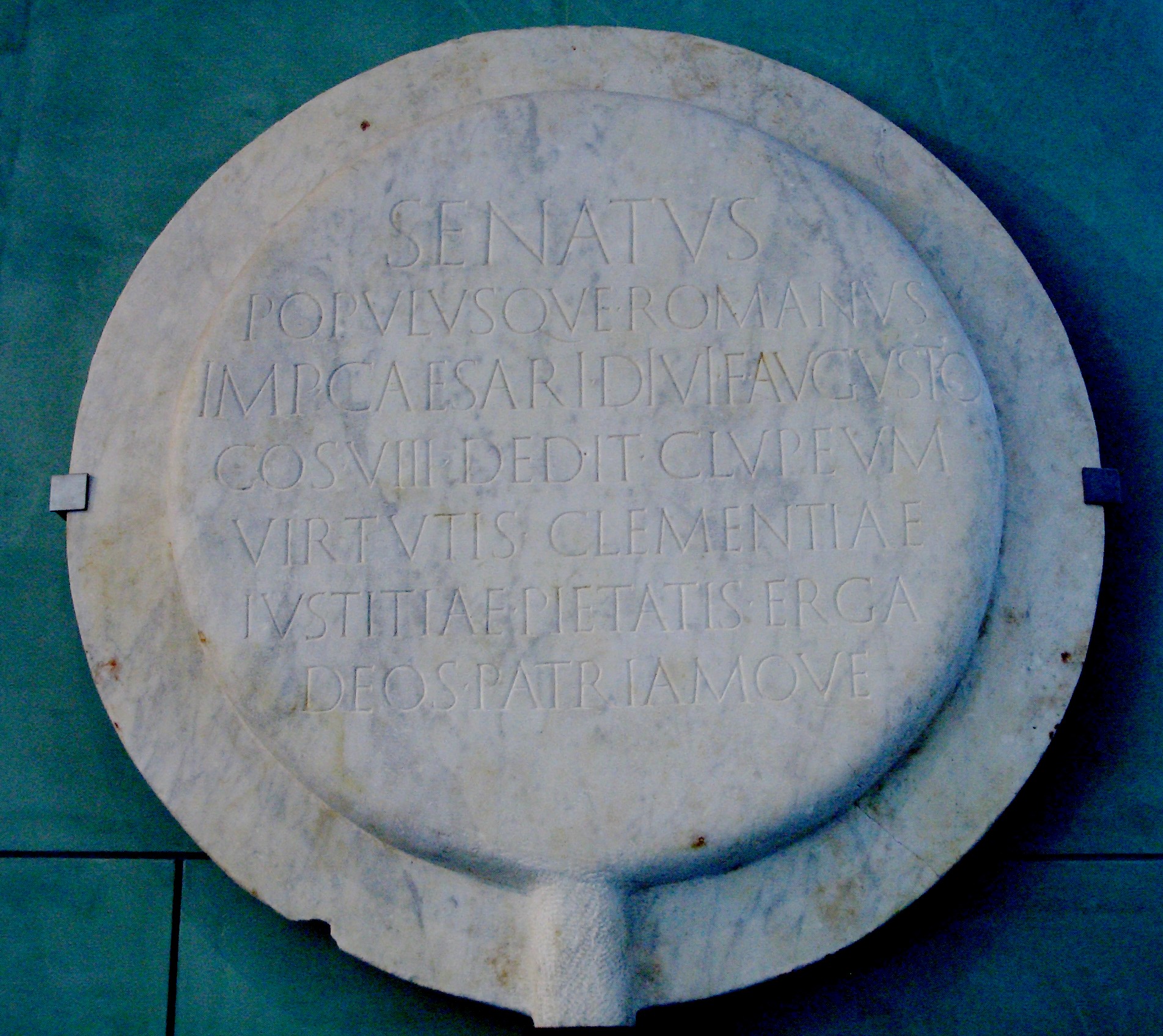
Marble is a very beautiful material to work with on inscriptions, it allows highly detailed and fine, elegant work than with the hard tuff or travertine while still being durable and polishable to achieve a fine finish. The letters in the inscription would usually be painted in a colourful red, which would achieve a nice and highly visible contrast with the marble. The clupeus virtutis, or shield of virtue awarded to Augustus after Actium, here in a marble copy of the golden original, shows the fine and measured craftsmanship of early imperial marble engraving. Imagine the letters painted out in bright red!
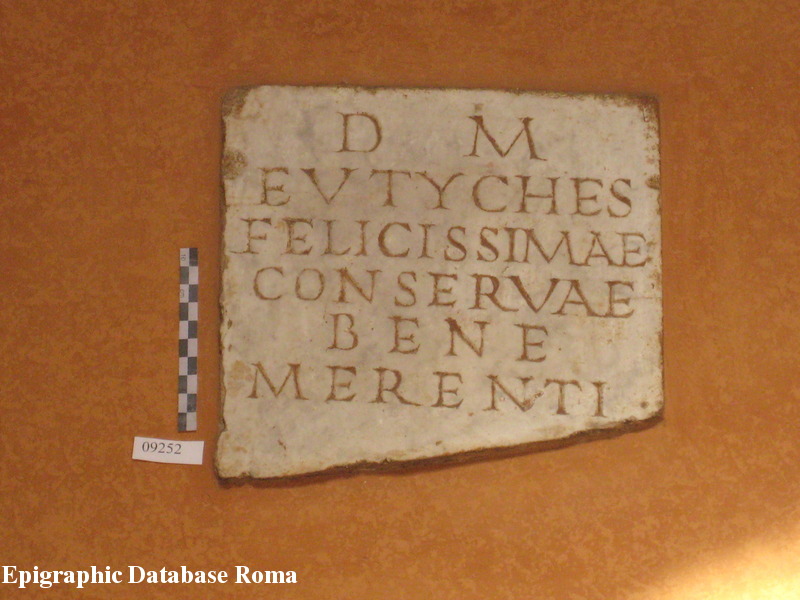
If you add to that the prestige value that marble had, it becomes a very sought after material for private individuals seeking to commemorate themselves and their (or their ancestors) deeds. Marble was still an expensive material (all stone that has to be transported a considerable distance is), and the differently coloured variants added another factor into this - you could easily tell just how much money someone spent by looking at the colour of the marble! Marble that was visually different from locally quarried marble or other stones betrayed foreign origin and thus high costs, and several variants became highly fashionable and sought after. That is evident both from the literary account (I've already mentioned Pliny, who talks at length about the various types of marble) as well as epigraphic sources. Funerary inscriptions, especially on sarcophagi, sometimes mention the type of marble they were carved from, and the famous testament of Sestus Iulius Aquila from the territory of the Lingones in Germania explicitly mentions that he wants the carved parts of his tomb to be made marmorea ex lapide quam optimo transmarino, made of marble and from beyond the sea no less! The civitas of the Lingons lay as far from the sea as it gets, which would have made transport stupidly expensive. I feel a bit for his heirs. Marble, especially the sorts transported from further away, was something you used when it had to appear expensive. It was not only used by the rich and powerful, but also by the aspiring and affluent middle class, and also by slaves who had achieved a bit of wealth themselves. This small marble plaque was placed for Felicissima by Eutyches, her fellow slave. Marble plaques such as this one were not very large, but quite popular in later times, through all parts of the empire and inexpensive compared to the larger types of funerary monuments.
So, marble was used for two main, interwoven reasons: Firstly, it was the best and most prized material to use in inscriptions other than bronze or inlaid golden letters. Secondly, and this reason is something that is unique to the Roman Empire, was the epigraphic habit. For some reason that we still can't completely explain, for the first three centuries BC the number and importance of inscriptions exploded to a level never seen before or after. And a considerable number of them, especially the important ones, were put up in marble.
Sources / further reading:
- G. Susi, The Roman Stonecutter (Oxford 1973).

- G. Alföldy, Augustus und die Inschriften: Tradition und Innovation, in: Gymnasium 98, 1991, pp. 289-324.

- B. Russell, The Economics of the Roman Stone Trade (Oxford 2013).

- J. Edmondson, Inscribing Roman Texts, in: C. Bruun - J. Edmondson, The Oxford Handbook of Roman Epigraphy (Oxford 2015) pp. 111-130.