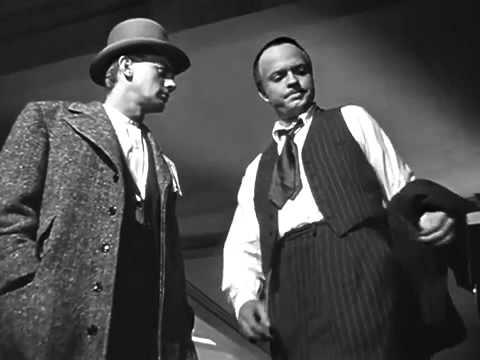
In Elaine Dundy's 1963 article "Stanley Kubrick and Dr. Strangelove" (in the book Stanley Kubrick: Interviews, edited by Gene Phillips), she discusses how being on the set of Dr. Strangelove differs from that of other contemporary studio films. She lists reasons like the "lighting--which incidentally Kubrick does himself--is simpler, what they call 'natural lighting'", the fact that the set itself has a ceiling rather than being open and lit from above, and the actors wearing "tiny concealed mikes on their persons" to avoid the use of booms.
It strikes me that all of these techniques have now become standard but she lists them as if they were unfamiliar at the time. Did Kubrick specifically invent these techniques or were they simply lesser known innovations in the big studio era that Kubrick picked up upon?
While I cannot speak to the use of lavalier mics in movies, I have some modest knowledge of lighting and scenic design, and a fascination with the movies of Orson Welles.
For all intents and purposes, the first appearance of ceilings in film was in Citizen Kane. Welles and cinematographer Gregg Toland wanted to use the low angle shot often in the film, so Toland "created" ceilings. In the case of Citizen Kane, they were cloth, and they hid the microphones behind.
So, at least in this one instance, Kubrick didn't invent the idea of ceilings in movies... though he may very well have used REAL ceilings.