In the 17th century Sweden took what is now southern Sweden from Denmark. They forced everybody to speak Swedish and while I'm sure people complained at the time, nobody cares today. When was the last time an invasion actually worked, not ending in eternal internal conflict?
EDIT: A possible other way to phrase the question is "Which is the most recent annexation that is recognized by all member of the UN?"
Can you clarify the question a bit? Taking a piece of land is not the only reason people invade. Do you mean the question in the sense of "when was the last time an invasion achieved all its intended goals" of "when was the last time a piece of land was forcefully annexed that is now uncontroversial"?
When was the last time an invasion actually worked, not ending in eternal internal conflict?
20 year rule
A possible other way to phrase the question is "Which is the most recent annexation that is recognized by all member of the UN?
20 year rule.
So ignoring the most recent stuff you run into the problem that its not always clear what counts as another country.
Goa being annexed in the the sixties by India is pretty unambigious. Sikkim in the 70s (by India again) is less clear.
Getting close to the 20 year rule we have the Bantustans in apartheid South Africa. 4 of them were recognised by South Africa (and no one else) as independent states. They were reencorperated into South Africa in 1994. In the case of Bophuthatswana somewhat violently.
Source: For the Bophuthatswana conflict Greg Marinovich and Joao Silva's The Bang-Bang Club.
Though well within the twenty years, the thing which first came to mind was the Russian taking of Crimea a couple of years ago. It remains to be seen if it will ever be "officially acknowledged" by the UN, but I don't think the Russians care. They have it, they seem to be in no hurry to give it back, the current population seems generally happy (being ethnically Russian), and nobody, for obvious reasons, seems inclined to force the issue militarily.
China's annexation of Tibet seems to be equally a fait accompli, and although the Japanese aren't too happy about the Kuril islands taken by the Soviets at the end of WW2, there seems no indication that this is going to change.
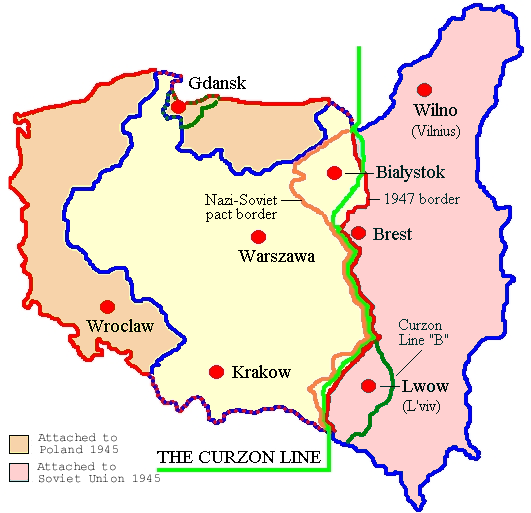
During and after World War 2, the Soviet Union permanently changed the cultural landscape of Central and Eastern Europe, by annexing parts of Germany and Poland and then evicting the local peoples.
While Poland would cede much of its eastern territory directly to the Soviet Union (territory now part of Belarus and Ukraine), eastern Germany, including the region of Prussia proper, was incorporated into Poland after the war. The linguistic change from the prewar years to the present is dramatic.
In accordance to the Potsdam Agreement, most of the Germans in territories now held by Poland were forced to leave their homes. Interestingly, many of the Poles who settled in these territories were themselves refugees who had been evicted by either the Germans or the Soviets.