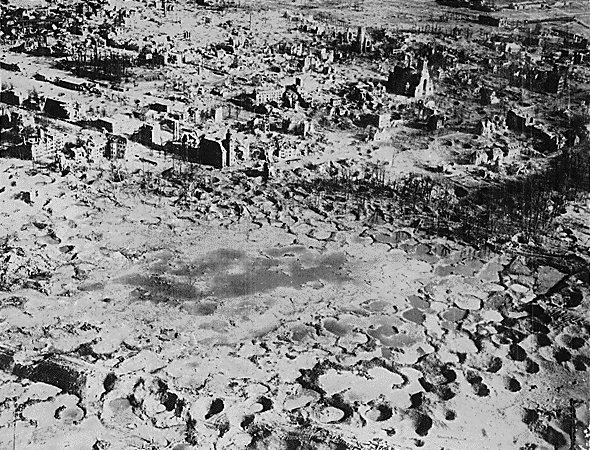
I've often heard about the importance of the U.S. in rebuilding these countries after WWII, but always have really wondered to what degree it really contributed to their recovery. It sounds reasonable, but I'm always skeptical especially when it comes to stuff like this where patriotic fervor can cloud historical fact. Thanks in advance to anyone who can help shed some light on this topic!
It was quite helpful. While it only constituted roughly 5% of the GDP of the areas in which it was rolled out, as a morale boost, it had a tremendous effect. America emerged from the war with a GDP worth about 45% of the world's. It was largely untouched by bombs (Pearl Harbor and the Aleutians aside), had immense industrial capacity that had grown ever since it began supplying the Allies in 1940, and had claimed most of the world's gold reserves through its loans to the Allied powers starting in 1914. Thus, in 1945, when Europeans could very easily see the world as having ended, America's Marshall Plan came as an amazing assurance that everyone would get through this together.
In addition, it can't be overstated how important the private sector was in post-war reconstruction. Remember, Marshall Plan aid was to be used for the purchase of American goods, since America had developed such industrial capacity during the war that by 1945&6, without the demands of Total War, America was already slipping into a recession predicated on overproduction. So the Marshall Plan was meant to be a government subsidy to domestic corporate interests in a way that would also revive a strong European standard of living (read: consumption).
Before the war, American companies such as Woolworth's and Gillette had made inroads into the European market. But after the war, domestic European companies had been displaced and disrupted, and, perhaps most importantly, social mores of who shops where for what had been destroyed by the apocalyptic struggle. So American corporations were given carte blanche to show up with mass produced consumer items, available to all levels of society. This combined with populations who were fed up with war and demanded real change, especially in terms of quality of life. American advertising also played a huge role, convincing people that cheaply manufactured American products like refrigerators were not just the playthings of the aristocracy, but readily accessible material goods that were not just luxuries, but necessities of modern life.
The Marshall Plan is laughably small when seen today ($103 Billion in 2015 USD; compare that to our previous couple wars or bailouts), but its main purpose was to jumpstart various industries and really whole economies which had been halted while the continent devoured itself in war. That said, it truly was a terrifically successful plan which benefited most people whom it affected. From the Greek farmers who got their Missouri mules to French perfume makers who had their factories rebuilt and their customer base expanded to the wider populations of Europe and America to the American manufacturers and their employees who could count on well off Europeans to buy their products, the Marshall Plan shows how a stimulus, if executed correctly, can transform and revivify a totally destroyed society.
Sources:
Paul Kennedy, Rise and Fall of the Great Powers
Victoria de Grazia, Irresistible Empire: This is where all my info on consumption came from. Sorry if that was in a different direction than you were hoping, but I've been reading this book recently and it's a truly tremendous history on how America came to occupy a commercial and cultural hegemony in the 20th and 21st century