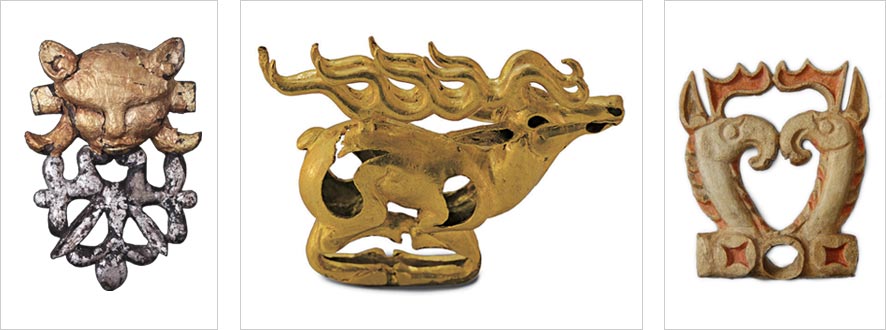
From what I understand, Central Asia (i.e. Kazakhstan, Uzbek', Tajiki', Turkmen', and Krygyst') was very different demographically, linguistically, etc. in 300 BC than it is now. Back then, they had amazing art that had a European flavor to it, and now it has largely disappeared.
Proto-Indo-Iranian culture originated in lands north of where Kazakhstan and Mongolia meet in lands somewhat close to modern-day Novosibirsk.
Many Iranian nomadic tribes lived in this steppe zone, and even in Uzbekistan, Tajikistan, but I"m not sure if ancient Kazakhstan, Krygystan, or Turkmenistan had Iranians speakers in those days. By the way, in modern-day Uzbekistan and Tajikistan, Iranian languages are still spoken there.
Anyways, I'm curious about information regarding the demographics of the people in those lands back then, and when/why/how did these people, who had European features (and even art, as you can see) get displaced.
One factor to keep in mind is that the Eastern part of the Steppe (Mongolia etc) has different climate than the western. In short, its more fertile, and, even more importantly, more conductive to creation of large political groups due to the need of bringing the herds in the western part into the relatively isolated and small mountain valleys in the winter. This, in turn, meant that politically, the eastern part of the steppe seen creation of stronger polities, and often the defeated went west, sometimes pursued by their eastern bretheren (and escaping even more west, into Europe). The demographic flow east was relatively smaller, and earlier.