Things like the PIAT, the M1 Bazooka, Panzerfaust, Panzerschreck or even the PTRS-41.
They ranged from very good to mediocre, depending on context and design. You're not giving me much to work with so I am kind of being vague. If it was really that bad, you didn't see the ordinance and weapon designs staying in service terribly long.
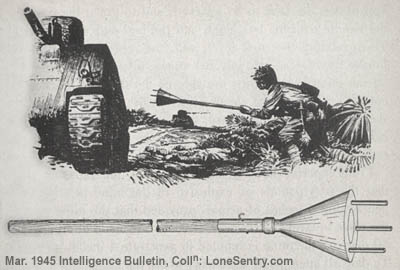
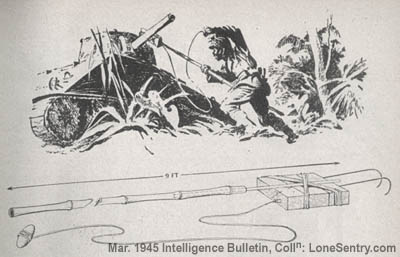
So, on the one hand, someone though that an AT Grenade that you would virtually have to physically place against the hull of a tank was a good idea. And the British had their sticky bomb that wouldn't work if it landed on a dirty surface, and had a risk factor of, instead, sticking to the user. This being relative to the Soviets who figured out fairly quickly that a simple Molotov cocktail on the engine mounting would be a bad thing for the tank crew. And the Japanese had an anti-tank "spear". Along with a door hanger. Wish I could find the diagram of the Japanese soldier trying to wedge a log in the tracks of a tank as a viable means of disabling it.
Point being, the effectiveness of an AT weapon tended to relate heavily to whether or not it could allow you to remain about 100 meters or more away. While it was, in theory, most effective to have a heavy weapon you use that removed the thickness of a tank's armor as a means of resisting the weapon, in practice there wasn't really any delivery system that accommodated these weapons. You had to get fairly close to the tank to use them.
That said, even the more successful ordinance- M1 Bazookas, Panzershrek, panzerfaust, PIAT, PTRS-41, etc- had their flaws. The entire point to AT ordinance that infantry could operate as individuals- this being relative to a field gun or an AT gun- wasn't to hunt and destroy tanks so much as the ability to avoid being completely over run. Tanks couldn't mindlessly plow through infantry positions under threat of taking a rocket to the side they had no way of knowing was there. The threat of some random hiding in a foxhole with a panzerfaust, or a group of PTRS's hiding in those ruins meant that tanks had to be far more cautious about their surroundings.
At worst, in this class of weapons you had to deal with teething issues, or the discovery that there was a cheaper way of doing it. Germans had to issue gas masks with the panzershreks in early models. Early model bazookas were unreliable. While the PIAT in theory had a critical edge in that it left no smoke trail- I've never seen a report that actually confirmed that this was a useful feature in combat- it was physically punishing to use. Panzerfaust were useful, but had limited use and once everyone knew what their maximum range was, they simply held their tanks outside that range. PTR series rifles were effective against everything the Germans were fielding short of a Tiger 1 or 2, but typically relied on finding an exposed flank on the vehicle.
As a side question, why didn't the soviet forces develop or deploy any rocket/spring shaped charge anti tank like the other major forces? They probably found plenty of bazookas panzerfausts and so why did they keep the old antitank rifles and AT grenades?