It seems to me quite weird that the cradle of civilisation now seems to be land that doesn't seem very fertile. Was wondering if my assumptions about the Fertile Crescent 7'000 years ago is correct and if so what caused its demise as an agricultural heartland?
(EDIT: slightly revised and added conclusion)
Shifting weather patterns played a part, but the Fertile Crescent was always susceptible to desertification.
The Tigris and Euphrates had wide floodplains which, like the Nile, flooded regularly, fertilizing the soil. Humans dug canals to widen the watered and fertilized area.
This, however, damaged the soil. Arid soils often have a high alkaline pH and accumulate potassium, sodium, calcium and other minerals which damage plant life in high concentrations. This is because in the absence of water, carbon will bond with oxygen to form carbonates, and then with these minerals to form cations which will actively repel water. Basically, a salty limestone crust forms which prevents water from reaching plant roots, and then encourages flash floods which leave behind little groundwater. This prevents water from breaking down the alkaline minerals and speeds the desertification process.
A properly prepared irrigation canal in an arid region can alleviate this problem, by flushing water deep below the root level to break down cations and keep a field from becoming too alkaline. Using crops adapted to the region also helps. Waves of invasion in the region killed many experts who were unable to pass on their wisdom, and the authority necessary to maintain good irrigation practices. Shallow canals, while easier to dig and maintain, speed alkali formation and desertification by leaving water close to ground level; cations below this level kill plant roots. Without plants, temperatures rose, further drying the region and making plant growth more difficult.
The desertification of the region was made much worse by deforestation upstream. This had the effect of changing rainfall patterns (forests in warmer regions release enough water to seed clouds and rainfall), making the whole area more arid. Without a sustaining web of tree roots, upstream topsoil was washed away; spring floods became more violent and gradually brought fewer nutrients to the Fertile Crescent.
To sum up: This land was always arid, although local conditions around the floodplains were very hospitable. The floodplains became less hospitable as irrigation damaged the floodplains, and upstream deforestation reduced their extent and fertility. This encouraged a vicious cycle that increased the aridity and temperature of the region, reducing its overall fertility and especially that of the floodplains.
Sources: This paper gets into more of the chemistry involved.
If you're up for a recent, broad overview of the natural and human dynamics involved in desertification (and reversing it), look at Desertification, Land Degradation and Sustainability by Anton Imeson.
I'm going to commit the cardinal sin of suggesting Jared Diamond's work as a simple explanation of the human processes involved.
I would gladly defer to a specialist on the region for recommendations on the specifics of desertification in Mesopotamia.
Thank you for asking this! My PhD thesis is on prehistoric ecological change in the eastern Levant, so I could talk about this all day, but since you've already got two good answers and I've already spent too much time replying to them, I'll have to try and keep this short. (Try.)
The Fertile Crescent
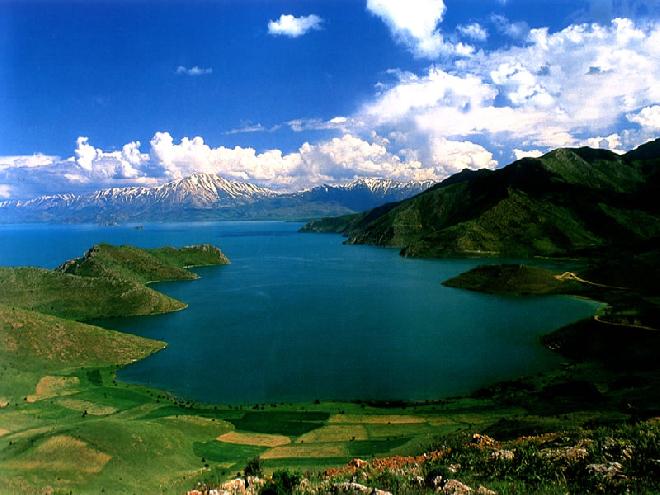
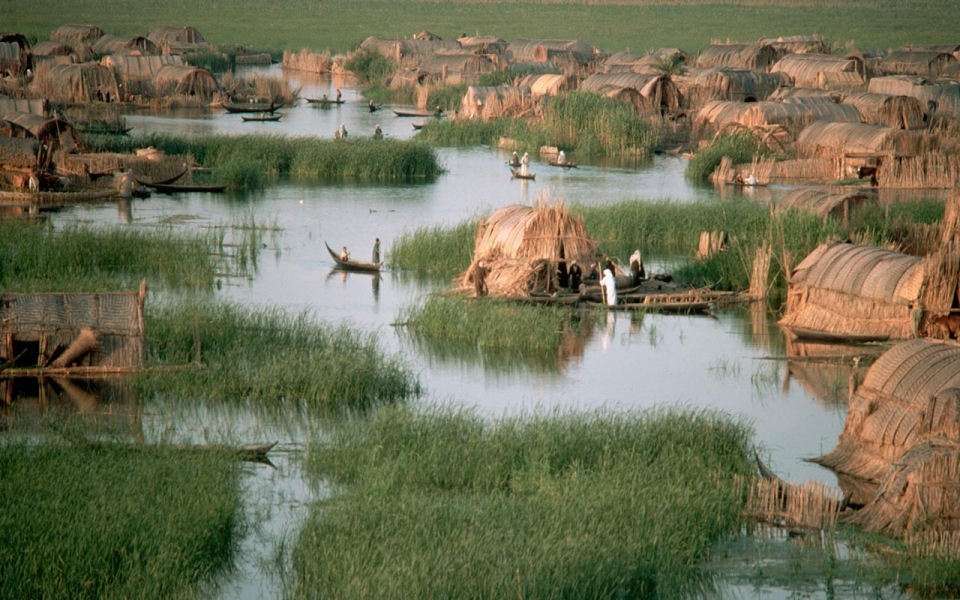
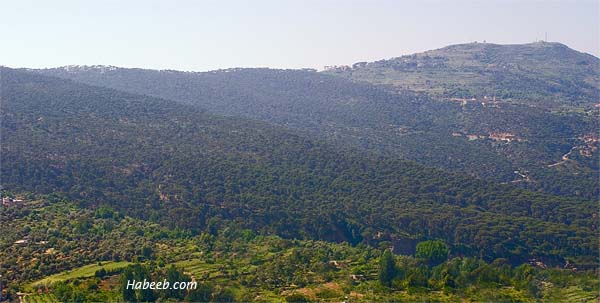
The first thing to consider is that the Middle East is huge and very geographically diverse. Our image of it in the West tends to be fixated on the desert. And a lot of it is desert. There are scrubby deserts, weird rocky deserts, and proper sandy deserts. But there are also snowy mountains in Iran, lakes in Turkey, marshes in Iraq and forests in Lebanon.
The "Fertile Crescent" is a not-very-precise term for the region where archaeologists have found the remains of the oldest urban societies; the "cradle of civilisation". Something like the area shaded green on this map. It basically straddles two geographical zones: the Mediterranean coast of the Levant, and the floodplains of the Tigris and Euphrates (Mesopotamia). Some people also extend it to include the Nile/Egypt. These two regions are "fertile" in the context of the generally arid Middle East: the Levant gets a steady stream of rain from the Mediterranean, enough to support rainfed agriculture; the Tigris-Euphrates used to flood annually in prehistory, depositing fertile sediment (like the Nile in Egypt), and could also be used for irrigation (as they are today).
But there are also two other "fertile" zones. The orangey area on that map is what archaeologists call the "hilly flanks" – upland areas hugging the edge of the Fertile Crescent. In some ways they're the true cradle of civilisation: they're where the ancestors of the first city-dwellers domesticated the first crops (wheat, barley, lentils, etc.) and livestock (sheep, goat, cattle) and began to settle down in one place. Without that initial step, urban states wouldn't have been possible, and again it happened in the Middle East before anywhere else in the world. The yellow area is an "inner crescent", where the fertile zone grades into desert. It's an area of shrubland and grassland (steppe) which prehistoric people found ideal for grazing animals after they domesticated them, and which became the core region of the pastoral societies existing on the fringes of, and occasionally invading and toppling, the civilised urban states. The rest of the area inside the crescent is true, uninhabitable desert.
So the simple answer to your question becomes: the Fertile Crescent isn't a desert. That or it always was. If we're being strict about it, the "Fertile Crescent" is the bits of the Middle East that aren't desert, and they still aren't desert. But clearly whatever definition you use there is quite a lot of desert in the equation. The Tigris and Euphrates are essentially a ribbon of green cutting through the Arabian desert. That precious rain from the Mediterranean dribbles to nothing a 100 km or so from the coast. These regions are like islands in a sea: the Tigris-Euphrates, the Mediterranean coast, the highlands, the steppe. They're places people can make a living amongst an otherwise unhabitable. So the environmental history of the Middle East is not a story of a fertile land becoming desert. Most of it is desert and it always has been. What has changed is how big those "islands" are: how far the Mediterranean rain gets, how big the floodplains are.
Climate change
The most obvious cause of these fluctuations is the climate, which has changed significantly over the past 25,000 years. In the Ice Age the whole region was much colder and wetter. The Mediterranean rains got much further inland and the Tigris-Euphrates flooded a much larger area. As a result the highlands were mostly wooded, and the nice lush coastal zone was much wider, as was the slightly drier steppe beyond that. The desert was restricted to the very dry interior of the Arabian peninsula. Early agriculture in the region, which began towards the end of the Ice Age, therefore wasn't particularly restricted to the Fertile Crescent. In fact, it seems that the some of the most productive areas where those on the periphery: the highland "hilly flanks" and the steppe. And people didn't find marshy, flood-prone Mesopotamia very attractive at all.
Paradoxically, it seems that declining productivity is what brought about "civilisation". Although people dabbled in agriculture for a long time beforehand, it wasn't until the end of the Ice Age when they got serious about this settling down and growing things business, and it seems to have coincided with a short but acute arid period known as the Younger Dryas event. For a thousand years or so the islands of fertility shrunk dramatically, and the hotter, drier and generally climate forced people to fall back on foods they previously wouldn't have bothered with—like weedy little cereals that take hours or grinding and baking before they're edible—and invest more in ensuring they had a stable food supply by, for instance, attempting to capture and herd animals rather than simply hunting them.
After the Ice Age ended, the region became hotter and drier for good – but not straight away. The period between 10,000 and 7,000 years ago was actually the wettest time in the last 25,000 years. Having become quite attached to growing weedy little cereals and babysitting goats, people didn't go back to the way it was before, though. They stuck with farming and found that the hard work paid off, with higher populations and food surpluses that allowed people to specialise in certain tasks and crafts, rather than having everyone spend all their time hunting and gathering. Again, in this period there wasn't much of a Fertile Crescent – the islands of fertility were big and broad, and people still didn't bother with Mesopotamia.
The period when people colonised the Tigris-Euphrates floodplains and began living in cities – became "civilised" in the classical sense – was again associated with a climatic downturn. The wet period at the end of the Ice Age was followed by another rapid and intense aridification event like the Younger Dryas (the 5.9 ka event). This seems to have pushed people to finally roll up their sleeves and start trying to make something out of the marshy black mud the two rivers dumped on their banks every year. And what they made was not just mudbrick houses, but complex irrigated agriculture, cities, monumental architecture, writing, and institutionalised social inequality. This is the period when the "Fertile Crescent" comes into its own. The islands of fertility were shrinking, and as a result the Mediterranean coastal strip and, in particular, the land of the two rivers became places of extraordinary agricultural productivity and population density.
Unfortunately, they didn't get a reprieve from the deteriorating climate after their eureka moment. The region has continued to get hotter and drier over the past six thousand years. As a result, the Mediterranean coastal zone and the floodplains have both shrunk dramatically, the steppe has all but disappeared, and the highlands have dried out and lost most of their woodlands. It's all still there – there's still a Fertile Crescent – but all significantly reduced in size. Whether the steadily more arid climate, or later fluctuations similar to the Younger Dryas or the 5.9 ka event, affected the history of the societies that experienced them I won't comment on. For one thing it's going way out of my area as a prehistorian, and for another climatic/ecological explanations of social change are much less popular in the historical periods – as they should be, considering we're dealing with much more complex societies with a much less straightforward relationship to their environment and ecology than in prehistory.
[continued...]
To add to /u/Prufrock451's reply, the spread of grazing animals -- particularly sheep and goats -- has been both linked to desertification and denied as a cause of desertification. In fact, this has led to some really heated arguments between development NGOs because of their different strategies.
Overall, I'd recommend the Food and Agriculture Organization's desertification primer for a simple answer as to why areas become desert.
Let's start at the beginning, however. Imagine a forested woodland, whether a rain forest or an alpine stand of trees. If a logger comes through and clears the trees, you're left with low brush or grasslands. This type of terrain might be acceptable for agriculture and farming like Prufrock mentioned, but in arid or semi-arid land, particularly without irrigation, it's more likely to be used as grazing territory.
As the number of animals in a particular grazing area grows, so does the danger that the area will be overgrazed. Some animals, because of their eating habits, are more prone to making an area overgrazed. An animal that simply crops grass, eating the top half of a leaf, is much less harmful to the grassland than one that pulls the grass up by the roots.
As the Food and Agriculture Organization states: "Overgrazing is categorically blamed for worldwide desertification, which is partly true and partly false, depending on the situation. ... Stocking rates and managerial systems that result in continual destructive grazing are a major cause of desertification on rangelands. The desertification process is accelerated when these practices are maintained during droughts and certain seasons where plants are highly vulnerable to abuse."
The poorer a society, the more likely it is to overgraze. A rancher or farmer wants to feed his or her family, after all, and long-term consequences are a sideshow when the alternative is immediate starvation.
This is why non-governmental organizations have fought so bitterly over goats. Farm Africa, in one example, has made a big deal about sending goats to impoverished regions as a means of economic uplift. Goats provide milk, wool and meat, and these products can be sold to generate income or simply used for personal subsistence. Organizations like the World Land Trust have opposed the distribution of goats in places where they're likely to cause environmental harm. That's because they believe that in the long term, that environmental harm will leave a region in worse economic condition than it was before.
Hiya, folks.
This thread's currently seeing an enormous number of poor, brief, speculative, or otherwise no-no comments. Citing your year 9 agriculture textbook really isn't on, either.
That being said, in a rare twist, nobody yet has asked about all the deleted comments - but that's probably because we've been slow off the mark and haven't removed nearly enough of them yet!
Please, before you attempt answer the question, keep in mind our rules concerning in-depth and comprehensive responses. Answers that don't meet the standards we ask for will be put out to pasture.
Finally, it's to the OP to further derail this thread with off topic conversation, so if anyone has further questions or concerns, please direct them to modmail, or a META thread.
Thank you!
Follow up question (sort of, please delete if inappropriate):
I've heard that the Mongols also had something to do with this?
Something about a dumbass ruler pissing off Genghis Khan, who then went medieval on the place, the resulting fires destroying vegetation and hastening erosion of the soil on a large scale.
Is there any truth to that, or is it just a myth?