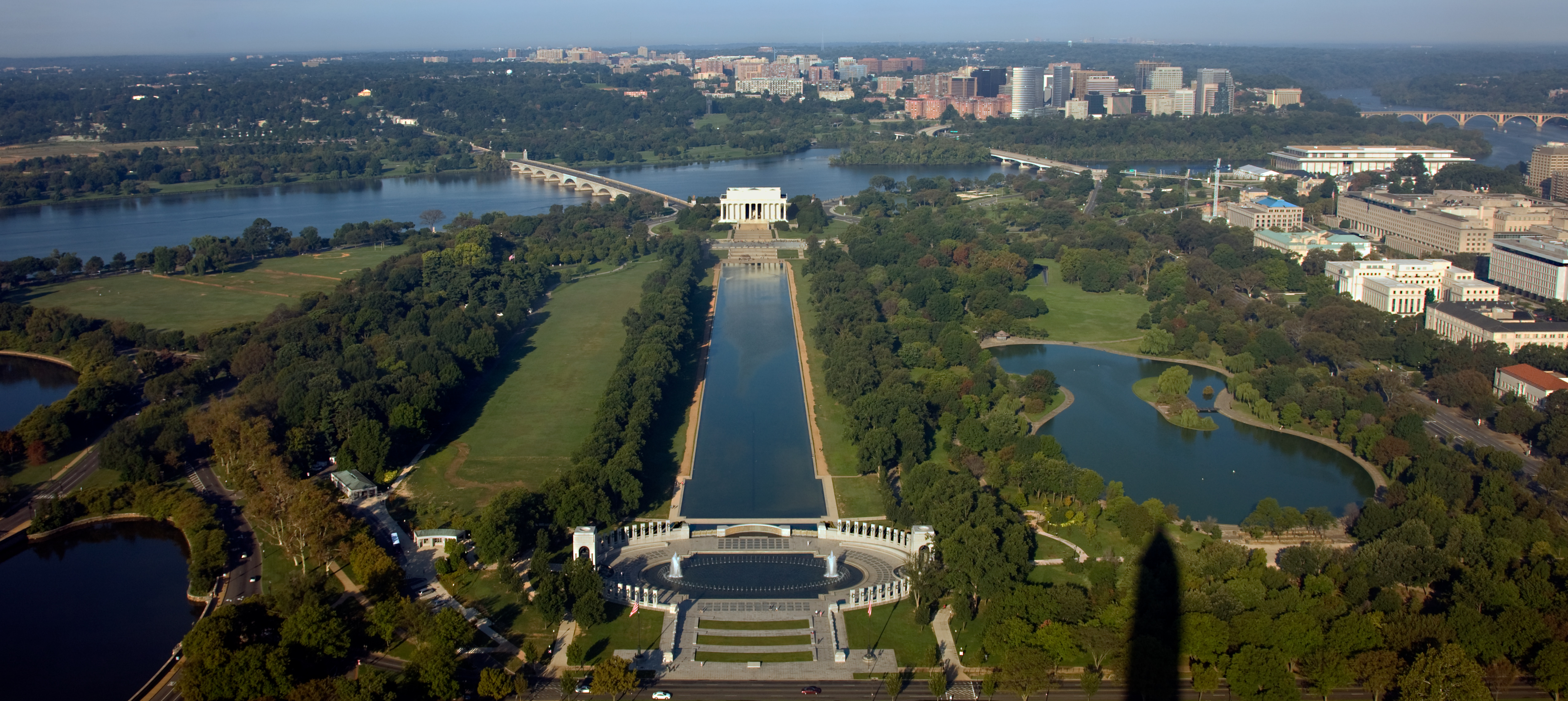
After visiting Washington for the first time this week I was amazed at just how well laid out the National Mall and how the various buildings and monuments related to each other.
This of course got me wondering about how it evolved - I'd be surprised if it were just convenient open space between the Capitol buildings and where the Washington monument ended up being.
I'd be interested to know when the Mall itself begin to take shape? What was there before and who were the key players that drove it's transformation?
First off, Im glad you enjoyed our fair city!
I wouldn't trade living here for anywhere else, though the cost of living is a bitch to be sure.
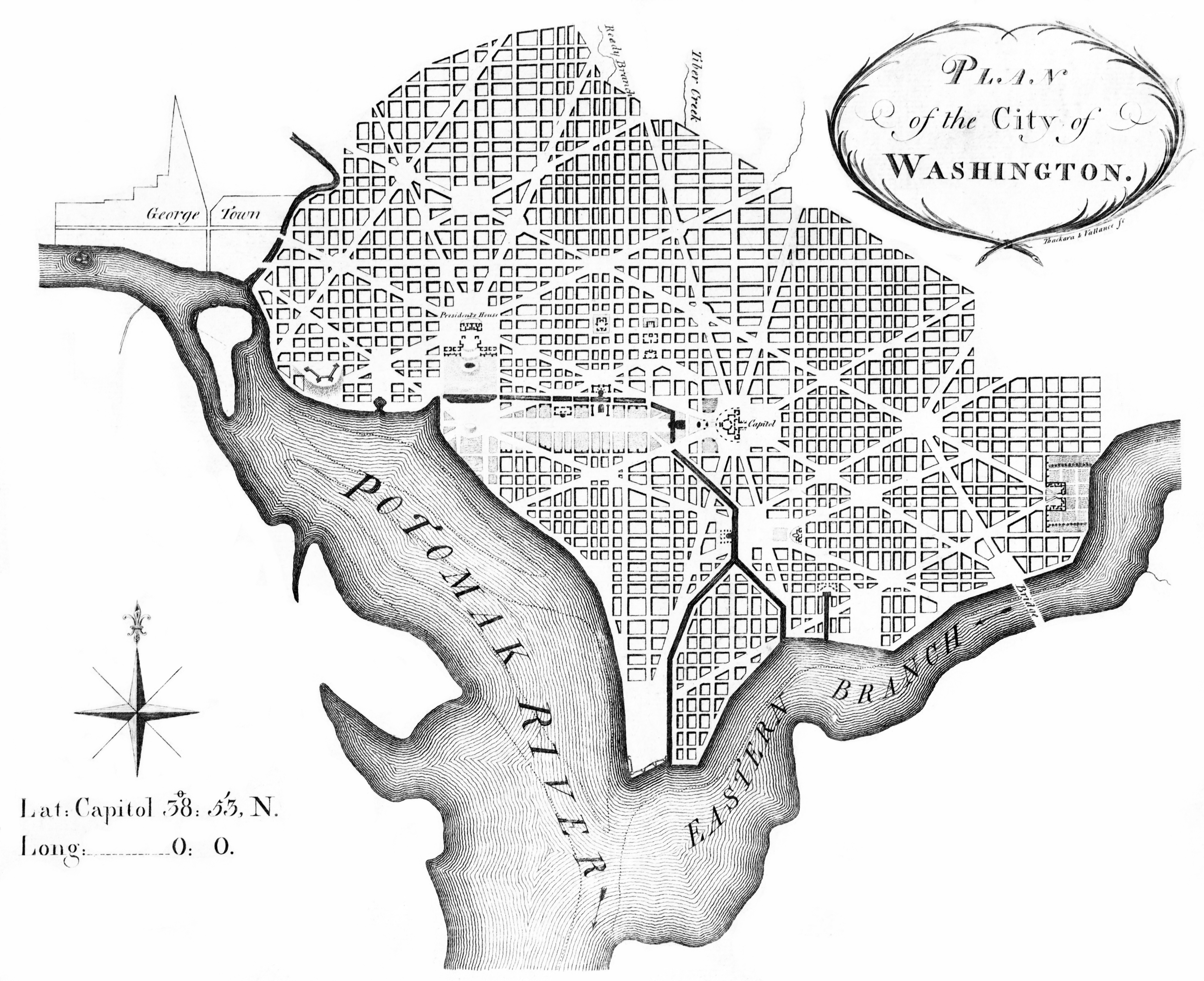
While I cant really speak to its origin, I can speak to a time when it was not always open space. Though as I understand it, between the swampy nature of the areas bordering the river, and L'Enfant's flair he always intended for the National Mall to be an open focal point, evidenced by this depiction of his street plan, you can see here that what would become West Potomac Park, and East Potomac Park (Jefferson Memorial) had yet to be reclaimed.
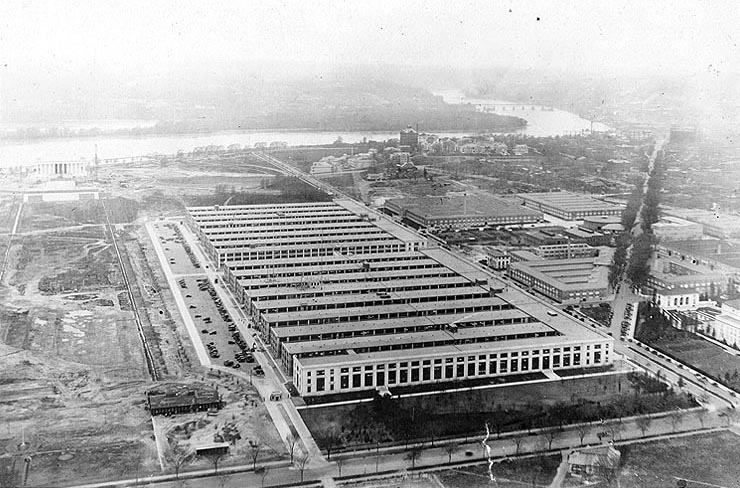
In 1917 the need for expanded office space for the Department of War, and the Department of the Navy was deeply felt. The limited federal office space and the Old Executive Building just were not cutting it as the US prepared to enter its first truly global conflict. So then Assistant Secretary of the Navy, Franklin Delano Roosevelt, suggested to Woodrow Wilson that a new series of temporary buildings be approved. The location then, after considering in front of the Capitol, and the Ellipse were rejected, was along Constitution Ave, where the Vietnam Memorial and Constitution Gardens sit today.
Truly hideous constructions of concrete and asbestos were thus quickly raised, and they became "Main Navy" and "The Munitions Building" sterile, barren, and monotone, the buildings served as the headquarters for the Armed forces for over 20 years. Only the once again expanding needs of WW2 spurred the construction of the Pentagon and the move across the river for the new DoD. Finally showing their age, the buildings were torn down under Nixon in the late 60's.