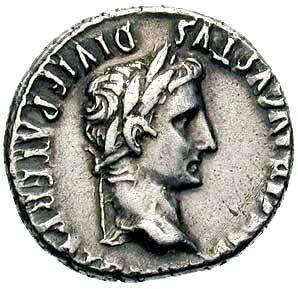
From around the 10th to let's say, the early fifteenth century, how likely would it be for peasants from various Middle Ages countries to recognize their monarchs?
I can speak more to the ancient period than the medieval period, but in the Roman Empire from the times of Augustus up until Constantine, emperors had portraits on coins which were mostly physiognomically accurate. Here are some other numismatic portraits, like Nero and Hadrian, which give a pretty good idea what the men would have looked like in real life. So to the extent which coins proliferated the empire, people would have had some idea what the emperor looked like. There were also sculptures of the emperor throughout the empire, located in private homes and sites of the imperial cult, though the farther away you got from Rome the more likely it was for artists to deviate from the set image of the emperor. Constantine, however, promoted a very stylized image which gives less indication as to what he actually looked like, and emperors succeeding him did the same. In medieval England, kings also used stylized portraits like this portrait of Henry III, so the population likely had little idea what the king actually looked like. However, his regalia would probably have made him instantly recognizable, even if the peasants didn't know his face.
You might be interested in my comment in this previous thread! Not completely applicable but along similar lines.