Was it because new advances in sewing lead to the ability to make these dresses, causing them to be the new style of high status, or was there more to it? There is such a rapid jump between the more "normal" styles in the early 1800s and then a sudden shift to these very elaborate dresses - did these dresses exist before that point, or did they become popular because they were a new invention? Likewise, how did they come out of fashion? Simply because they were really too cumbersome or because something else (more advanced sewing techniques?) come to be the new popular style?
I'm assuming that by "poofy dresses" you mean the style of the era of the hoop skirt and bustle, ie the mid-1850s through mid-1880s? If I'm wrong, please let me know and I'll answer more appropriately.
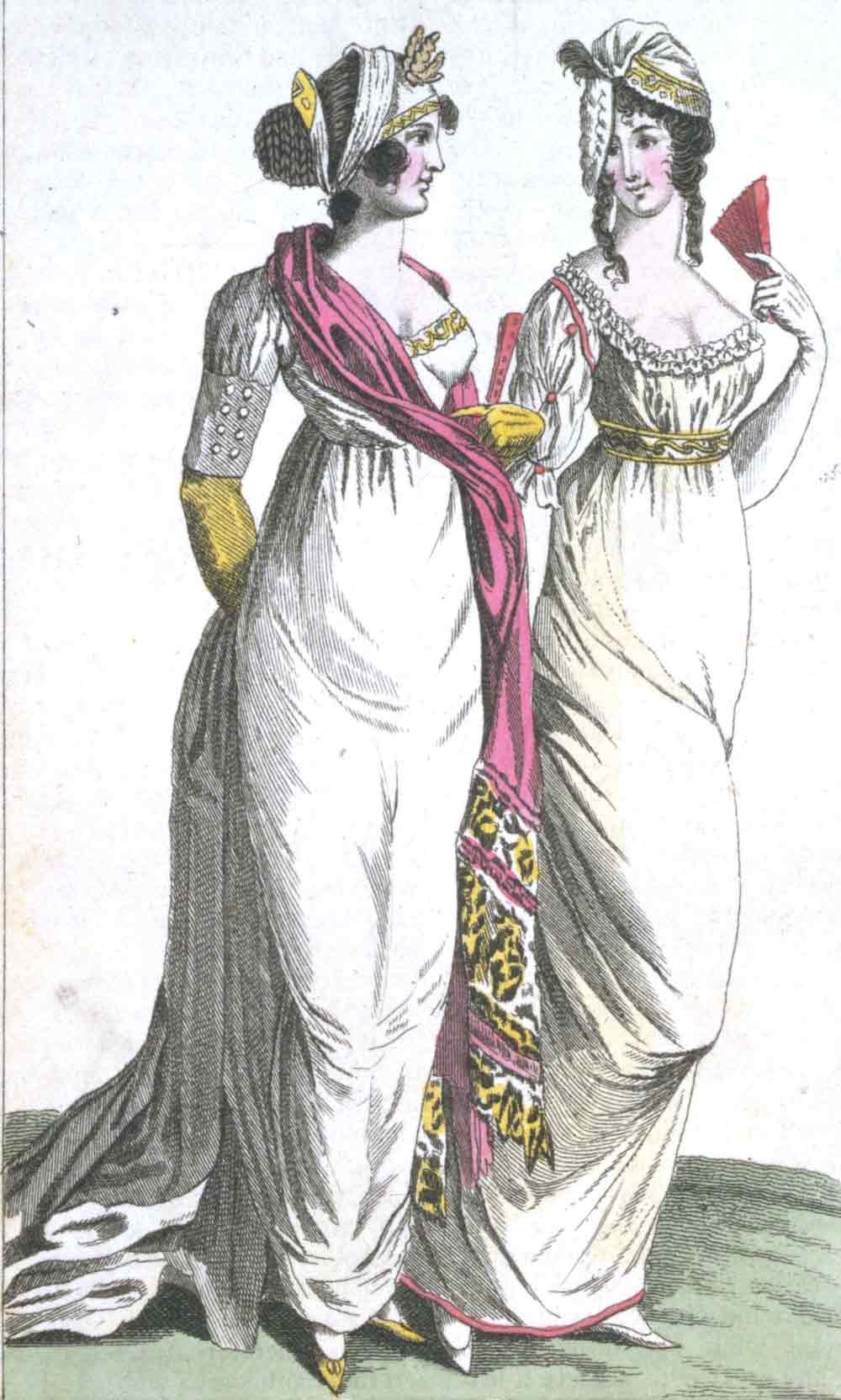
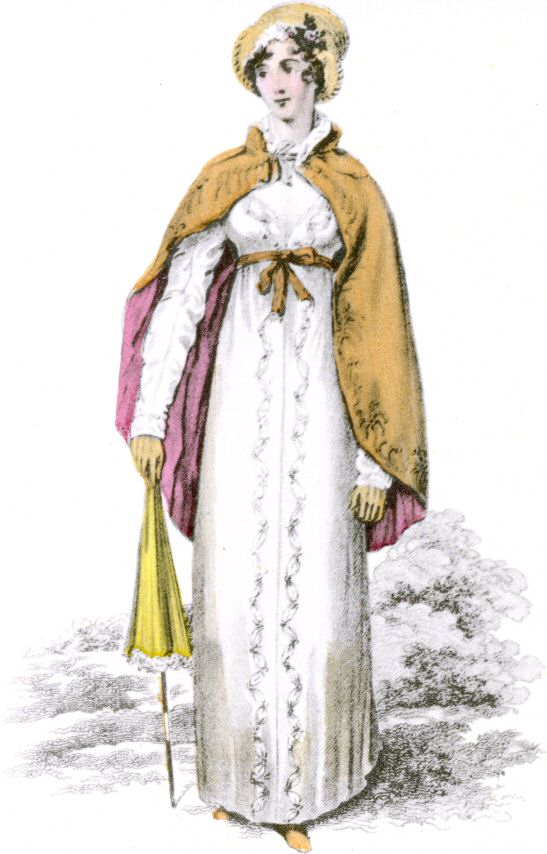
The lead-up to this new fashion happened by degrees. While it seems sudden if you compare 1802 to 1862, that's quite a span of time! By 1815, the puffed sleeve was universally fashionable and the skirt stood out from the legs at the bottom; the waistline dropped to the natural level by around 1824, which led to greater importance for the full sleeves and skirt, as they provided a contrast that visually shrank the waist. By 1829, these qualities had increased dramatically (though it had happened by degree over the course of the half-decade). In the early 1830s, the sleeve retained fullness but came off of the shoulder, while the skirt, which had previously had a somewhat conical shape, took on more of a spring from the waist. While the sleeve lost this fullness later in the decade, the skirt retained its bell-like shape. Through the 1840s and early 1850s, it stayed at roughly the same size, there being only so much that layers of ordinary petticoats can do.
However, this changed in 1856. While people had been experimenting with ways to increase the silhouette of a woman's skirt (and fashion had taken to tiers of ruffles worn on the gown, as their light edges would float up and create the illusion of a fuller skirt), that was the year of the first patent for a petticoat which was held out with metal or wooden hoops. This allowed the skirt hem's circumference to increase, and then provoked a subtle change to a more conical shape that was not possible at that width without a structure like the hoop beneath it. Where those tiered ruffles attempted to hide the limitations of the petticoats, skirts worn over the new elliptical hoop were generally very plain, accentuating the artificial form.
Fashions changed at similar rate during the "poofy" period, with the hoop shrinking, adding padding at the top back, turning into the bustle, dropping out for a period (1876-1882) known as the "Natural Form" era, and returning as a subtly different bustle. It left fashion gradually, with back fullness remaining in women's dress for several years, provided by the cut of the skirt and a smaller, abbreviated form of the bustle. There's no specific and definite reason we can give for why it was phased out - fashion requires change to force consumers to update their wardrobes, but if the couturiers of Paris had decided to go bigger, everyone else likely would have followed. However, the growing popularity of the Art Nouveau style, which emphasized sinuous, flowing, organic lines, had an effect on fashion - by the early 1900s, many aspects of women's dress fit right in with the aesthetic.
Early 1800's fashion was really an anomaly rather than the norm. The shift towards larger dresses took about 40-50 years (here we have 1790's, 1800's, 1810's, 1820's, finally 1830's), so not exactly sudden by modern standards. Dresses for wealthy women have been rather large since the 1500's. The basic shape might have changed (there were giant barrel shaped farthingale of the 16-17th century and the extremely wide side but flat front and back of the mid-1700's).
In the 1830's dresses often have multiple stiff petticoats under them to give the correct shape. In the early 1840's the cage crinoline was reintroduced (this was not the first time hoop skirts were worn, in the 1600's farthingales of a different shape but with the same mechanism were used) and in the 1850's multiple patents for steel hoop skirts were filed. Because they were much more lightweight than stiff petticoats skirts were able to grow much larger.
Note that the largest dresses, whether from 17th, 18th, or 19th century, only peaked very briefly in civilian life before subsiding to a less extreme form. Large court dresses stay in longer but they still get smaller a few years after the peak of the fashion. By late 1860's skirts began to shift most of the volume towards the back and by 1870's the bustle have replaced the crinoline.