Follow up question, when did drawing him as Caucasian (or any other race) become popular?
First, if you want a very rough sense of what men in Jesus's neck of the woods looked like, you might look at the Synagogue at Dura-Europos That building and its decoration are important for showing a Jewish precedent for Christian art, as well.
Now, on to your question about the long-haired/bearded Jesus. As others have observed, there are a million different context-specific depictions of Christ--as art historian David Morgan remarks, images of Jesus are more about what we believe Jesus to be like, rather than how he looked. They are interpretative and theological, not "photographic."
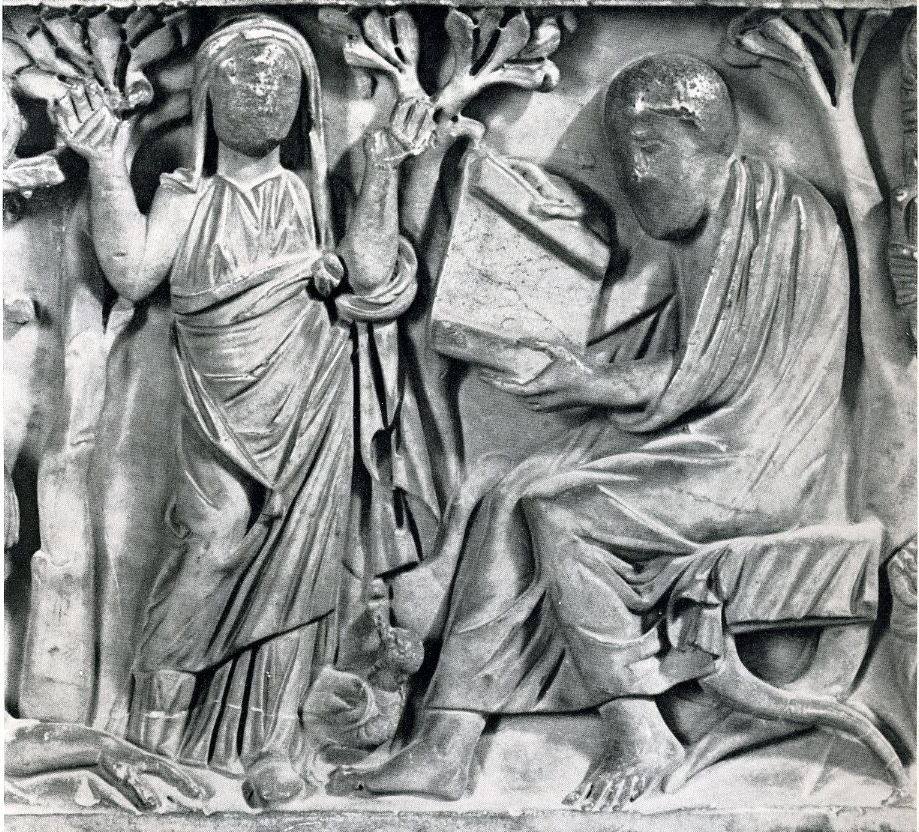
The idea of showing Jesus as a Caucasian man with long hair and a beard comes from two associations people had with Jesus during the 2nd and 3rd centuries in the Roman Empire (both East and West). Christians before this did not depict Jesus as regularly as you might anticipate: the most common figure was Jonah (associated with salvation, the main purpose of the early Christian faith). The first images of Jesus we have portray him as a vehicle of salvation (the Good Shepherd) and philosopher (and here) . Roman philosophers were sometimes portrayed with a beard and long hair, particularly, Stoics and Cynics). The long hair and beard were associated with a philosophical indifference to worldly gain and luxury, and carried associations with Greekness (Greeks being the archetypal philosophers). At the same time, many Roman gods (see Jupiter) were already portrayed with long hair and beards, something that according to Matthews almost certainly influenced Jesus iconography (a way of making him consistent with the visualization of the divine in Rome). Also, long hair sometimes appears on images of a youthful Jesus as "the Good Shepherd" (this was the most popular image of Jesus in the earliest portrayals of him from the 200s and 300s). The long hair would suggest youthfulness and rusticity, adding to the main theological point of Good Shepherd iconography: Jesus forgives you, rather than condemning you for your sins. The idea of forgiveness was really important for the Christians' hope in salvation (see Picturing the Bible on this).
Later depictions build from this tradition. The earliest Christians made art in tombs (the famous catacombs in Rome, for example) and particularly after Constantine the image of Christ expanded in importance, grandeur, and number. Christ became a kind of Jupiter, ruling the universe from a throne. Over time, this Roman iconography became one of the enduring traditions for showing Jesus in art. Note that it has no basis in showing the appearance of the historical Jesus, but rather in showing Jesus as a kind, forgiving man, a philosopher, and later a Roman god. In other words, the artwork is more symbolic than "realistic" in a photographic sense.
Mathews, Thomas F. The Clash of Gods: A Reinterpretation of Early Christian Art. Princeton, N.J: Princeton University Press, 1993. Print.
Morgan, David. "The Likeness of Jesus." http://divinity.uchicago.edu/sightings/likeness-jesus-david-morgan
Spier, Jeffrey. Picturing the Bible: The Earliest Christian Art. New Haven: Yale University Press, 2007. Print.
EDIT: words/grammar; added the bit about Roman gods have long hair
Follow up: is it true the face commonly used for depicting Jesus (long blonde hair, red cheeks, handsome face) was the face of Cesare Borgia?