Hollywood likes to picture gladiators, Greek soldiers and Roman legionaires with elborate armored belts with apron-like tassets. Example
My question is, were these kinds of belts actually used to this degree? Or were they status symbols for higher officers? Are these kind of belts known in other cultures?
They are more properly called pteruges, and Hollywood got them (indirectly) from actual depictions of Roman (and Greek) soldiers wearing them. The version Maximus is sporting is unusual -- they are usually in at least one row, and often two or three rows deep. Example. Their origin is actually Greek, from the end of the 5th century, though I'm having trouble finding a good image as example.
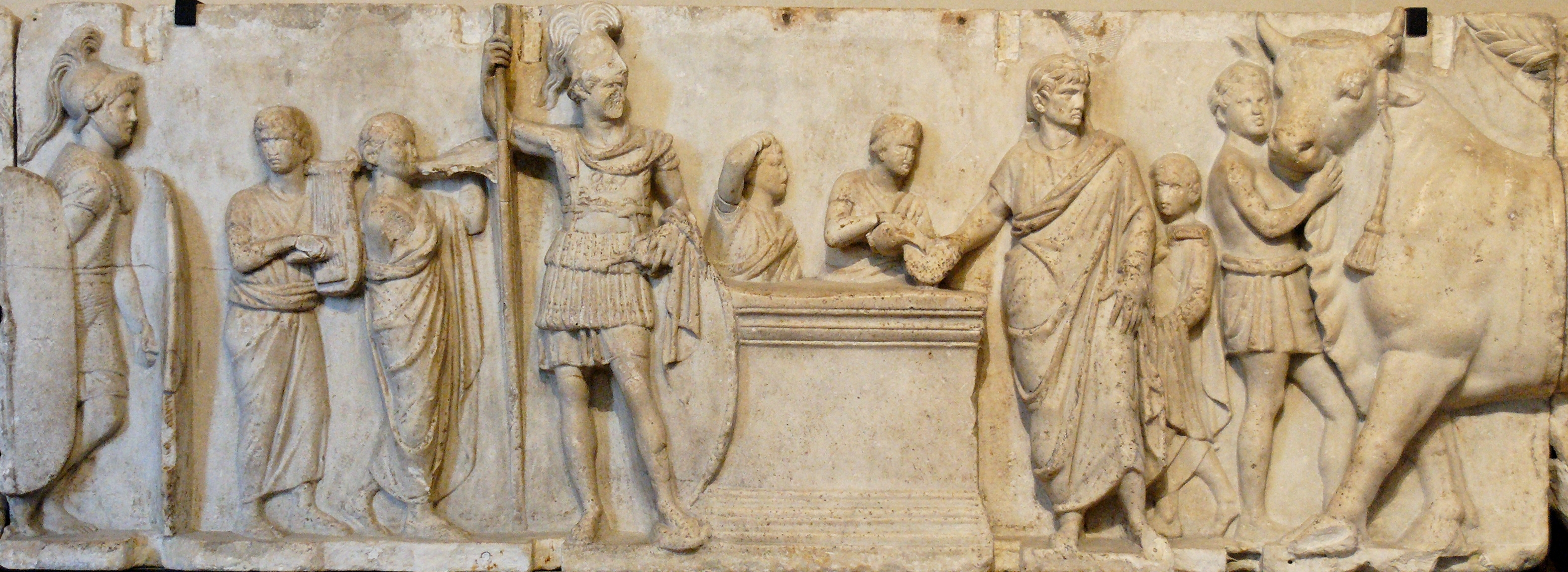
The prevailing argument is that the pteruges were the mark of a certain distinction or rank, and that the regular soldiers did not wear them. The famous Altar of Domitius Ahenobarbus (ca.100 BCE) seems to suggest this. On the right of one of the scenes, three soldiers are depicted in mail shirts and without pterguges, including the guy on the far right who might be a cavalry trooper. Further left, another soldier stands next to an altar, and he clearly has a double-row of pteruges paired with a short cuirass. It has been suggested that he is supposed to be a tribune of the soldiers, or perhaps a legatus.
With the advent of the Imperial period, things get more complicated. Just around the turn of the millennium, the lorica segmentata really starts to become popular in the legions. On Trajan's column and the base of the column of Antoninus Pius, soldiers in the lorica segmentata appear without the pteruges. Many of them, however, appear to wear the cingulum or balteus belt, which sometimes had features like the "tassets" in your picture of Maximus from the movie. By the time we get to the column of Marcus Aurelius, pteruges with the lorica segmentata seems pretty standard. It is probably the case that the rank distinction associated with pteruges became blurred as equipage style changed in the Principate (though I'm definitely not an expert on this).
Of the examples on sculpture, the really fine ones can be examined up close and it seems that the pteruges are depicted to be made of linen or cloth (not leather). They often have stitching along the edges and the bottoms are fringed.

TravisLeeClark_MuseiCapitolini_loricatacapitdeta.jpg)