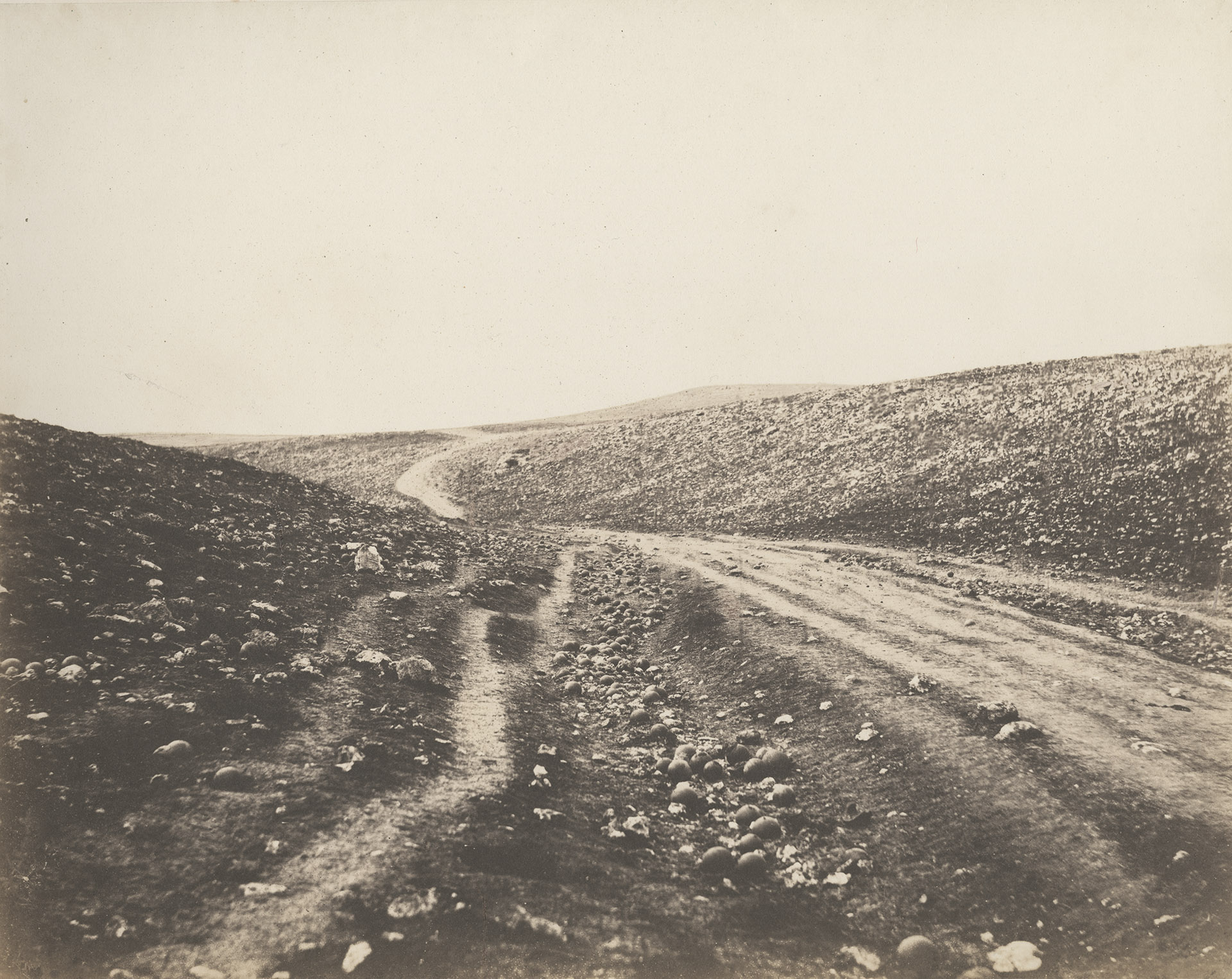
If so would armies send crews to go looking for cannonballs after a battle?
Occasionally, but typically under only specific circumstances.
In the first centuries after the development of the cannon, stone shot was used in most cases. Stone is frangible; it tends to shatter upon impact, and even if a stone cannonball did not shatter, it was easily converted to peaceful use as building material. Both of these factors tended to work against the recovery and re-use of stone cannonballs. During excavations at Edinburgh Castle between 1988 and 1991 archaeologists discovered a handful of never-fired stone cannonballs and fragments from rounds that had clearly been used and shattered.
The use of iron shot began to take off in the 16th century and by the 17th century, they were almost ubiquitous. The issue here, as with stone, is that poor-quality iron (endemic in this period) is brittle and will shatter upon impact just as stone will. Given that cannon shot were designed to be destroyed, they were typically constructed of the cheapest iron possible, which increased the likelihood that they would fracture or deform.
Now, allow me to divert you into the question of why and when solid shot would be recovered. Solid cannon shot, whether iron or stone, tends to be extraordinarily heavy for its size and is difficult to handle because of its shape. You have to have a reason to go through the effort of recovering a particular solid shot. It is much easier to get new shot from your logistical train than to go through the effort of recovering shot. Large-scale shot recovery only makes sense if your own supplies are limited.
You might need a block and tackle setup to lift the shot. You'll need wagons and horses to carry the shot away. All this is expensive in both time and labor, which means you typically see shot recovery take place only where large concentrations of artillery have fought in a confined area. The effort of mustering a shot-recovery detail is offset by the ability to collect large amounts of shot.
Remember, too, that you have to cope with matching the shot's caliber ─ something not always easy if both sides in a battle aren't using compatible ammunition.
So to recap: In order for shot-recovery to be feasible, you need to have a shortage of ammunition that forces you to recover shot. You need to have the manpower to be able to recover the shot. You need to be fighting between approximately 1500 and 1870. You need to be at a place where large amounts of artillery were used in a confined area.
This checklist limits how often cannon shot was reused, but it did happen time and again. Stephen Bull, in his book The Furie of the Ordnance about artillery in the English civil wars, writes, "It is likely that the largest number (of 17th century cannon shot) were picked up and reused, or scrapped, within a relatively short period of the time they were fired or lost. Shot are recorded as having been removed from many of the major battlefields, notably Marston Moor and Naesby, over a very long period of time."
Mark Thomson's book, Wellington's Engineers about military engineering during the Peninsular War, references an account from Alexander Dickson: "the soldiers were offered a bounty for every roundshot they could recover for re-use and so as not to discourage them, even roundshot of calibres which were of no use were paid for."
During the Crimean War, when vast amounts of artillery were leveled against the Russian defenders along the Black Sea, the practice of round shot recovery was captured on camera, with the cannonballs in the ditch having been rolled down a hill by soldiers seeking to collect them.
Finally, during the American Civil War, the logistically-strapped Confederacy's quartermaster department mined the Seven Days battlefields for almost a year afterward, recovering supplies and spent cannon shot to be used in the war effort. At isolated places like Ship Island, in Texas, and elsewhere, Confederate artillerymen recovered Union-fired round shot in order to keep their guns fed.
The development of exploding shot and artillery shells brought an end to the era of recovering round shot. Even by the time of the American Civil War, round shot was on the way out of circulation.
I am amazed I have something to contribute for this very specific question, but it was only for one specific circumstance. And I apologize because in order to get the exact quote I will need to interlibrary loan a diary /memoir that is held at Rice University that I took notes from some 20 years ago. And since these were handwritten notes -- long before I was digitizing things -- I don't know the woman's name from memory. Hopefully in describing this particular memoir -- because it's story was so unique -- perhaps one of my fellow colonialists will recognize the woman's name in question and I can find the original source again.
At Rice when I was doing research on southern beliefs I came across a rather remarkable journal / memoir of a woman who had been a refugee after the Revolutionary War. She and her husband were Tories, he was a doctor, and they would eventually after the war flee to Jamaica. (Again I hope this will trigger some memories in any of my colleagues to help me dredge up a name -- this woman's story was so fascinating that years later it stays with me.)
Anyway, in discussing the events that led to their abandoning the British North American colonies, she described how she and her husband were present during a siege of a southern city. And again, I apologize, I do not recall which city, though it may have been Yorktown.
What was remarkable in her narrative was something she mentioned in passing that -- and it struck me to this day -- an event I hadn't even thought about happening. She described how the streets were part sand in places and how they had been bombarded by the Patriots. And she described how young black children would run into the streets -- while bombardment was still happening -- to cover cannonballs that had landed but not broken into pieces with sand. She then described the children digging these up later and selling them back to soldiers on her side -- Tories.
As I had never run across a story even similar to this, even though it had nothing to do with the research I was doing, it struck me as so singular -- I hadn't even thought about the idea that someone would try to recovered shot solid cannonballs, much less the idea of children "selling" them -- it stuck in my memory. (I also wondered if how she reported the events were quite accurate, as her perception of what the children were doing -- or the fact that they were enterprising versus if they were somehow being coerced into doing so -- but obviously when you only have a single source you have no way to know that.)
I always meant to go back and re-read this diary, so I have to thank you for your question for triggering this distant memory. And reading The Alaskan's excellent post, above (I am no expert with military pieces, I just happened to have read a firsthand account of the practice by a civilian bystander in my research along the way) it appears the account from the journal I had read matches the circumstances under which he noted that recovery might have occurred.
I did a causal search of the Fondren Library holdings electronic catalog just now without success to try and see if I could identify the source. I will call them this week and see if they can help me trace it down. If any of my colleagues knows the source I am talking about please chime in, it was a pretty unique set of circumstances, so I would have a hard time believing we may not be able to identify the specific name and hopefully in a week or two I might get the source back in my possession so I can pull the original quote. (I will warn that some of the language in the original quote in reference to the children may contain language that would not be as appropriate to today's sensibilities, so if I get the source and reprint the quote I note in advance some language may be, well, colorful.)
One particularly interesting example of cannonballs being repurposed was during the on-again, off-again Siege of Candia. The Ottomans wanted the city, the Venetians had the naval power necessary to keep the port open and thus prevent a proper siege, and the native Cretans were hostile to both sides (the Venetians tended to ruthlessly exploit them and the Ottomans were foreign invaders who wanted their island; neither was really a good option for the Cretans). The Ottomans were also plagued by truly abysmal morale: such a long-running affair required home leave and when home leave was granted exclusively to Janissaries in 1649-1650, against the advice of the commander (Deli Huseyn Pasha), the reaction from the regular Ottoman troops roughly mirrors that of the French mutinies in WWI -- they refused to fight, except on the defensive, and stubbornly resisted all attempts to convince them to fall back in line. At least until they finally got their leave.
Over the course of the siege, the Ottomans and Venetians shot cannonballs at one another. Late in the siege, the Ottomans looked at this enormous pile of Venetian cannonballs they had been collecting and presumably said, "wouldn't it be funny if we shot these things back at them?" And so the Ottomans casted new cannon in the field (this wasn't terribly common in the 17th century but when you've got a 21-year siege you tend to get creative), loaded them with Venetian cannonballs, and shot the Venetians' own cannonballs back at them.
It's not a coincidence that the Ottomans casted three new cannon in 1668 for the approximately 30,000 Venetian cannonballs they had on hand and that the siege, which had by then dragged on for two decades, would end the next year.
As for why the they're explicitly mentioned as having "collected" this frankly ridiculous number of previously useless cannonballs fired from enemy guns, I can't even begin to guess. Rhoads Murphey, who generally offers all sorts of explanations for weird events like this, is regrettably silent on the issue (and the quote in Turkish he cites doesn't appear to offer much more information, though my Turkish is probably about as good as a three year old's).