The natives of the Americas weren't that much different from the Europeans that 'discovered' them 1000 years ago. Most if not all other animals were completely different between the old and the new world. Did someone travel to the Americas before 11.000 BC? What is the historical explanation for this?
Posting some Wikipedia links because this is a question and not an answer:
https://en.wikipedia.org/wiki/Laurasia
https://en.wikipedia.org/wiki/Naia_(skeleton)
https://en.wikipedia.org/wiki/Norse_colonization_of_the_Americas
I removed the previous answer here because it had numerous inaccuracies.
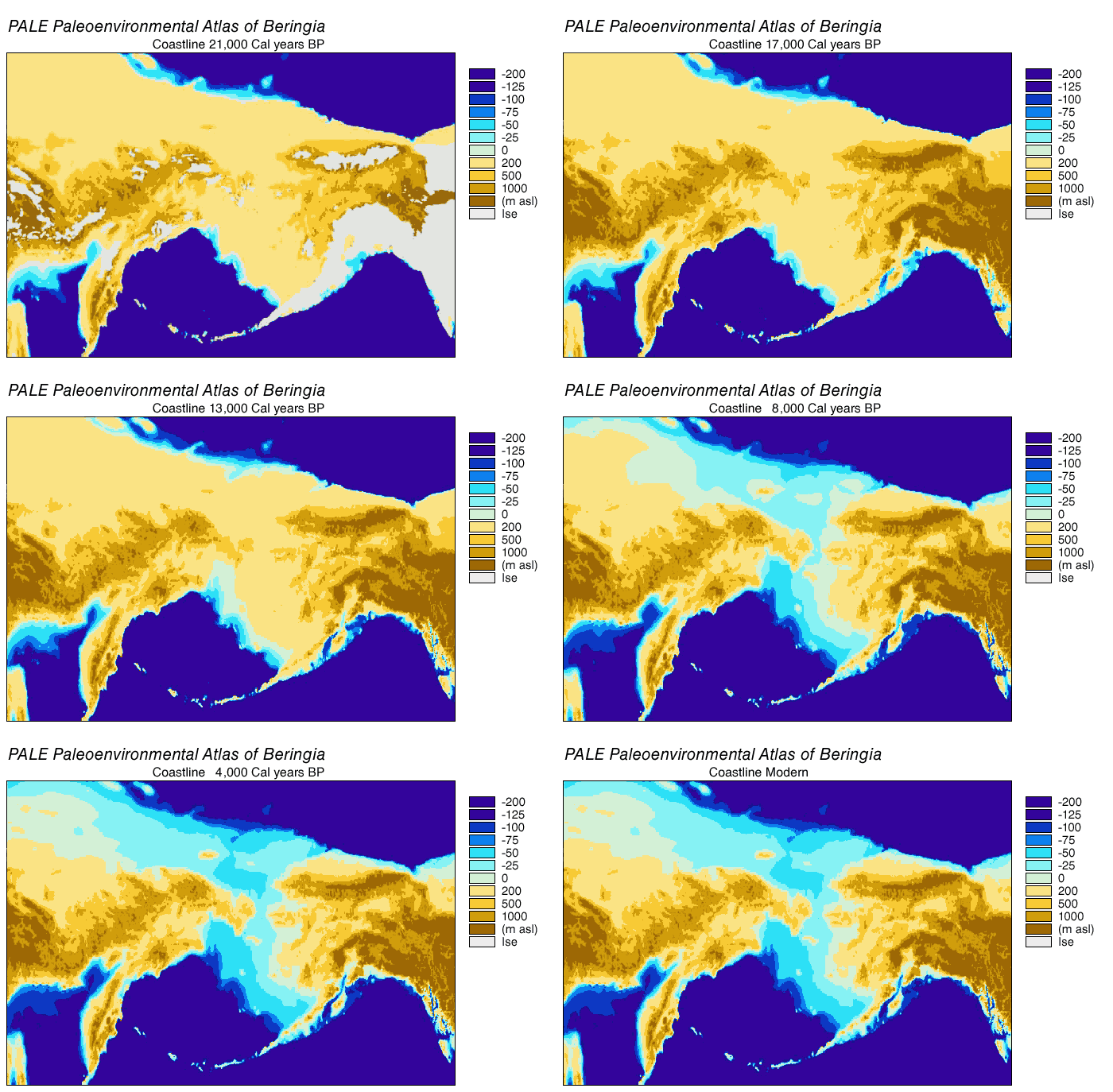
The leading anthropological theory regarding the peopling of the Americas is that humans arrived in North America sometime before 16,000 years ago, coming from northeast Asia into Alaska. Previously this was thought to have been largely overland route. During the Ice Age, when massive glaciers locked a large portion of the world's water up as ice, sea levels were lower. This exposed land that today is shallow sea, in this case, the sea separating Alaska from Russia. This exposed landmass is called Beringia. In this image, you can see it at its maximum extent and how it shrunk as the ice melted and the sea levels rose to their present state.
However, with a human presence in North America established before 14,000 years ago, a purely overland-route is unlikely. Before that time, the glaciers that allowed Beringia to exist would have hindered and probably out-right prevented eastward travel overland.
So, today, it's thought that the First Americans were a maritime people who used canoes to travel along the Pacific coast from Asia into the Americas, quickly spreading all the way down to Chile within a few centuries. They would have had inland relatives in Beringia who eventually moved into North America proper as well, but those people would have had to wait a bit longer.
Where the other post started to go wrong is when it associated American populations with Tungusic / Turkic populations (it's also inaccurate to use Tungusic and Turkic interchangeably as it did). Genetically, American populations' closest ties are with Siberian peoples generally, but not with any specific group. While there's always a bit of gene flow between the continents, the First Americans effectively became a genetically isolated group around 23-25,000 years ago, shortly after the first humans reached the Siberian Arctic. Whether that means they were already in the Americas by that point or whether they were just in a particularly remote part of Siberia (Beringia?) remains to be determined.
The previous post was also way off-base when it equated American religions with the Shamanism of Siberia. You can draw parallels, of course, as you can between almost all religions, this is especially true of "Circumpolar Shamanism." But even then, an Evenk šaman not synonymous with an Inuit angakkuq, at least no more so than an Catholic priest is with a Sunni imam. As you head south from the Arctic the differences get even more extreme.