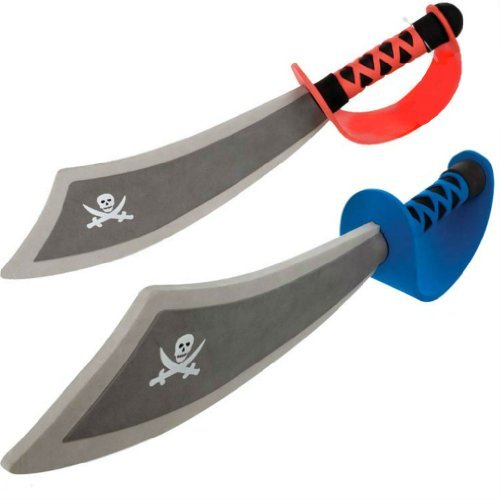
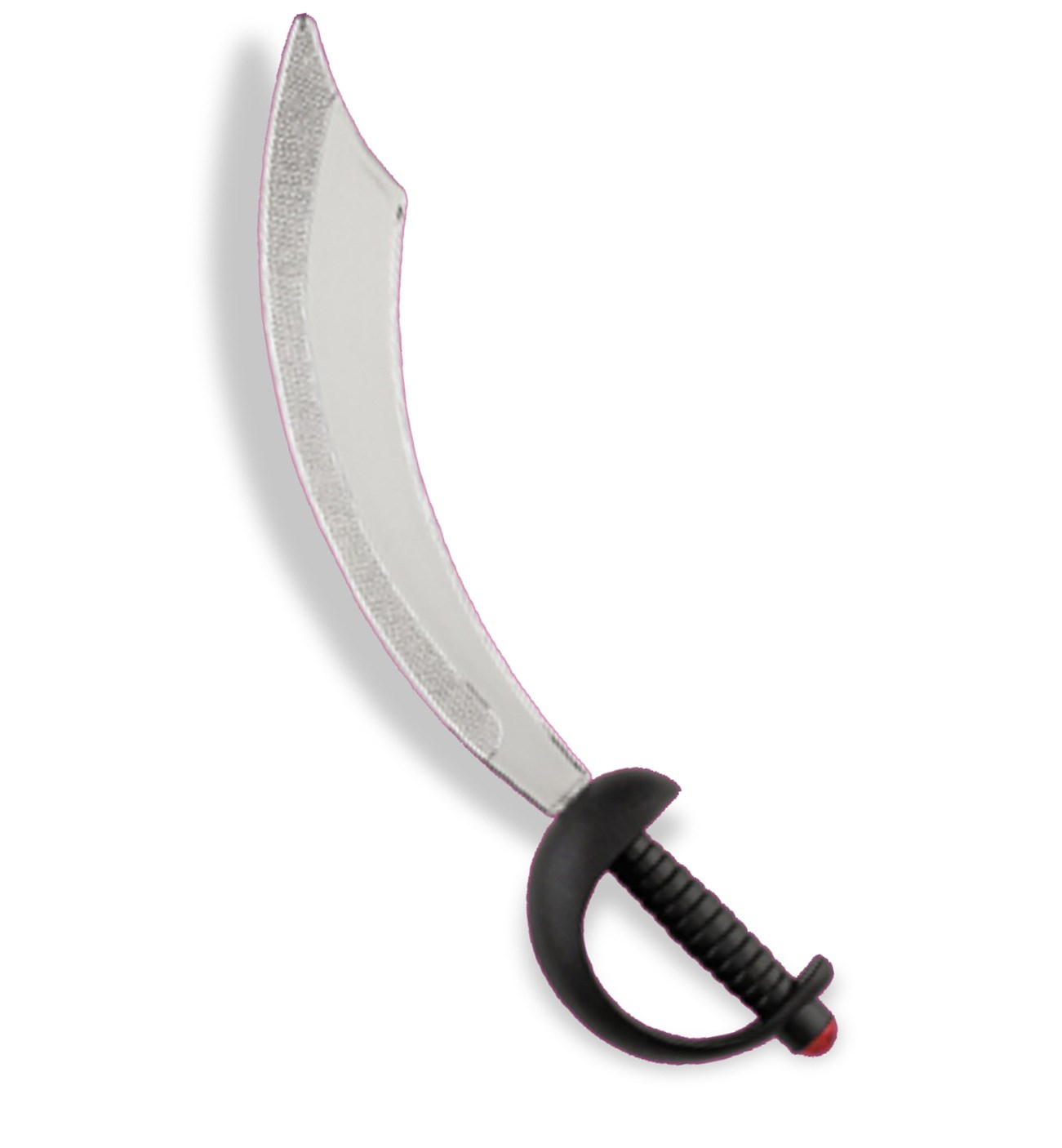
I know for a fact that the cutlass was the most widely chosen sword for use in piracy and in the rest of the age of sail. Anyways, I'm sure we've all seen plastic or foam, short pirate scimitar sword toys with over exaggeratively curved blades. Take these for example. I'd like to know if swords similar to the shape and design were actually used by pirates in the golden age. More portrayals of the "stereotypical pirate scimitar" can be seen here and here.
I call these "stereotypical pirate swords" scimitars because of the very curved blades on them, like the ones seen in earlier history and late antiquity (during the times of the Roman and Persian empires or whatever IIRC)
This is a typical, albeit somewhat fancy, cutlass. It was typical of 17th to 19th century European naval swords. Generally speaking, they were short, broad, slightly curved, and with a moderately developed broadsword hilt and guard. Short, because ships were full of confined spaces and rigging that would snag long swinging weapons; broad and curved because they were slashing weapons that were used without a lot of sophisticated technique. (The science of fencing, which emphasized thrusts and duelling-style encounters, did not really catch up with slashing swords until the mid-19th Century.) Cutlasses were also useful for cutting lines and other practical purposes. The brass neoclassical broadsword guard with knucklebow was very typical of European cutting swords of the period, although you could also get basket, cage, and bowl hilts as well. Here's a contemporary depiction of Blackbeard (Edward Teach) brandishing a cutlass, so yes they really did use these swords.
This is a typical scimitar, by way of comparison. In contrast to the cutlass, it is long, highly curved, and with an eastern style hilt without a knucklebow. Long, because they originated as horseman's weapons, highly curved to accentuate the cutting characteristics, and without knucklebows because those simply weren't fashionable in Turkish domains. It was a great cavalry weapon in the absence of heavy armour (it was later adapted to the European cavalry sabre), but it would not have been the most practical choice on a cramped ship.
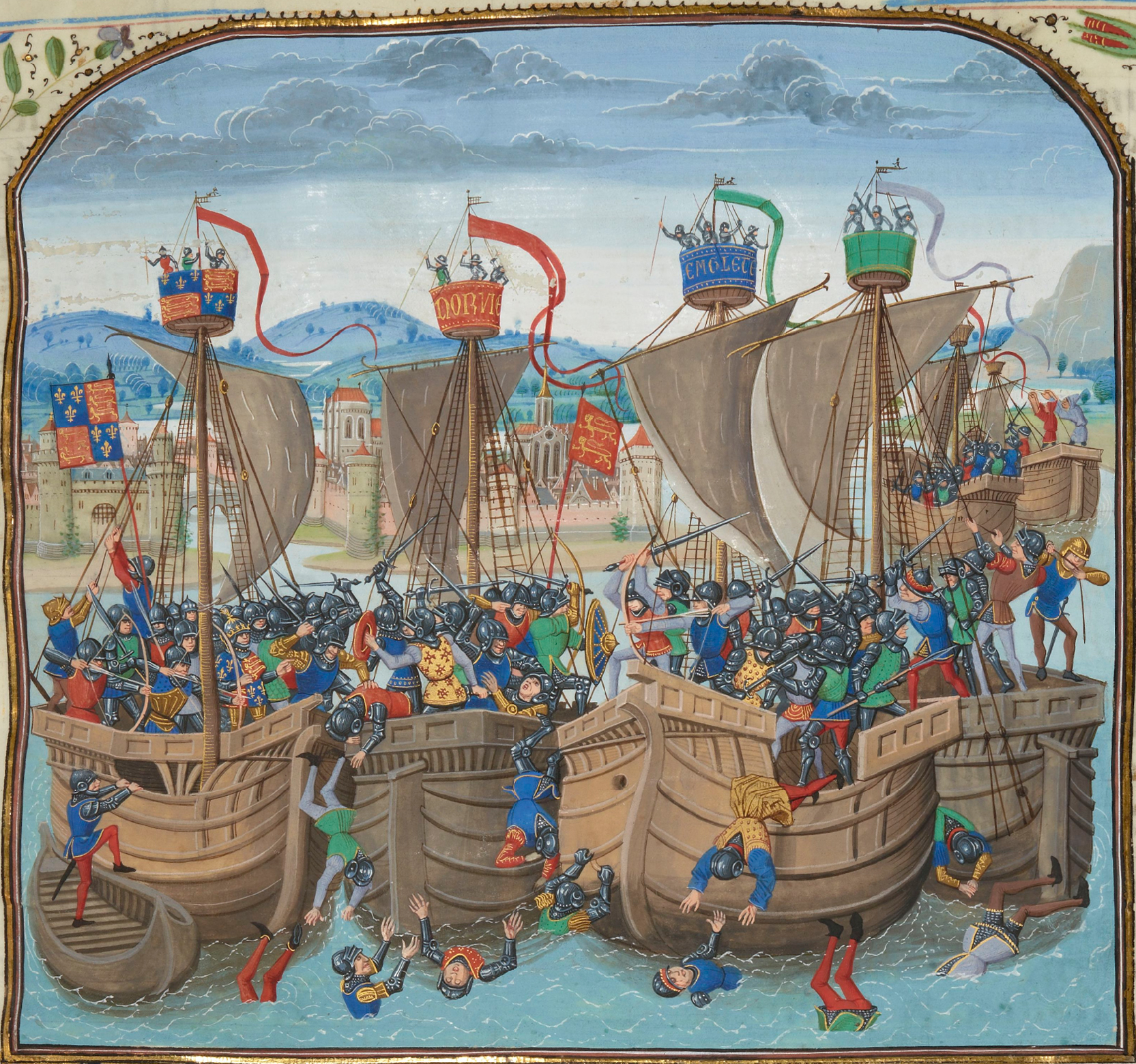
This is a falchion, for further comparison. They were very broad slashing swords, with a classic medieval cruciform hilt, and crude but effective point made by cutting away excess material at the broadly flared tip of the sword (and without which they looked like this). Falchions have a long history going back though the middle ages, and almost certainly informed the development of the cutlass. They were a popular footman's weapon for many centuries, and had similar characteristics to the cutlass (short, cheap, practical, easy to use), which endeared them to the non-knightly classes, and to knights as well as back-up weapons. They would not have been out of place on pirate (or other naval) vessels in earlier periods, although professional soldiers of the time didn't really make a distinction between naval and land combat, and generally used similar weapons and tactics for both. Here you can see a collection of typical land war swords, including a two-handed sword, being used in a 14th Century naval battle.
The modern cartoonish "pirate sword" is a bit of a mash-up, consisting of exaggerated falchion-like blades with more modern cutlass-like hilts. Other than the curvature (and curved weapons were ubiquitous so that's not a noteworthy point of similarlity), they had little resemblance to scimitars.
I'll add that an under-appreciated shipboard weapon of the age of piracy was the pike. The long reach was very useful for preventing boardings, and I've even read one account where pikes were used to successfully defend and retake a ship after being boarded by pirates.


.jpg)