There are two issues here, what people knew about radiation itself (quite a bit), and what they knew about radioactive contamination as a result of atomic bombs (nothing at all). They are not the same thing.
Radioactivity had been part of popular culture since the early 1900s. By the 1940s the general public had gone through the entire gamut of "rays that will bring us health" to "rays that will kill you and are bad." They had already experienced the Radium Girls fiasco, they had seen the wasting death of Eben Byers, they knew of the scarred hands of the X-ray operators. The term "radiophobia" (irrational fear of radioactivity) had already been coined, as had "radiomania" (irrational affinity for it), by 1903.
So while public knowledge of radioactivity and whatnot has always been limited to some degree, they knew of it.
Radioactive contamination is a different issue. It's about whether an atomic bomb makes lasting amounts of radioactivity, makes an area dangerous for the long term. They didn't know about that, because to know about that requires knowing a lot of specifics about nuclear weapons (e.g., fission products, radioactive clouds, neutron activation — very technical stuff that relates specifically to how atomic bombs work).
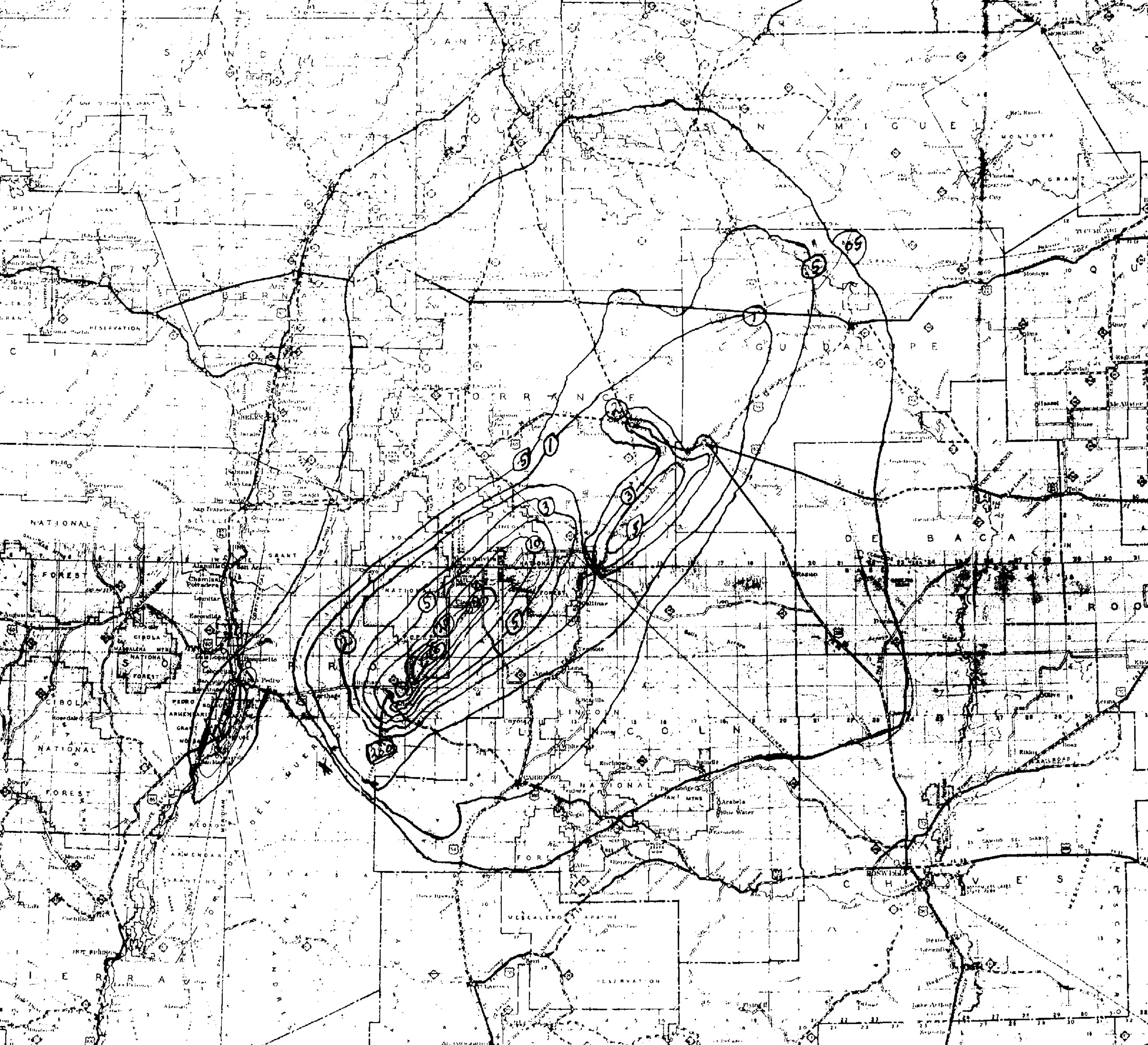
The first "taste" of discussions of this nature came very soon after the bombs were dropped. A physicist who had been in a very slight way connected to the Manhattan Project went to newspapers on right after the Hiroshima bombing and said that the atomic bomb would contamination Hiroshima so thoroughly that it would be uninhabitable for 70 years, that radioactivity would wash out to sea and kill ocean life, and that the city would basically resemble the moon. This was vigorously denied by the heads of the Manhattan Project — they had set the bomb off at a very high altitude, and this meant that ground-level fallout would be essentially negligible. Even at the Trinity test, which was set on the ground and thus created an impressive fallout plume (most of which was low-intensity, it must be said), could be visited by the end of the month (a "safari" of journalists was taken there in September 1945 to illustrate this).
The denials were made on the assumption that all was as planned; in early September 1945 the Manhattan Project sent scientists to Hiroshima and Nagasaki to assess damage and radiation. They found that indeed the amount of "secondary" radiation (contamination) was fairly negligible. There were more radiation casualties among the victims that they had expected, though, but these were "acute" exposures to the first moments of the bomb. Even here, they dissembled a bit, testifying before Congress that radiation poisoning was "a very pleasant way to die."
By late 1946 there were certainly other, competing narratives. No one can read John Hersey's Hiroshima (originally published as the August 1946 issue of The New Yorker) and come away with a misconception about whether radiation poisoning was a very pleasant thing. The contaminating power of atomic bombs was first put on public display as a result of the Crossroads Baker test in the summer of 1946, where radioactive ocean water made scores of ships intensely radioactive.
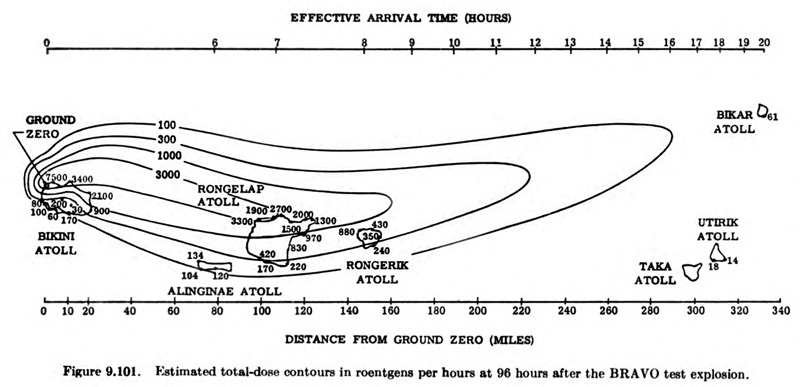
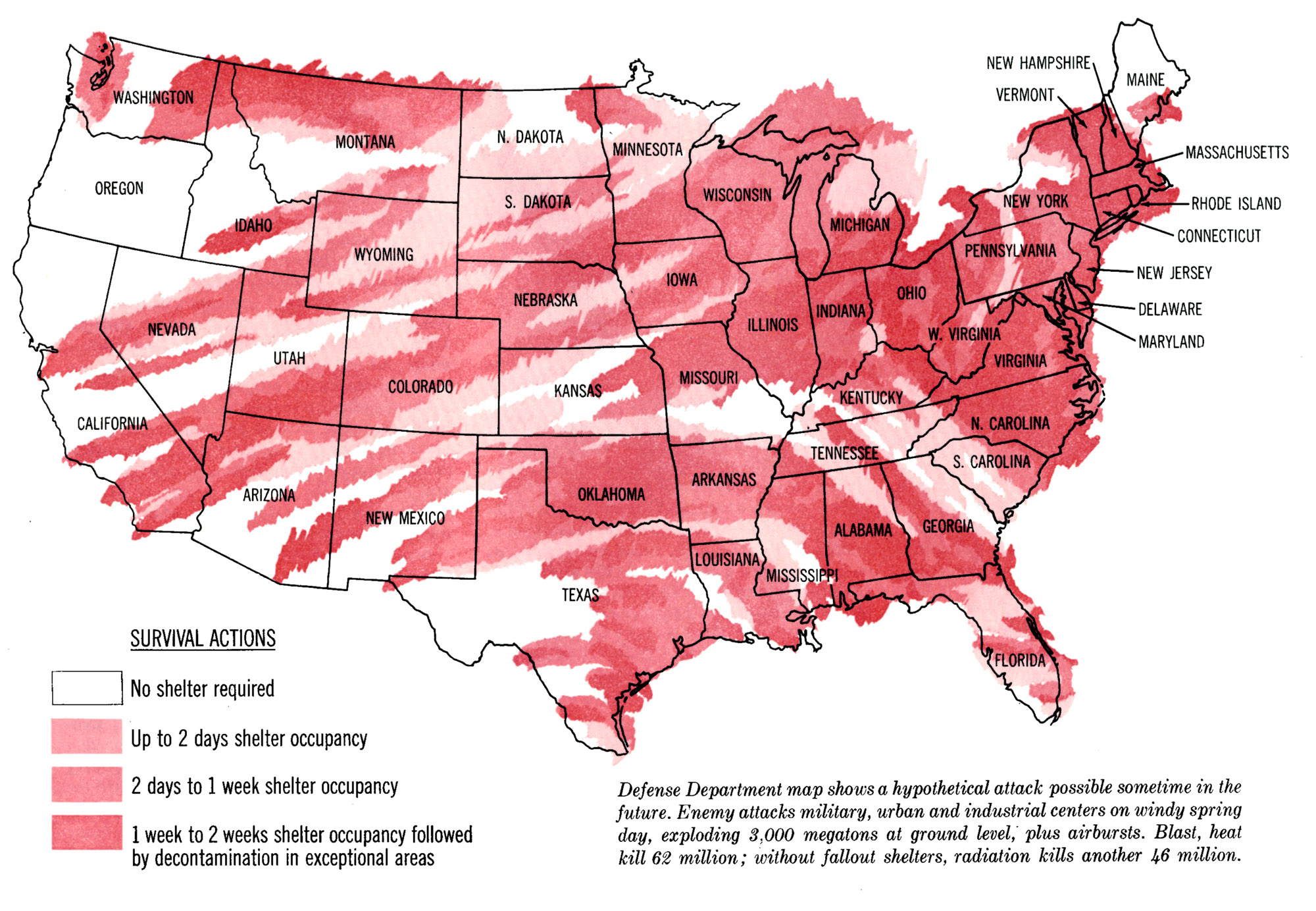
Still, the officials were correct that the contaminating power of atomic fission bombs was relatively minor compared to their other effects. The hydrogen bomb was a different question, and the Castle Bravo accident of 1954, which spread intense levels of radiation downwind for hundreds of miles illustrated this vividly and changed the discourse about nuclear weapons from just about immediate effects to the long-term. By the 1960s fallout was the way in which total nuclear war was discussed popularly, itself a reflection of the changing nature of the weapons and the arsenals.
To back up again to the atomic bombings of World War II, the Manhattan Project people were in a difficult bind regarding their characterization of the weapon. They wanted it made clear that it was a "special" bomb (as they dubbed it internally), that it was not just a big conventional weapon. They relied on this distinction both as an explanation of why it (and not conventional weapons) ought to compel Japan to surrender, but also to justify its immense cost of production. The scientists in particular also believed that this weapon might "end all wars" in a way that nothing else had, and its "specialness" needed to extend as far as requiring changes to the international order (they had someone utopian, idealistic dreams about what this would look like). But in the case of radiation, they did not want the weapon to be conflated with poison gas, because that would potentially put them into "war crime" territory (the practicality of international treaties was not at issue so much as the public relations aspect), or give too much sympathy to the Japanese. So they tried to advance a sense of awe but also reign it in — a tricky thing to pull off, and arguably they weren't quite able to.
For lots on this subject, from the discovery of radioactivity through the end of the Cold War, see Spencer Weart's The Rise of Nuclear Fear. For specifics on the early 1940s, Paul Boyer's By the Bomb's Early Light zeroes in on early attitudes. Robert Lifton and Greg Mitchell's Hiroshima in America also covers early responses to the atomic bombs.
To broaden this just a little bit, what was the public awareness of the bomb's nature in general (as opposed to the long-lasting effects)? Did the public in the United States (or Japan or Europe) know that the bombs were not conventional bombs immediately after they were dropped? If not, when did the general public become aware that these bombs were fundamentally different in nature from regular bombs?
Not sure if this would require it's own post, but I have a follow-up question.
Why did Hiroshima and Nagasaki remain habitable after the bombs were dropped? Does it have to do with the fact that the bombs exploded at higher altitudes as compared to nuclear incidents like Tchernobyl or Fukushima?