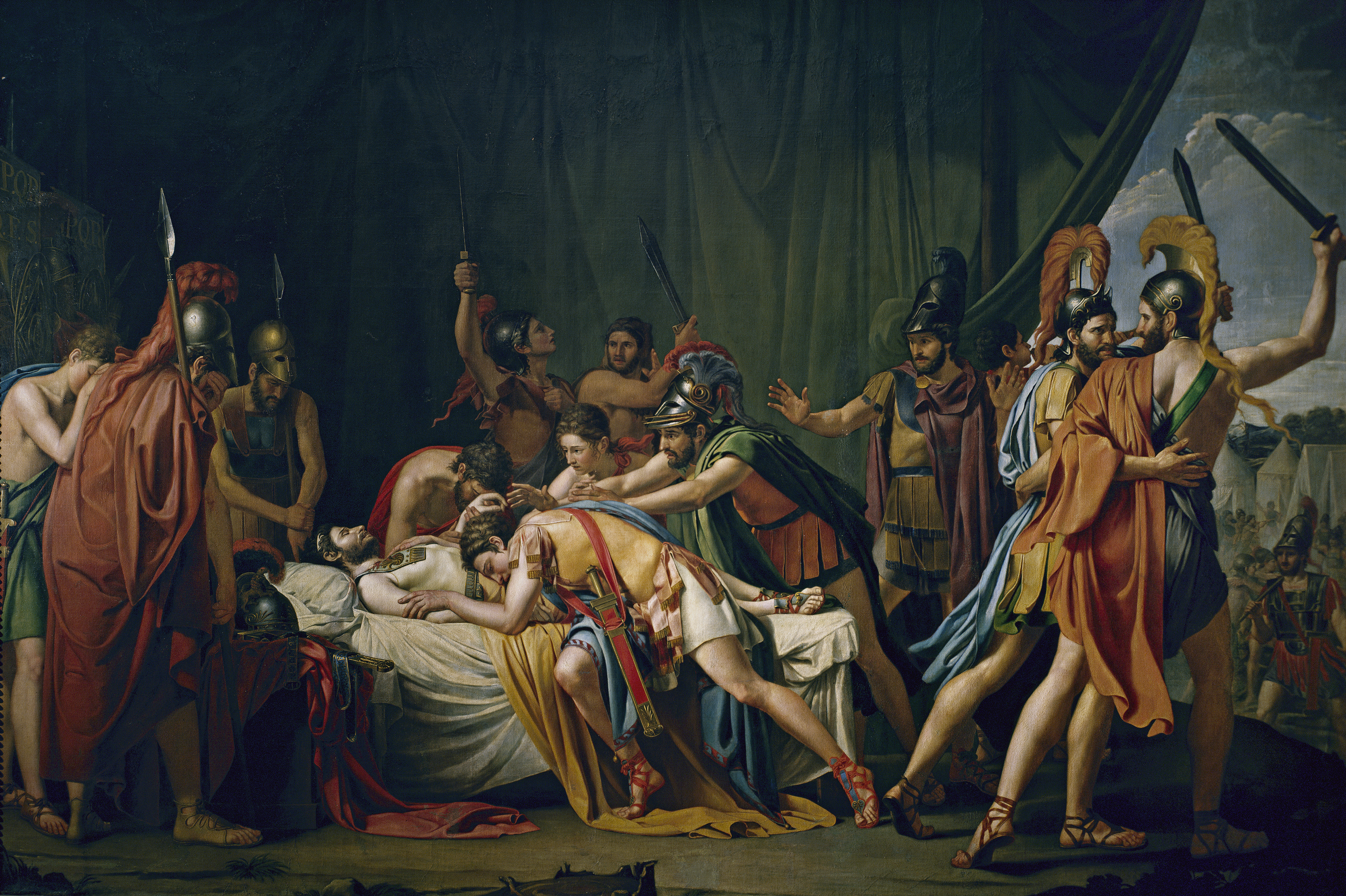
This painting portraying the death of Viriathus shows them nicely
https://upload.wikimedia.org/wikipedia/commons/2/21/Madrazo_Viriatus_HighRes.jpg
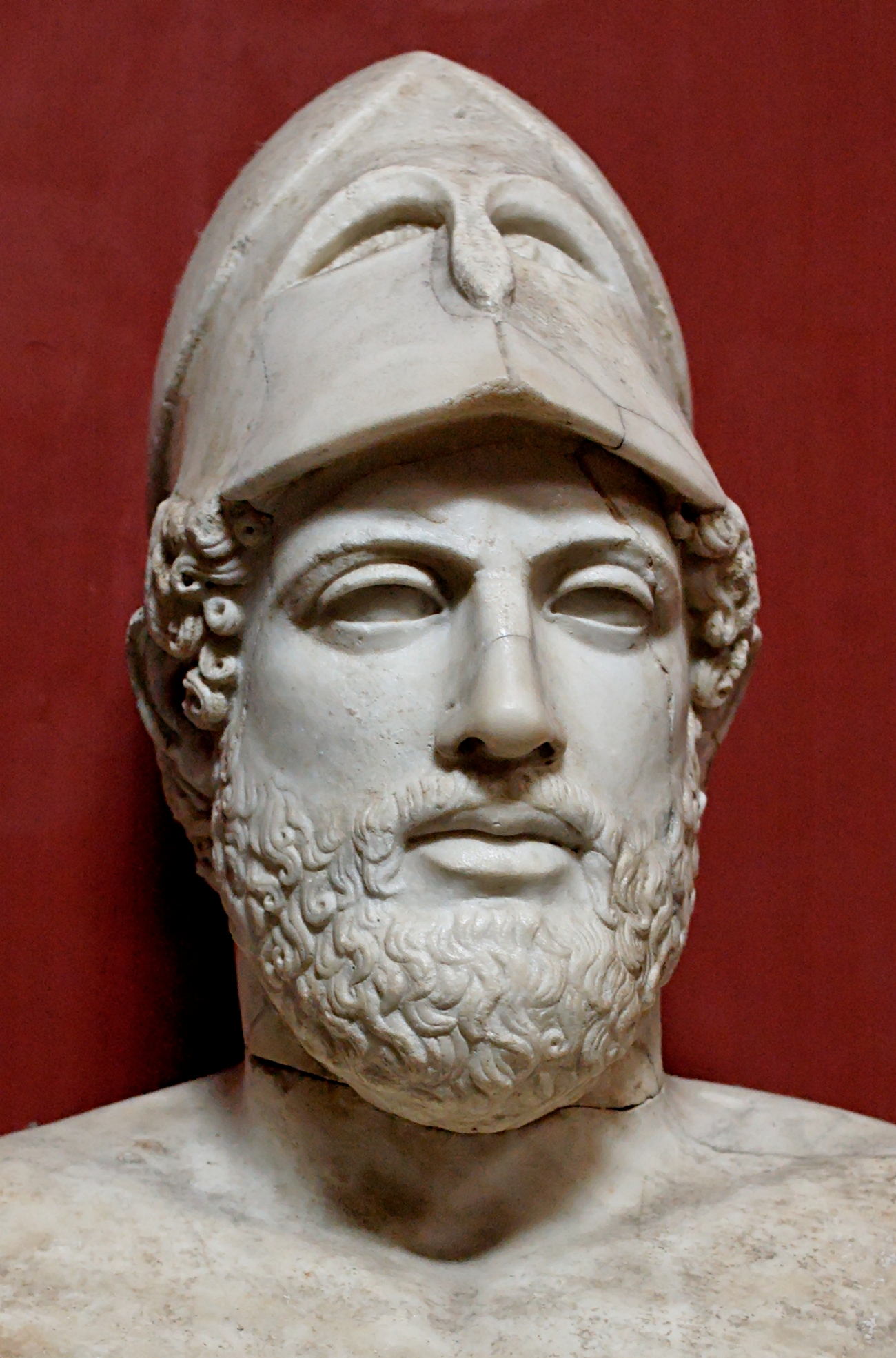
Pericles
https://upload.wikimedia.org/wikipedia/commons/4/4b/Pericles_Pio-Clementino_Inv269_n2.jpg
This type of helmet is known (somewhat randomly) as a Corinthian helmet. It was the most common helmet type for Greek heavy infantry from the early seventh to the late sixth century BC. It grew out of earlier helmet types as an improvement to facial protection; in its final form, the Corinthian helmet covered the entire face in a layer of hammered bronze about 2mm thick, leaving only small holes for the eyes and a slit down the face to allow the warrior to breathe.
In battle, the helmet was worn "closed", if by that you mean that it was pulled down to cover the face. There are many - hundreds - of - vases that show what this would have looked like; you can see it in 3D in this nice statuette.
However, artists were clearly torn between showing a warrior realistically and depicting his identity and emotions. Obviously a Corinthian helmet doesn't allow for much of the face to be shown. So they settled on the have-your-cake-and-eat-it-too compromise of the raised helmet. The Corinthian helmet (sometimes along with other armour, sometimes without) symbolises the depicted person's status as a warrior, but the helmet is raised so that his face can be recognised and his emotions shared.
Interestingly, the Corinthian helmet spread through Greek settlements in Italy to the Etruscans, who also adopted it - but they gradually altered its design in order to allow it to stay raised permanently, with just a vestigial little face carved into the forehead plate. Clearly there was some negotiation between protection and display going on in actual battle, as well as in art.
Now, as it happens, Perikles is a special case. Plutarch explains:
His personal appearance was unimpeachable, except that his head was rather long and out of due proportion. For this reason the images of him, almost all of them, wear helmets, because the artists, as it would seem, were not willing to reproach him with deformity.
-- Life of Perikles 3.2
The trend of depicting great warriors with a raised helmet worked in his favour here, because what better way to hide a pointy head than to show him always wearing a helmet pushed back to the top of his head?