EDIT: also dress
I happen to have on my shelf a copy of "Food in Chinese Culture", ed. K.C. Chang, Yale UP 1977. The information in this post is largely derived from this volume.
77 BCE is early-mid Han Dynasty. What's interesting here is that there's a rich find of foodstuffs in a burial site called "Han Tomb No. 1 at Ma-Wang-Tui". A variety of foodstuff has been identified, including:
Grains - rice, wheat, barley, millet, glutionous millet, soybean, red lentil
Seeds - hemp, malva, mustard
Fruit - pear, jujube, plum, strawberry, musk melon (from seeds found in the well-preserved digestive tract of the deceased)
Roots - ginger, lotus
Animal meats - hare, dog, pig, deer, ox, sheep
Poultry - wild goose, mandarin duck, duck, bamboo chicken, chicken, pheasant, pigeon, turtledove, owl, magpie, sparrow
Fish - multiple species of carp, bream, perch
Spices - cinnamon, galangal
The find also included documentary and pictorial evidence for items such as salt, sugar, honey, soy sauce; and cooking methods such as roasting, scalding, shallow-frying, deep-frying, steaming, stewing, salting, sun-drying and pickling.
1733 is early Qing. By this time crops from elsewhere had not only entered the cuisine but become important parts of the Chinese diet, so much so that they were at least partially responsible for the Qing population explosion, which saw China's population approximately treble between the early 1700s and the mid-1800s. Such items included maize, sweet potatoes, Irish potatoes and peanuts. Imperial edicts encouraged the growing of these crops and they allowed for the exploitation of hitherto marginal agricultural land.
There's a huge amount of material that I don't have time to go into right now, but there was a significant difference both in terms of what was available and how it was consumed. I'll add more when I'm able.
EDIT: Fixed formatting.
(Sorry Imgur isn't cooperating at the moment so I will upload more images when I wake up).
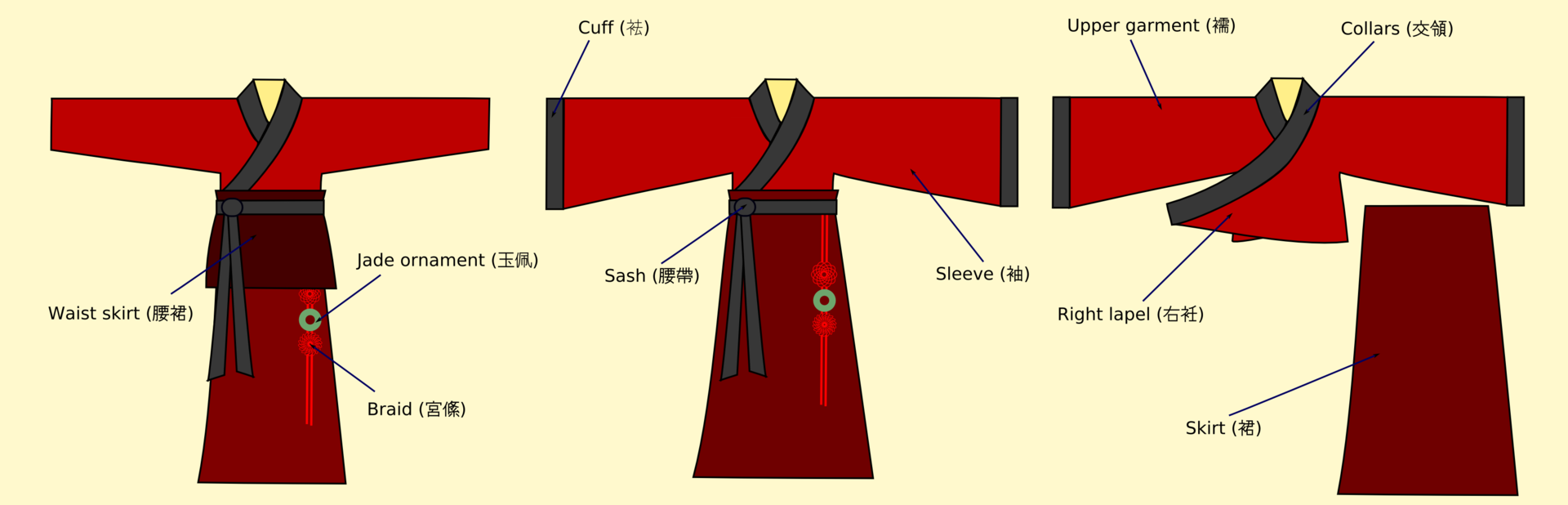
Dress is easier to describe. In Han Dynasty (and for thousands of years thereafter) the common everyday attire for women consists of a short top and a long skirt (usually tucked in) known as ruqun like this (here's a diagram of two styles and components). Well-off men wore a wrapping long robe with long "skirt" or pants under and a sash. Here's how Emperor Zhao of Han and his attendants dressed, their robes are so long that the "skirt part is mostly hidden. According to Book of Latter Han, fashionable women in court wore a particular short top and high waisted long skirt while men wore a particularly long robe overcoat. In addition very large billowing sleeves were popular, sometimes the bottom of the sleeves can reach the knees or lower.
Clothing became more complicated during the Qing Dynasty. Clothing were influenced by Manchu nomadic roots. Both men and women wore either a short robe (they are called magua) for ease of horse riding and other more physical activities (here's a men's short jacket and women's jacket) or a long "dress" called changshan (this is where the modern English "cheongsam" originate even though the original word encompasses a wide range of styles). Here's a men's long robe and women's. The biggest difference is the cut. Qing Dynasty clothing are often closer cut on the top portion and gradually widens on the bottom with no defined waistline and the sleeves were much tighter, especially for men (while there were mandates imposed Manchu customs on men's clothing and hairstyles, women were generally allowed to dress however they wish. As you can see in examples of women's clothes above). Frog button closures were used (as oppose to ties used in Han Dynasty). In addition decorative elements such as embroidery and weaving techniques are much more developed in Qing Dynasty so clothing became much more intricate than Han Dynasty.
Can anyone suggest some interesting books on topics related to this (what daily life, food, clothing, or general culture would be like for the Chinese over these eras)?
As something of a follow-up--the 1733 folks wouldn't likely be descendents of the 77 folks, right? In the Qing dynasty, the aristocracy wasn't Han Chinese but rather Manchurian in origin?