The oldest known source to identify the Americas as a separate continent or "new world" is the c. 1503 letter believed to have been written by Amerigo Vespucci after his third voyage to a member of the de Medici family.
There's some controversy as to whether this and other letters are the original words of Vespucci, or a fabrication by others at the time. Regardless of the authorship dispute, within a few years of the letters being published, it had reached the attention of Martin Waldseemuller and other cartographers working in what is now France.
The result of their work is the oldest known map to feature these new lands, as well as the first to call it "America", purportedly in honor of the man whose attributed writings made it possible.
The question of how long it took for all of Europe to buy into the whole "new world" concept is a little harder to answer. One point to consider is that the observation of the Americas as a separate continent did not immediately hamper the drive to sail west to Asia. Numerous early European voyages into well-known bodies of water (St. Lawrence Seaway, Gulf of California, the Mississippi, Hudson River, Hudson Bay) were done in the hopes that they would lead to Asia.
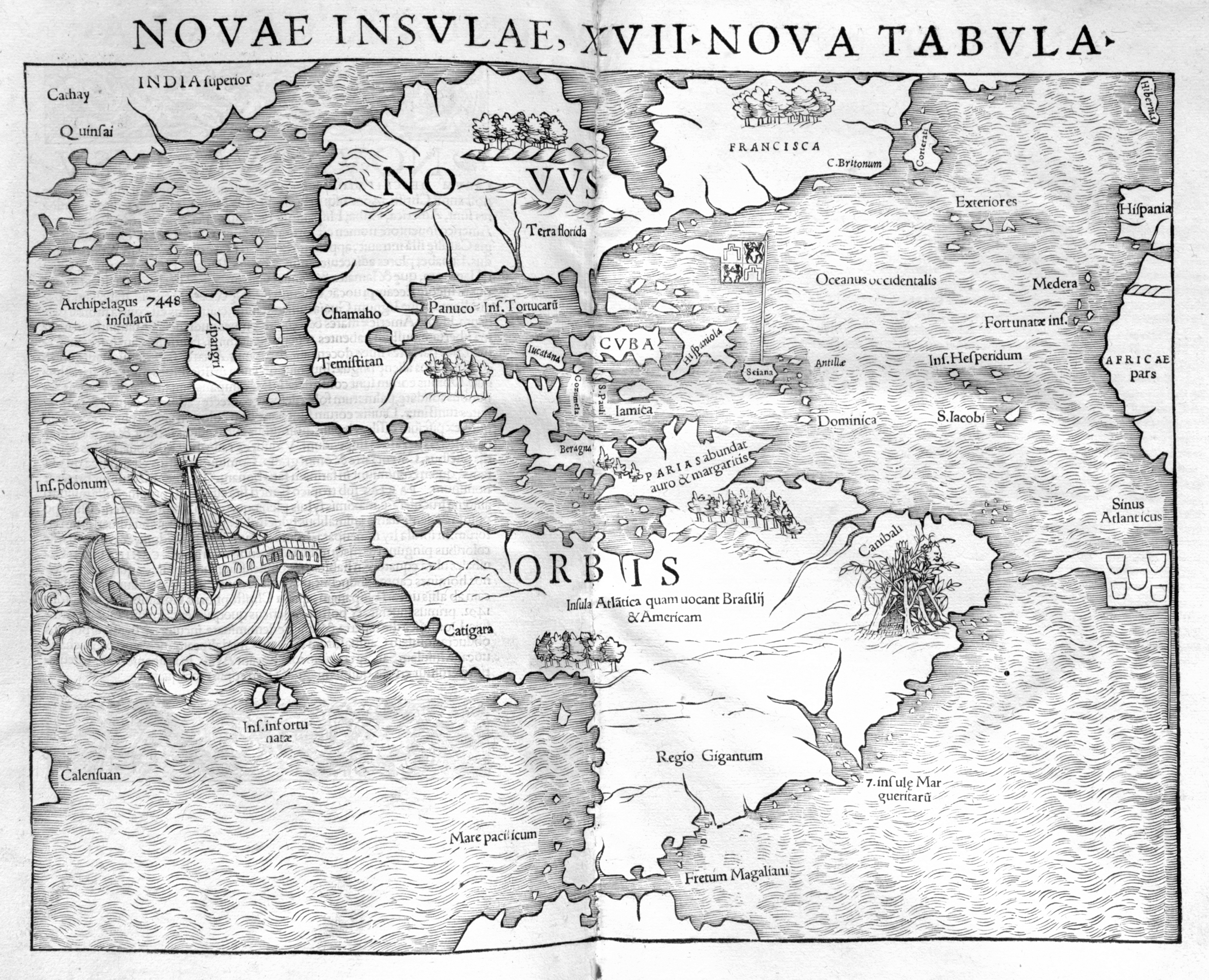
If you look at this map from 1540, it shows the Americas as mostly recognizable... with a few exceptions. See that island off the western coast of Mexico (rendered Temiſtitan on the map)? That's supposedly Japan.
So it seems that while the idea of the Americas being a separate continent took hold relatively quickly after Columbus, it was not yet entirely clear just how separate it was even 50 years later.
Fast-forward to 1589, and you can see on this map that the size of the Pacific Ocean indicates that by this point, the great distance of the Americas to Asia was becoming very clear to cartographers.
Hopefully that helps to answer your question in some capacity, although I'm also curious to know more about any lingering beliefs and theories among Europeans regarding the New World. Perhaps someone with a bit more knowledge on the subject can provide more?
Follow up: How aware was the general European public at the start of the American Discovery? How fast did the knowledge of the new continent hit the public from when Columbus first found it? And was there any efforts from European governments to withhold or alter information from the explorations?
Follow up: I've heard that Columbus thought he could sail around the world because he thought the earth was pear-shaped. That is, he didn't dispute the size of the earth, but the shape, which would have made it easier to circumnavigate the globe at northern latitudes.
Is this true?
Did Columbus's apparent success in reaching Asia cause any doubt or academic revision in Europe regarding the shape of the earth? (until it became clear that he actually ran into America)
This has been answered several times in the past, including by /u/itsalrightwithme here. The existence of a previously hard-to-reach land to the west was accepted very quickly, what with the various items and people brought back to Europe. As early as Columbus's second voyage, various entrepreneurs outside the official sanction sailed to the New World. So there were already a good number of people, and competing leaders, who sailed there and back.
What was being debated was whether this new land to the west was connected to "Cathay", India, or China. Columbus himself insisted as late as 1503, his fourth and last voyage to the Americas, that the New World was India, or China, or both. You can read his surviving letters on this subject.
However, to quote that post,
The first passage to the Pacific Ocean, by land was by de Balboa in 1513. They crossed Panama successfully and reported their findings back in Spain. This was the point at which arguments that the Americas were attached to China became moot and lost all credibility.
This is the point at which everybody started to be pretty damn sure Columbus was wrong.
Want to know more? Fernandez-Armesto's Columbus is still a damn good book. Or, Kamen's Spain's Road to Empire.
Follow up: I am tickled by this idea of 16th century conspiracy theorists. What were some of the popular conspiracy theories in Europe around this time period (let's say 15th-17th century)? Did they think mapmakers were hiding islands from them? Did they really think there was a fountain of youth?