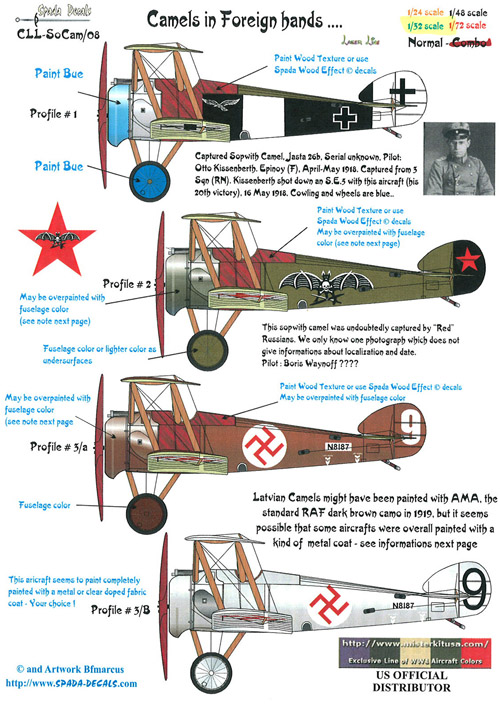
Hey there! I'm currently modelling a Russian captured Sopwith Camel and I've got a few questions regarding the insignias, especially the ones on the upper wing. Would they have painted the Russian imperial air force roundel, the Russian red star or its variants? 1,2?
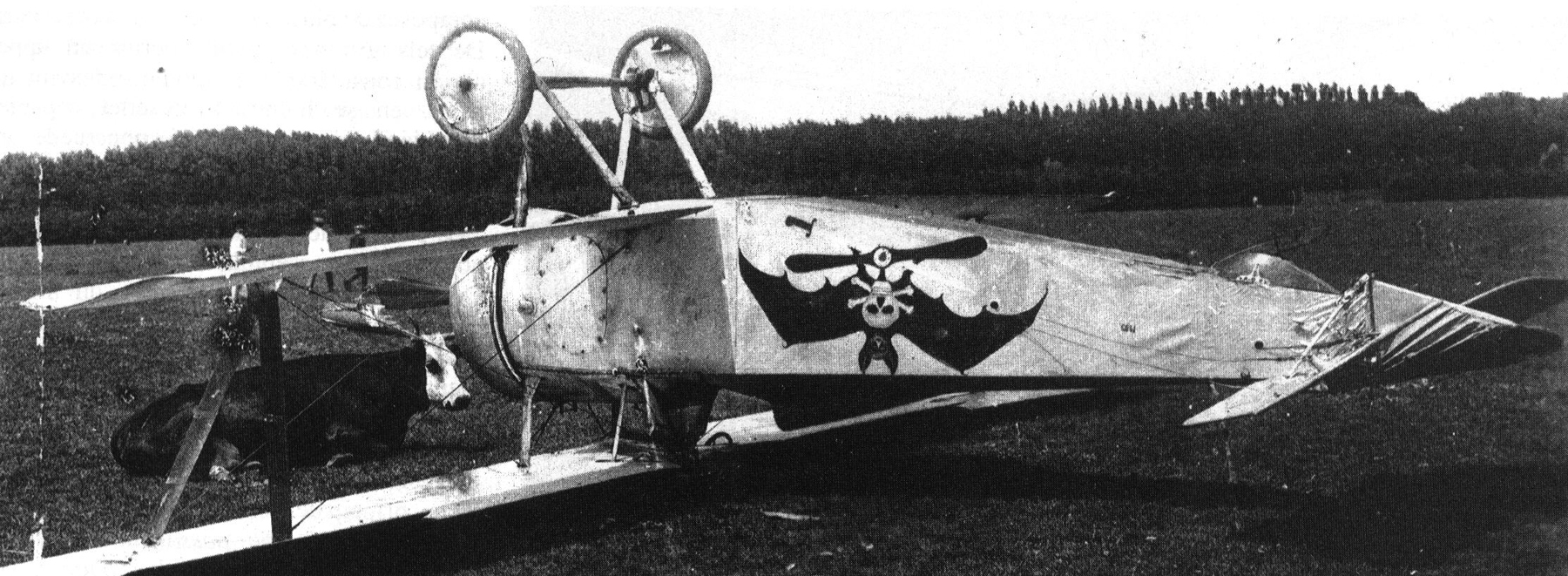
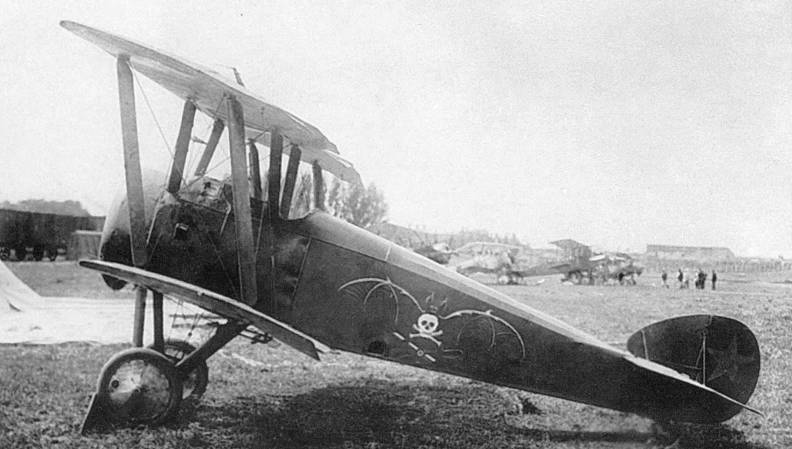
Bonus questions: Would they have left the original serial number? Also, what is that bat logo?
And a more general question, was painting the pilot's (or plane's) nicknames on the fuselage widespread during WWI?
Apologies if this isn't the correct subreddit and thank you in advance!
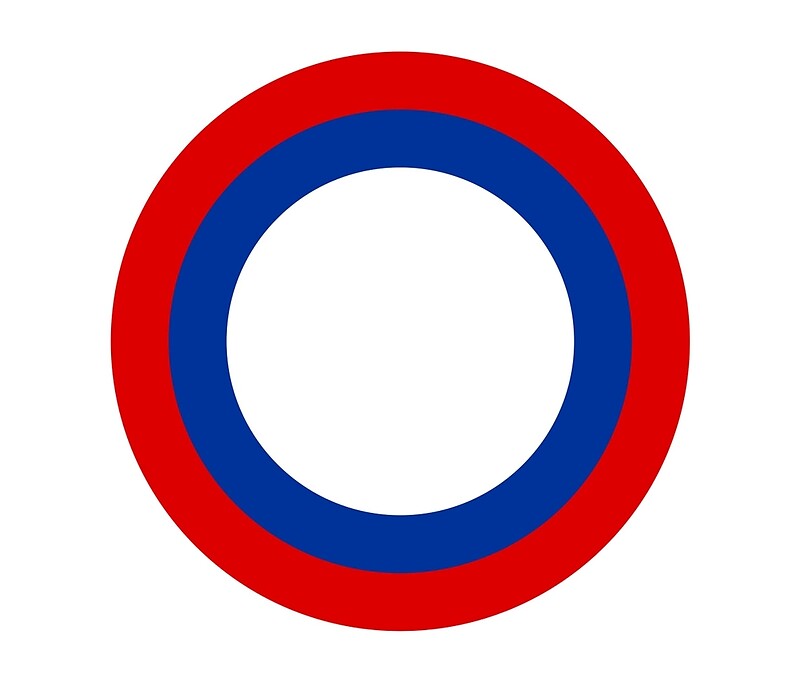
The answer to your question would indeed depend on whether you are discussing the Imperial Russian Air Service or the Red Air Fleet. The official markings in the IRAS varied, but generally were the Russian Rondel (white center, red center circle, blue outer circle-- with or without white lines between the circles). These Rondels were placed in various locations on IRAS aircraft, and could range in number from zero to 14 (both sides of fuselage, top of both wings, bottom of both wings, top and bottoms of the horizontal stabilizers, and both sides of the rudder). I have not found any regulations specifically governing painting of captured aircraft, though I would assume that if time and materiel permitted, they would have been repainted in standard IRAS schemes. The Red Air Arm was much more haphazard in its marking scheme, but generally seems to have used some version of a red star, either alone in appropriate locations, or placed in the center of the IRAS Rondel. Some pilots (mostly aces or unit commanders) are noted to have painted various personal insignia on their aircraft, usually on the fuselage (or occasionally on the rudder), and with or without the Rondels. Names are very scarce in photos of the period, though one Nieuport 17 is inscribed "BOB" in Russian on its fuselage, which may have some other meaning in Russian than a name. Be aware that many of the French aircraft delivered to Russia in 1917 were painted in French schemes, with French Rondels and Tail markings-- some of these were used with the addition of Russian Rondels, and some were used in the original French paint scheme. Most Russian aircraft did not have visible aircraft serial numbers, so I would be surprised if a captured aircraft was left carrying its previous serial. As to your question about the "bat" marking on the inverted aircraft, this is a Nieuport 17, probably one of those delivered directly to the IRAS by France in 1917, and the marking (black bat, white skull, crossed wooden propeller, and sword) is probably a personal one for the pilot. Unfortunately, both the pilot and unit are unknown. Probably the best reference on IRAS and Red Air Fleet aircraft and their markings is: "The Imperial Russian Air Service", by Durkota, Kulikov, and Darcey.
The way the question is phrased, I am going to assume we're talking about Red army captured Sopwiths - the Whites were given a few planes to operate on their own, but I wouldn't call them "captured."
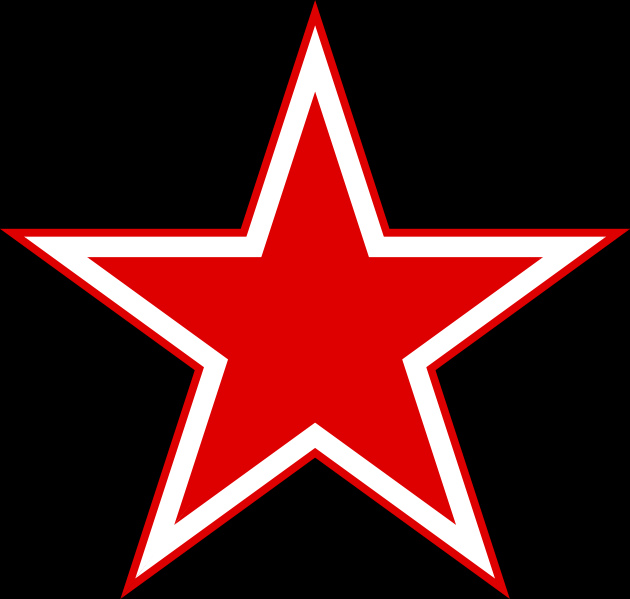
The insignia used by the Red air force was extremely haphazard and didn't follow any unified pattern, although the plain red star (on or not on a circular white background) seems to have been the most popular roundel, followed by leaving the original roundels in place (and just painting over, say, the tail), and of painting the red star on top of the preexisting roundel (thus producing the odd looking star on white in a blue circle seen on your transfer sheet). The whites, of course, continued to use the Imperial Russian Air Service roundels.
There are a few pictures here, including what looks like your Bat-Plane in a less destroyed circumstance. The rest of that website appears to have more examples as well.
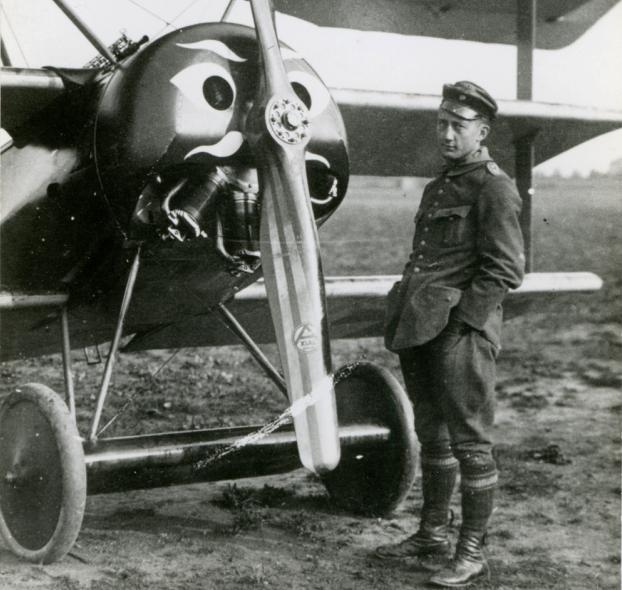
As to the name painting, it's possible that some pilots did this, but I have never heard of it being a widespread phenomenon (as it was in nose paintings during WWII). Iconic insignia were much more common - think of how hard it would be to read the text written on a plane. If you have done a decent amount of WWI era airplane modeling, I am sure that you are familiar with the more iconic ones, like the face on Wener Voss' triplane or Charles Nungesser's Death Heart.This is what I suspect your bat logo is - the signature of a specific red army airman, or perhaps of a squadron. According to this website, this particular plane was flown by one P. Karpuhin, although who knows how accurate that piece of information is.
Hope this helps!