As a Vietnamese, I've been thinking about this a lot lately. Obviously, all the materials we have in Vietnam depict a feverish atmosphere back then, where everyone professed unquestionable love for the Socialist motherland and was ready to die liberating the South.
However, I wonder how many percent of those people and soldiers genuinely believed in the propaganda, versus the percentage of not believing but simply being forced to fight?
The 1968 and 1972 campaigns saw almost every NVA soldier leaving their bodies in the Southern battlefields. Wouldn't this spread a certain atmospheres of fear among the population at home, in the villages and hometowns? If your neighbours, uncles and brothers were never to be heard from again, wouldn't your survival instincts be prioritised over your faith in propaganda--no matter how powerful the rhetorics?
You are correct to be wary of these depictions. Of course, remember that when we talk to historical actors, or read biographies, we are often hearing what they remember or want to remember. Not necessarily what happened. In Vietnam this is difficult because of the totalizing way the government and party enforce an interpretation of the war that reinforces the legitimacy of the communist party to retain sole control of the state. Even portraying suffering of the NVA troops was forbidden for a long time!
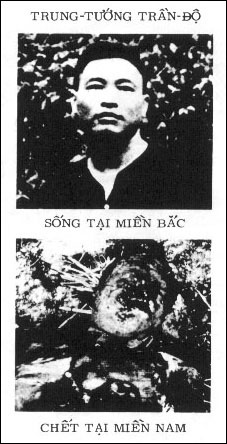
Now, the problem is that research on the DRV during this time is very difficult. Press access was highly restricted then, and today the archives are tightly controlled. So often we are left with anecdotal evidence. But some scholars have found interesting clues. For example, Pierre Asselin notes finding documents related to anti-war (and anti-Le Duan) activities in North Vietnam. In Lien-Hang Nguyen's book, Hanoi's War, she cites documents from Soviet bloc diplomats, reporting from Hanoi, that part of the reason Le Duan escalated support for the insurgency in South Vietnam was to quell domestic problems in North Vietnam -- using the war and propaganda to overcome unfair land practices, food shortages, etc. The South Vietnamese government also tried to exploit the fear or reluctance of North Vietnamese soldiers to go into the south, as you can see here.
One of my favorite examples to show the difference between the propaganda films (which show Vietnamese as passive to the DRV and party, always obedient) is the documentary Chuyện Tử Tế. Watch how the farmer reacts to the presence of government film makers in his village. This is a stark contrast from the official propaganda films produced by Hanoi.
My own research relates to the era before, to the First Indochina War. But the themes are the same, and because of better access to documentation, can provide better examples. Like Saigon in 1975, Dien Bien Phu is when all the Vietnamese people are said to have defiantly faced the French and willed their victory. Yet most soldiers defending Dien Bien Phu were Vietnamese! They were soldiers in the Bao Dai government's national army (Quốc gia Việt Nam). And in fact, significant numbers of the DRV troops deserted before the fall of Dien Bien Phu, because the conditions in the DRV army were so bad. As a result, as Christopher Goscha notes in his book Un État né de la Guerre, Vo Nguyen Giap resorted to executing some deserters or soldiers that, out of fear, refused to follow orders. Understandably, they were afraid to die.
But today, as Liam Kelley noted recently, Vietnamese history remains imbued with a strong element of 'Vietnamese Exceptionalism', whether it's Dien Bien Phu or the 'giải phóng' of Saigon. And therefore to acknowledge that North Vietnam is a complicated subject, not unique, but like other states and other armies has not been possible. It's soldiers were people too, some eager to go fight (whether out of patriotism, ego, or some other motivation) and others were afraid or even opposed to the war, if not openly.