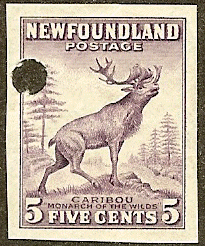
The simple reason why Newfoundland issued it's own stamps from Canada was that it was a separate entity. Newfoundland had a Representative government in 1832 and made the transition to Responsible government in 1855. It seems that the first stamps were printed in 1857, which makes sense since after Responsible government the colony was able to make domestic decisions but Britain still controlled international issues.
I have to admit... I have no idea how the idea of mail or post developed in Newfoundland. There were a series of coastal boats that serviced the rural communities these boats were the only means of communications for a number of years in these communities. On the island the first in land community wasn't founded until the 1880's with the development of the railway, which is amazing to think when the first settlement of Cupids, or Cuppers Cove, was started in 1610. These boats were subsidised by the government which took over operation of the post office in 1851 and later by the Reid's who ran the Newfoundland railway and were guaranteed a monopoly on the service. The Reid company ran the Newfoundland Railway (which had a very interesting history) on an integrated schedule with the coast boats, these boats were known as the "Alphabet Fleet" serviced all the areas that the railway couldn't reach. These boats serviced the Outports right up to, and past confederation with Canada, and in fact there is still a rather large provincial ferry service to communities that are only accessible by boat.
The stamps themselves had images similar to stamps in other countries, famous events, natural beauty, and heroic deeds. The Newfoundland Railway is common, Animals such as dogs seals cod and caribou lastly, and probably the most famous Trail of the Caribou series listing the famous battles the Newfoundland Regiment were involved in during WWI.
As for why Newfoundland resisted confederation with Canada, a short answer is political power in Newfoundland was held by the merchant class that was focused in St. John's. The concern during the period of time of the initial confederation talks was that the Merchants would be weakened in the political deals of Newfoundland and that they would lose the monopoly that they held in the colony. Other issues were sold to the public due to the friction between Canada and Newfoundland, the idea that the price of fish would be lowered with Canada was floated, that Canadians would be able to harvest the resource was another, and the French shore question on the western part of the island was still not answered and the concern was that Canada would want to appease the French part of the population. As time went on trade agreements were scuttled by Canada through Britain which actually drove Newfoundland to seek dominion status which it was granted on September 26th 1907, the same day as New Zealand. All these reasons were driving factors that pushed Newfoundland away from Confederation, and we only became part of Canada after a vote of 52-48 percent.