This is going to be a very hard question to answer since at face value one needs to note that Tom Clancy was a fiction writer. So whether or not he got something wrong really depends on how you evaluate what he wrote. Some of of his novels include technologies which are clear plot devices (the silent drive of the Red October is probably the most famous example) and it's not at all clear that Clancy ever even intended to suggest that such a technology was viable in the real world.
Added to this is the fact that a lot of his stories include fictional characters on all sides who might be based on a person like Gorbachev or Chernenko but are either composites or heavily exaggerated.
I haven't read Clancy in a while, but you might get better answers if you are more specific about how you are looking at the question. He certainly wasn't an uninformed writer, but it's really important to note that he was writing fiction about hypothetical conflicts in the near future (all of which are premised on a fairly exotic set of counterfactual circumstances) and not trying to document the Soviet diplomatic or military posture of the late Cold War in any sort of academic sense.
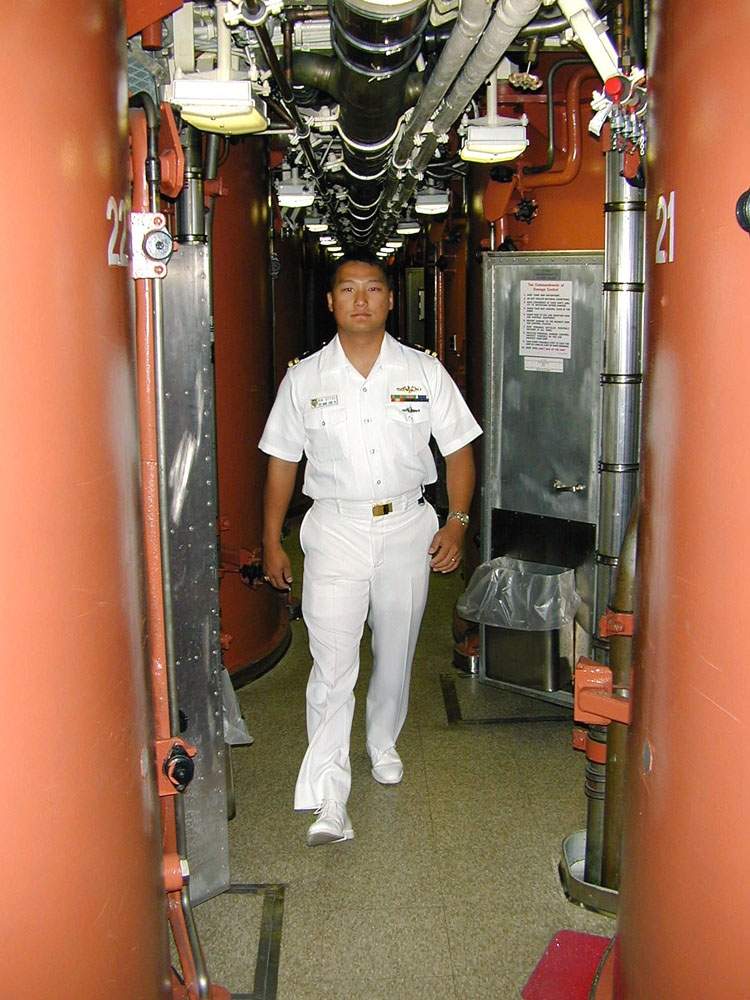
The obvious example from The Hunt for Red October is the climactic scene that takes place in the October's missile room. Without giving too much away, the protagonists are engaged in a gun battle to prevent disaster. The staging offers up not only the ability for the director to shoot an exciting scene as characters duck and cover behind missile tubes, but also has some great one-liners in it.
The problem with the scene is that it's based on the assumption that Russian missile subs in general, and the Typhoon in particular, operated like US subs, where the missile room is accessible to the crew. In the Typhoon class, it's not -- the subs actually have multiple pressure hulls, and the missile tubes are in a flooded space between the two main pressure hulls. I'm not entirely sure about the design logic behind this change, other than the fact that the Typhoon really is a big son of a bitch and enclosing the tubes means a larger pressure hull (or another pressure hull). It would mean the missiles were not serviceable at sea, but I'm not sure the extent to which Soviet crews would have been trained in such maintenance.
Incidentally, if you'd like a comprehensive look at the class, check out this album from /u/vepr157 that was posted awhile back on /r/WarshipPorn.