Were there hand-cranked mechanical analogues to blenders in use, or did you just have to mash stuff with a mortar and pestle? Were puréed foods regarded as something of a luxury prior to blenders, usually only eaten by relatively rich people (and/or only on special occasions)?
Or was hand-puréeing food, in spite of the labor required, such a trivial part of the overall cost and labor that goes into food (e.g., in the case of hummus, puréeing the chickpeas might be pretty trivial compared to the effort involved in planting, harvesting, shelling, cooking, etc) that it wasn’t a significant contributor to food’s cost? (e.g. so even low-class fellaheen could afford to purée chickpeas insofar as they could afford chickpeas in the first place).
(I'm focused here on things that produce a wet purée rather than a dry powder, since of course milling and the production of flour, etc, have an extensive history that I'm somewhat more familiar with.)
"Hand-cranked mechanical analogues" were rare, because machinery costs money. Until the later industrial revolution when factories began cranking out parts in large numbers, machinery of any kind was expensive, specially machinery with gears and cogs and wheels like grinders have.
For the vast majority of history, people have used stones to grind and mash stuff, and still do. But they wouldn't have used a mortar and pestle, which works best for dry materials. Liquids flow, so a pulp with liquid in it will squeeze out to the side, and won't remain in the space between mortar and pestle where the crushing action happens.
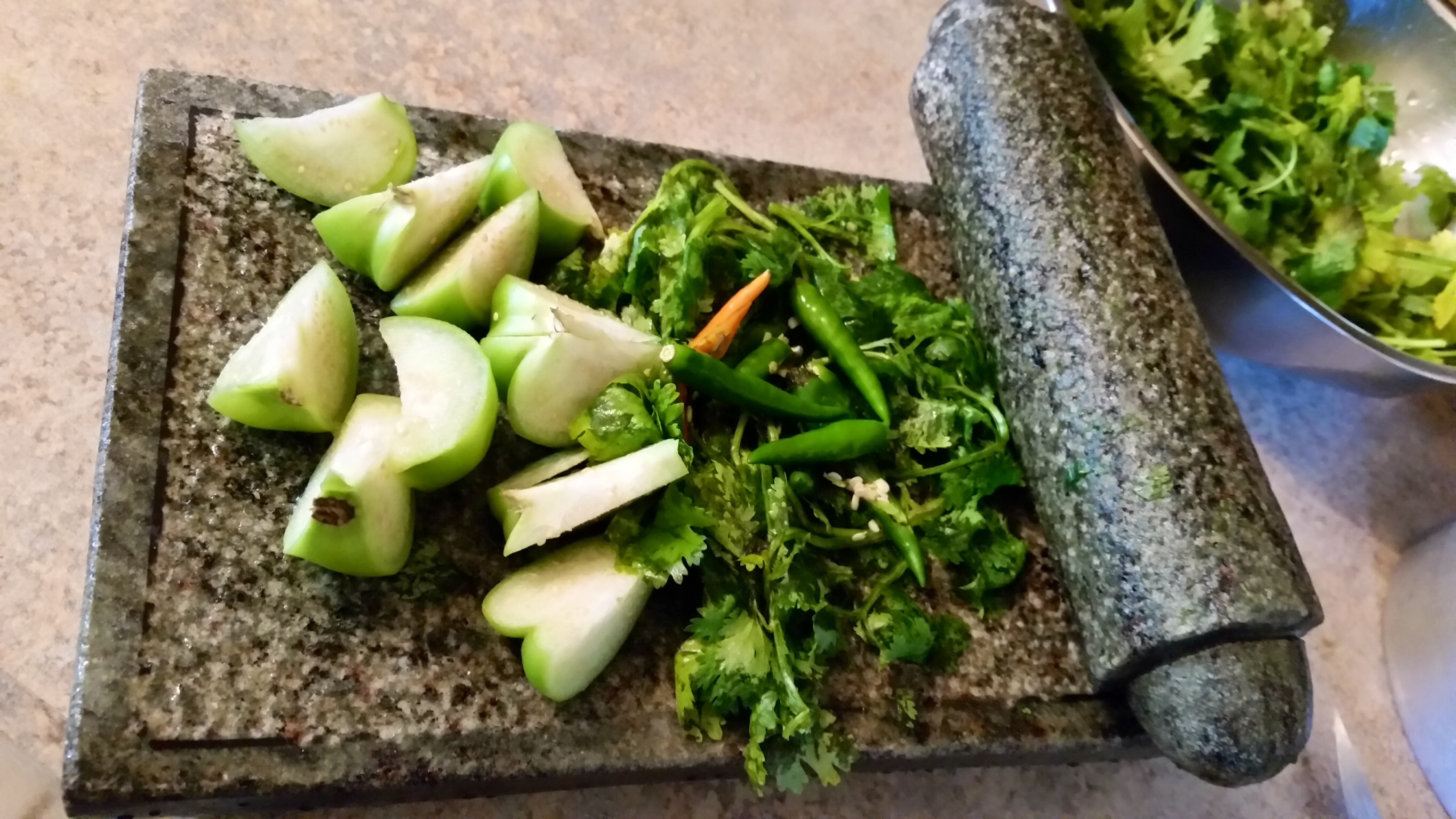
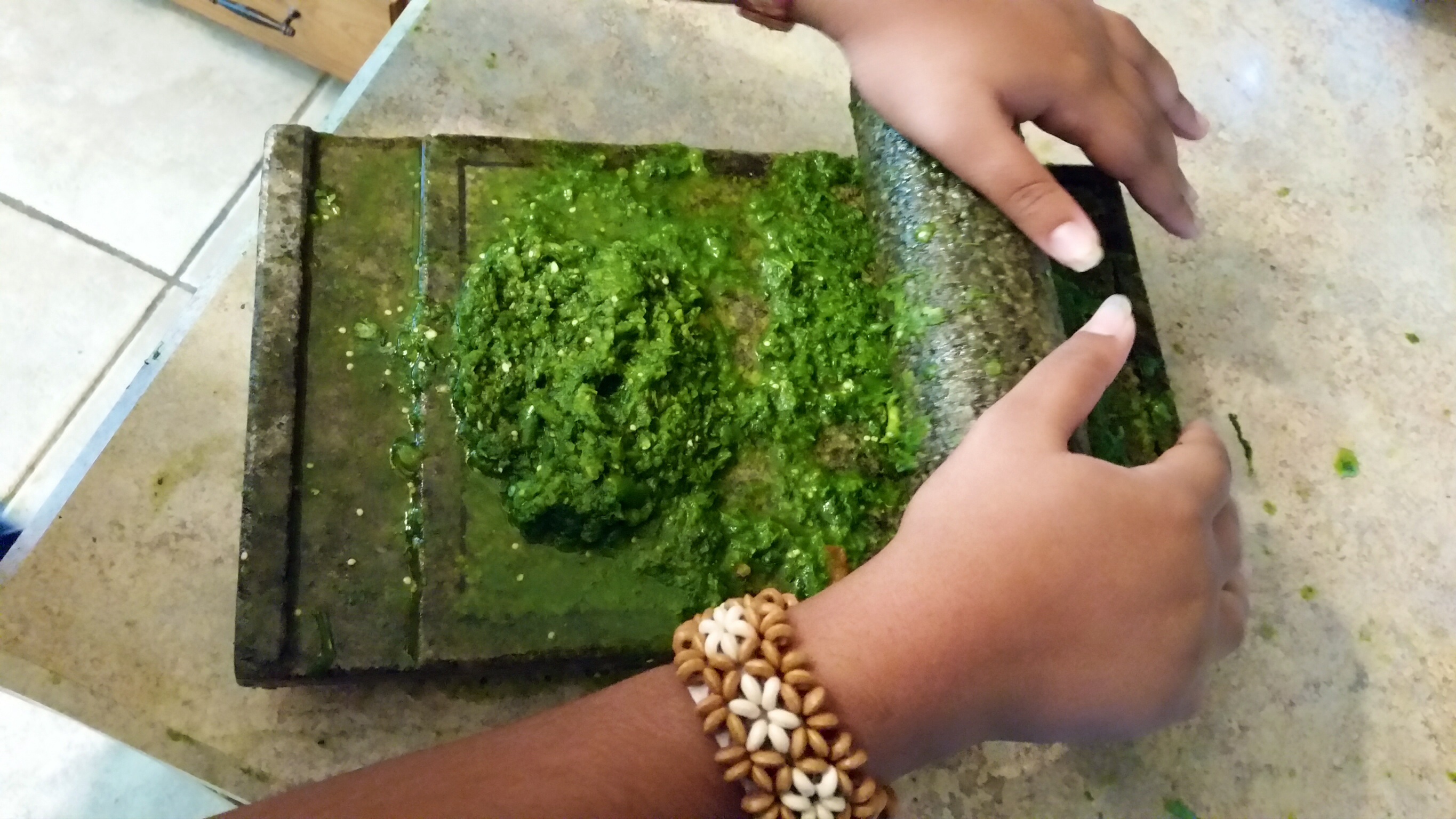
Instead, they use grinding stones, which include one stone with a large flat surface, and the second which is long and cylindrical. You can roll the cylindrical stone over the flat stone like a rolling pin to get started, and then for a finer mash you can rub or slide the cylindrical stone rather than rolling it. Both stones have rough surfaces which catch the food and don't let it slip away.
The version I linked above is called a sil-batta in India, and is incredibly common, even in households with electric blenders. Blenders require more liquid to work, otherwise you're constantly scraping stuff off the sides, back towards the blades. Grinders will work with dryer stuff, but are hard to clean. In India where nearly every dish starts off with a masala which needs to be ground, using an electric blender would be more work than to just drop the stuff on the sil and roll/mash the batta over it a few times. Cleaning is far easier. The sil is heavy and you don't want to keep moving it around, so it's permanently installed near the sink or other water source, and you just turn on the tap or point the water hose at it and hose it down.
You can grind/mash most liquid containing foods on it, including chickpeas, leaves, onions and garlic, wet spices, veggies, whatever. This is what was used prior to mechanical or electric blenders, and is still faster overall than using a blender, unless you are working with large amounts of food.