This is an incredibly broad question. The first thing to think about is, 'compared to what'?
North America is very large. It would take you about 80 hours of driving to get from Anchorage to Mexico City. Just driving across mainland Canada, from Vancouver to Halifax is about 60 hours (if you take the shortcut through the United States).
Think about these distances on a world map. The North-South axis from Anchorage to Mexico City is roughly comparable to the distance from Oslo to central Niger. The East-West distance is roughly comparable to the span between Lisbon, Portugal to Baku, Azerbaijan.
If you were to draw lines on the map between Oslo, Lisbon, central Niger, Baku, and back to Oslo, that gives you an area to use for rough size comparisons.
If you look at that space on a map, does it surprise you that it contains a great deal of linguistic, religious, ethnic, political, economic and cultural diversity? If no, then the diversity of Indigenous populations in North America shouldn't be all that surprising either.
As a second broad point, the legal status of the Indigenous nations of North America were frequently 'crystallized' during the colonization process. Across Canada and the United States (I'm not comfortable commenting on Mexico or Central America), the formal interactions between settler governments and Indigenous governments frequently operated to 'freeze' Indigenous political units at points in time, preventing much consolidation or fracturing.
The numbered treaties across Western Canada provide a good example.
The general structure of the numbered treaties was that the Aboriginals would transfer lands to the Canadian Federal government (technically to the British Crown in right of Canada, but operationally to Ottawa), and in exchange specific parcels of land would be 'reserved' to them, the government would provide annuity payments to all included Aboriginal individuals and specific payments to a limited number of Aboriginal government actors, and the members of the signatory nations would retain certain rights (depending on the treaty, but hunting, fishing and trapping are in almost all of them). The later numbered treaties also included lists of specific equipment or financing provided to the Aboriginal nations by the Canadian government to encourage/force the Aboriginal nations to transition to settler-government approved economic models. Agricultural tools, seed stock, and ranching equipment are the standard.
So how did this crystallize relationships?
By reserving specific parcels of land for Aboriginal life, (and confining any benefits of the treaties to Aboriginals who lived on the reserve until the 1960s), it created a fragmented system of small governments that did not necessarily reflect how the Aboriginal people saw their own governing structure. These small governments are known as band councils, or First Nations.
Let's take a look at the province of Manitoba as an example. A linguist would probably divide the Aboriginal populations in Manitoba into three or five broad groupings. Economists or geographers would make a similar number of divisions based on the relative importance of agriculture, fishing, hunting to the group, and which ecosystem they live in.
But Indigenous and Northern Affairs Canada (the Federal department responsible for the administration of treaty relationships) says there are sixty three First Nations in Manitoba.
The First Nations themselves have three umbrella organizations-- the Assembly of Manitoba Chiefs which acts for First Nations across the province, the Manitoba Keewatinowi Okimakanak which represents First Nations in Northern Manitoba, and the Southern Chiefs Organization. The moral here is that Aboriginal people view their associational and governmental structures differently than was agreed upon in the numbered treaties from 1871-1908, and differently than the Canadian Federal Government does.
But the treaties and the subsequent segregation of Indigenous people from Canadian public and political life meant that the original reserves crystallized as the only vehicle for government-to-government relationships between treatied Aboriginal people and the federal Canadian government.
Compare this to what happened in our imagined Lisbon-Niger-Baku-Oslo square since the 1870s. Empires crumbled, linguistic and religious nationalism rose/fell/was co-opted/was crushed, multi-ethnic states rose/fell/rose again, economic and political structures served as the focus for a half-century bipolar conflict and a Non-Aligned Movement arose around that conflict.
Absent the crystallization of 63 different political units in Manitoba, and the lack of major geopolitical turmoil, who knows how First Nations people in Manitoba would have organized and re-organized themselves?
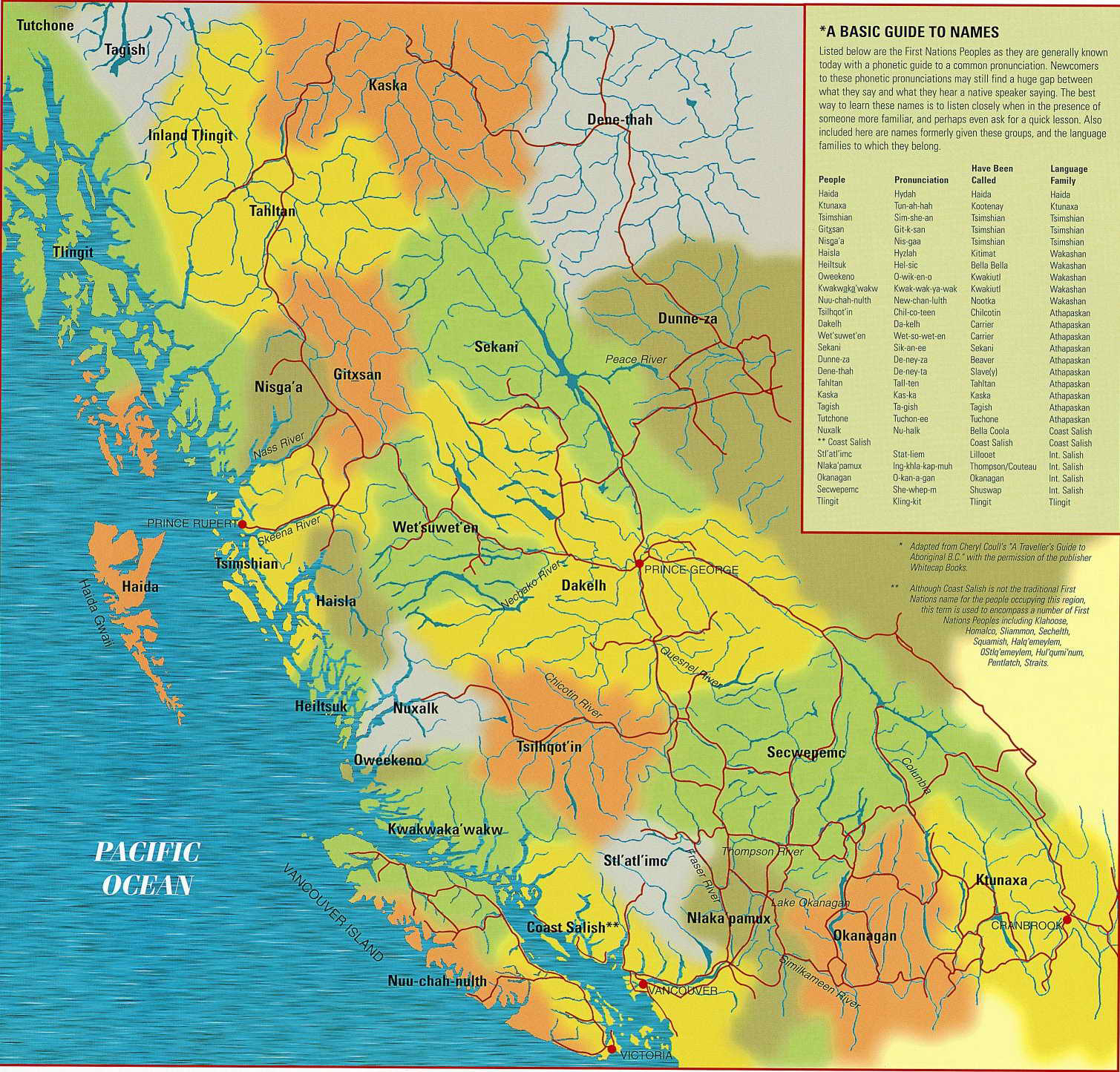
We can get some interesting ideas from how (largely non-treaty) British Columbia peoples think about grouping themselves; specific affinities like Musqueam, Tsleil-Waututh, Puyallup and many more; broader dialectical categories like Coast Salish, Interior Salish; and a broader Salish identity. All of these identities mean different things to different people who claim them.
Someone might describe themselves as an English speaking, Jewish, Albertan Canadian living in a suburb of Edmonton and working as a doctor. That person could emphasize any of the above identities differently depending on the context and their goals.
The Indigenous peoples of North America also have a multiplicity of identities they can claim. But the crystallization of government-to-government relationships ~100 or more years ago has prevented much of the coalescence and fragmentation of identity groups that we have seen in our comparator area.