I find there is an increasing number of people who refute this idea. I read that the borders are based on ottoman administrative regions, but does that really matter given that the Ottomans were colonizers themselves?
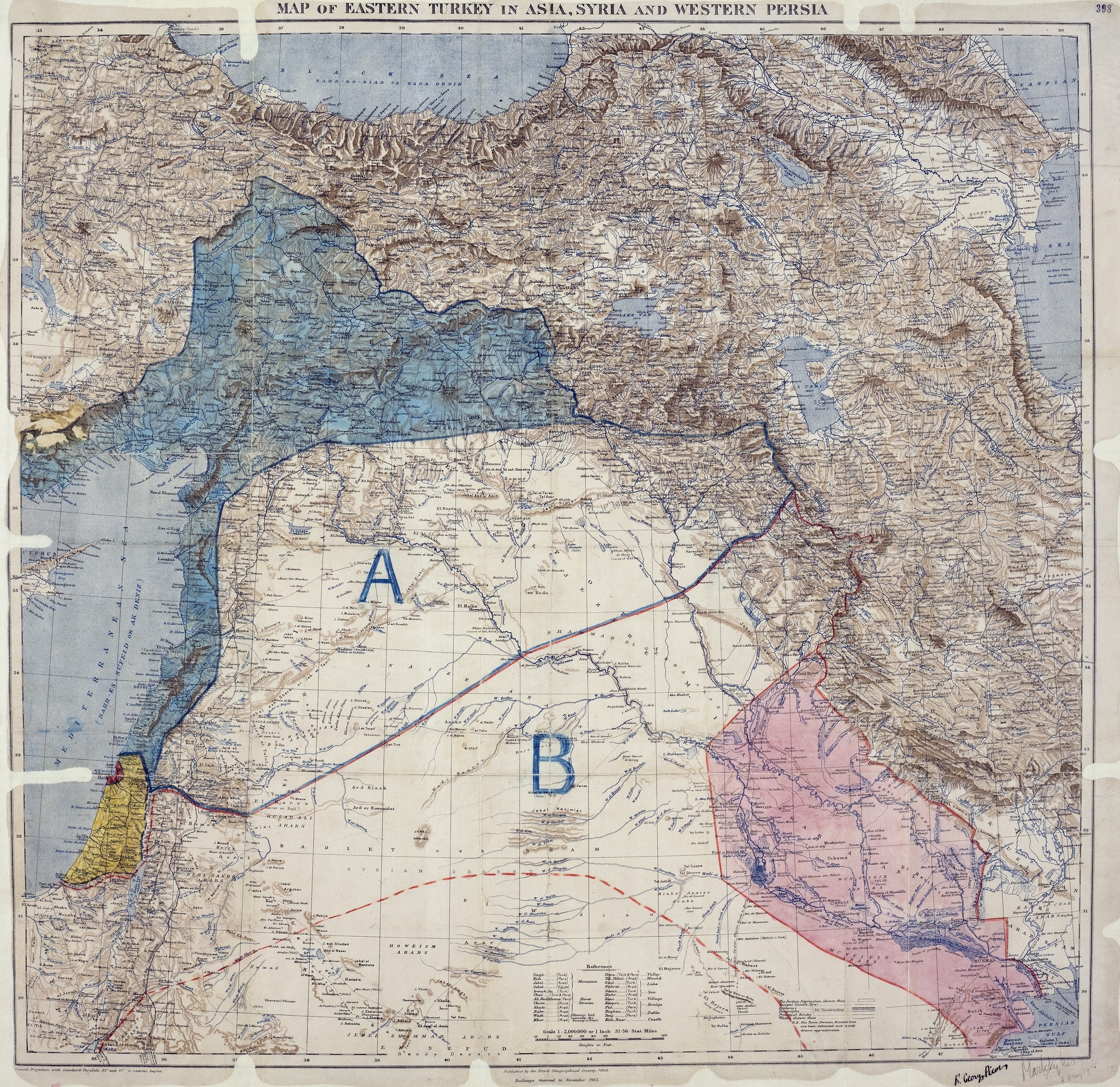
Firstly, the Sykes-Picot agreement is not what got put into force, it was sort of an early draft of which "spheres of influence" would be under direct or indirect control of France, Britain and Russia. It did not specify final borders of specific states, and in the end, changes were made. The actual treaty they attempted to push through was the Treaty of Sevres (forgive my lack of accents on those letters), however this in turn did not dictate the final borders because the Turkish war of independence allowed the Turks to push back, creating more or less the borders of the Turkey we know today.
Here is a map that shows the French and British spheres of influence under the Sykes-Picot agreement. If you know your geography well you might notice that one change is that the state of Iraq (under British influence) crossed into the French zone on this map.
Since the agreement did not specify how these zones were to be administered, a better question to ask might be "How accurate is it to say that the British and French mandates in the Middle East were 'arbitrary lines drawn in the interest of the colonizers'"?
I'll refer you to an earlier discussion that we've had on /AskHistorians/, particularly the responses by /u/CptBuck and /u/tayaravknin. The "Mosul question" is one notable example where the borders drawn in the final calculation were done more for political expediency than they were reflective of sectarian lines on the ground.
The other point I want to mention is the situation in Syria, specifically. It's interesting because the French administration involved the creation of states that corresponded to the Alawites, the Druze and the Maronites. You can see this image here, which represents the 1922 division of the French mandate. At the time of it's independence, though, only the Lebanese state sought a separate state. This is an area of of weakness for me though, and I hope we have some experts on the Syrian mandate that could provide more detailed information here.