At first I had thought this might be a Christian/Muslim thing (cross vs. crescent), but then I realized that swords have been mostly straight in Europe since at least the xiphos days (long before Christianity), and were made curved in parts of Asia that were never Muslim.
The exception here is cavalry swords, which were curved in both Europe and Asia to assist with keeping the blade on target during ride-by and at a downward angle. But leaving aside this purpose-built design, it does seem that most European sword blades were straight, while most Asian (and many African, while we're at it) were curved, even for swords that were meant to be used by foot soldiers or duelists. I'd love to know why.
This sub occasionally gets questions like this along the lines of "why did Asian armies do this while European armies did this", however I've noticed that they tend to rarely get satisfactory answers if they get answered at all. This might be due to the fact that there aren't many people who are experts in both medieval European and medieval Chinese warfare. Generally fully understanding how warfare and weapons developed in just one region for just one period of time tends to be a full time job.
For swords, the simple explanations like "one was better against armored vs unarmored" or "one was better from horseback" seem to have too many counter-examples to take at face value. Knights of course often fought from horseback and there were many periods where straight swords were used against mostly unarmored enemies. Similarly there are definitely examples of asian soldiers who fought with curved swords against armored opponents on foot. While the curved saber started to become more popular in Europe once cavalry stopped wearing armor it was hardly universal and the thrust vs. cut continued to be debated by scholars well into the 19th century. If you could somehow develop a complete knowledge of warfare during all these periods and then perform a statistical analysis of the victories of the straight sword compared to the curved sword then maybe in theory you could figure out which was really more effective in which situation, but that probably isn't going to happen.
In addition, curved vs straight is just the tip of the iceberg. You'd also need to dive into why some peoples preferred swords with very pronounced curves while some preferred swords that only had shallow curves, why some swords had the center of mass right at the handle while others had the center of mass further down the blade, why some swords had a cross section that looked like this while other swords had a cross section that looked like that, etc.
Again there likely isn't a very good answer to your question. It may be that choice between straight vs curved blades often did just boil down to culture, tradition, or personal preference. Most sword designs are at their heart a compromise of some sort between various features. However a strong cut from a knight's longsword is still going to make someone pretty dead, as is a thrust from a katana. How important is it really if one design is 1% better at one or the other?
Asia had plenty of straight swords.
The traditional Persian blade was straight, especially in the Sassanid period:
https://upload.wikimedia.org/wikipedia/commons/9/9a/Sasanian_Swords.jpg
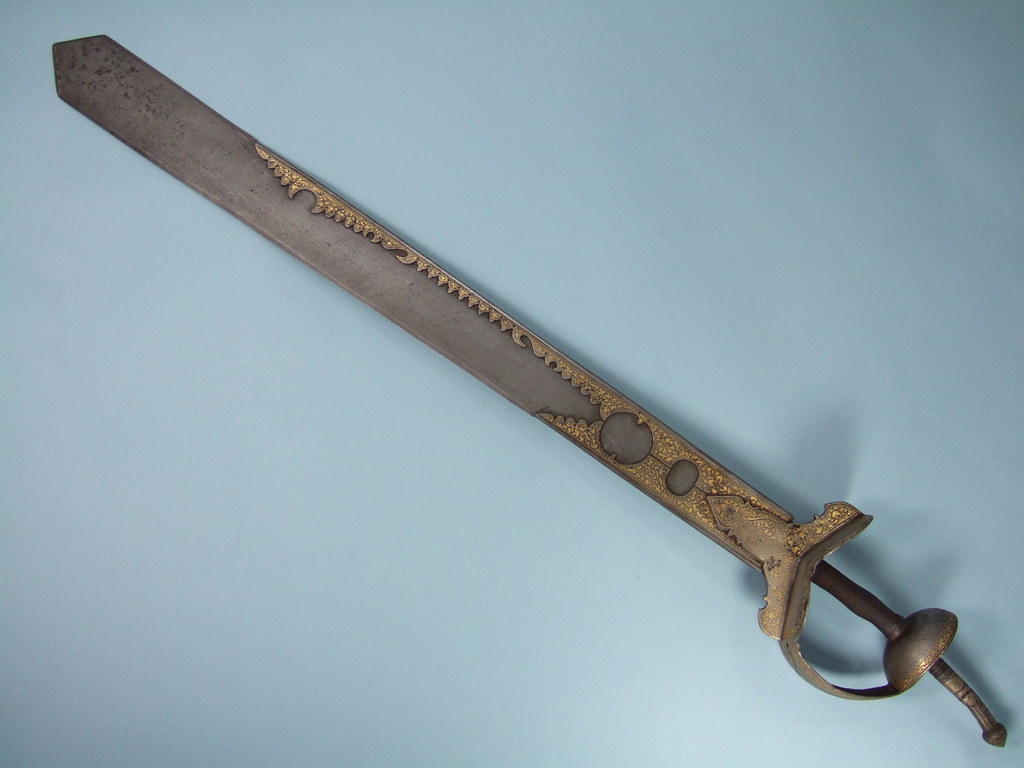
There is the Indian Khanda:
https://c2.staticflickr.com/8/7163/6517941425_8fb103a8d5_b.jpg
India also imported European blades to create the Firangi sword:
http://oriental-arms.com/photos/items/18/001318/ph-0.jpg
There was the Chinese Jian:
https://s-media-cache-ak0.pinimg.com/originals/b1/2d/4c/b12d4c39ab6b98155facabd65f641c15.jpg
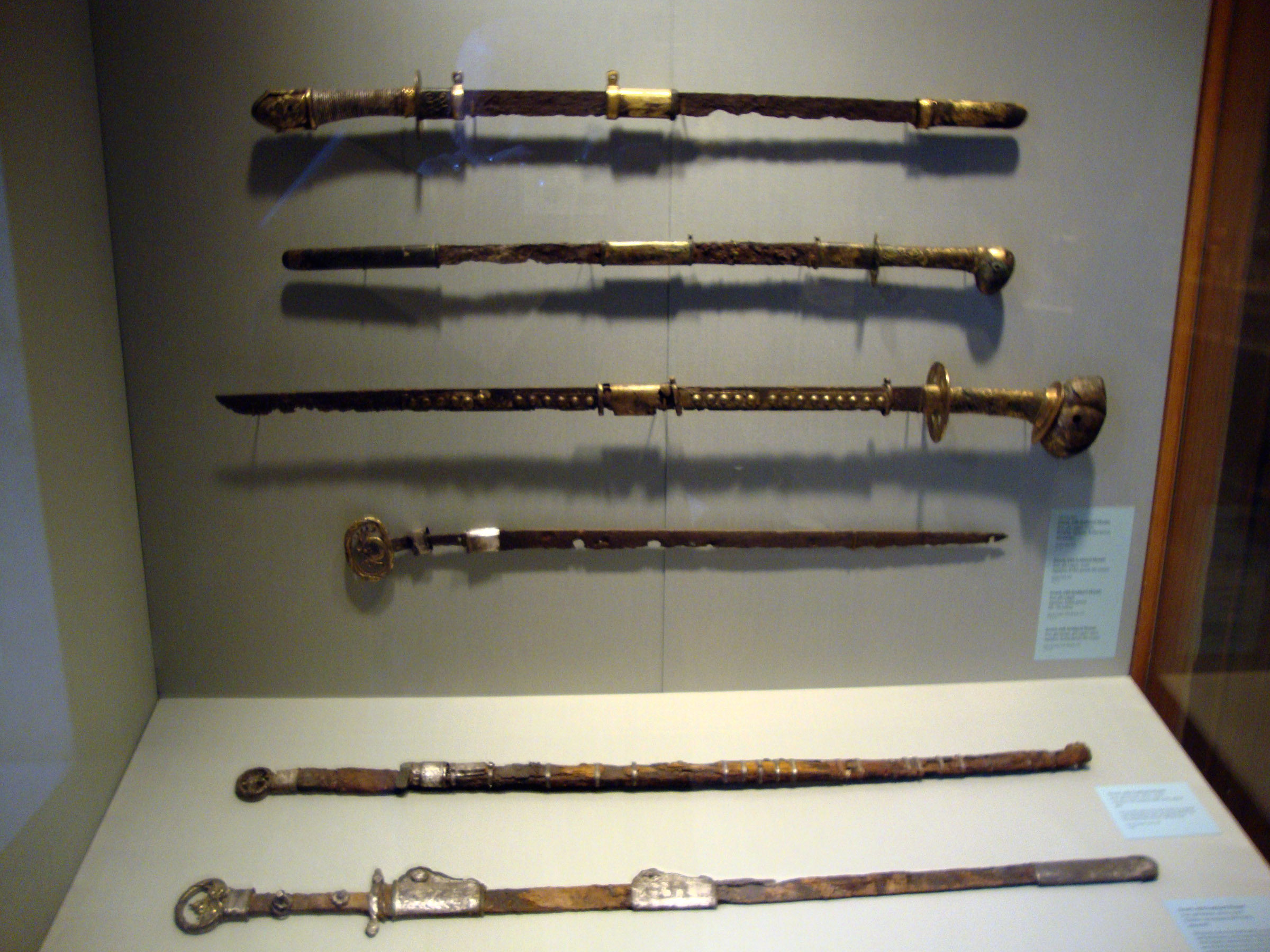
Korea also had straight swords:
https://upload.wikimedia.org/wikipedia/commons/6/60/Three_kingdom_swords.jpg
The Philippines had the straight, but flaired kampilan:
http://www.arscives.com/historysteel/images1/177-iag24.jpg
And also the Kris which, whilst wavy, was certainly not curved:
http://www.arscives.com/historysteel/images1/161-iag21.jpg
Japan initially used straight swords called the Chukuto:
https://upload.wikimedia.org/wikipedia/commons/c/c5/Ancient_Japanese_swords.jpg
African swords, like the Sudanese kaskara:
http://www.swordsantiqueweapons.com/images/s527.jpg
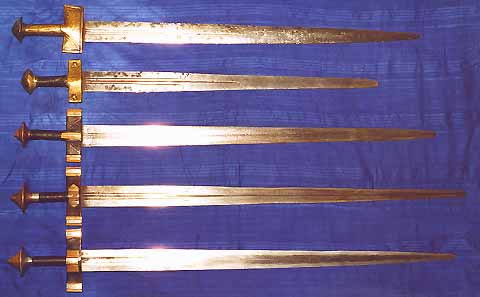
And the Tuareg Takoba were straight:
http://www.vikingsword.com/ethsword/takoubao.jpg
Arabic swords were also initially straight:
http://www.tameshigiri.ca/wp-content/uploads/2014/08/7thc.jpg
Old AskHistorians thread to help anyone who may feel like contributing further:
https://www.reddit.com/r/AskHistorians/comments/1ffws1/why_are_eastern_swords_generally_depicted_as/
EDIT: Keep in mind it looks like AH was far less stringent with citations and such back then.
The first thing to say about your question is that it feeds into the broader question of why different fighting systems evolved in different parts of the world. Given that we are all basically working with the same meat and bone machines, one might be forgiven for imagining that given access to similar technology, we'd all develop similar systems, and in fact, even where bladed weapons are concerned, this tends to be very much the case.
The differences between how a highly-trained European martial artist would use a sword, for example, vs how a highly-trained Asian martial artist would use a sword, are far smaller than how a completely untrained individual would use one with regard to either.
But there are differences in fighting systems across time and geography and, hypothetically controlling for differences in technology, it very much does look like regional and even continental trends are a real thing.
As for why said continental variation exists, my idea is that it has less to do with what is or is not most effective, and more to do with what, for lack of a better term, I'll call "cultural inertia."
In this explanation, the European preference for straight blades and the Asian preference for curved blades (though obviously not universal in either case) derive from a single prehistoric, or ahistoric, predilection which in turn led to a sort of causal cascade that through cultural means resulted in two very different-looking realms of swordsmanship.
Again, the real question here isn't so much curved swords vs straight swords, but instead is something Like, "why did different fighting systems, together with their respective material and psychological accouterments, evolve to solve the same problem?"
The answer is cultural. At some distant point in time, straight-bladed and curved-bladed systems were independently established in different regions with long-term effects that have cascaded through history to create the very different European vs Asian systems that we see today.
While the stereotypical Asian sword is curved and the stereotypical European sword sis straight, there are counter examples of each. Other commenters have already linked to a bunch of straight non-European swords, but I wanted to mention a few curved swords of Europe. The falchion and falcatta families of swords from Spain and Italy are heavily curved. German messers (technically knives due to handle construction, but generally sword sized) are also curved. Some basket-hilted broadswords of European design (schiavonnes and claymores- not the giant ones- in particular) are curved as well. Cutlasses are also typically curved. So while the typical European sword may not have been curved, there are plenty of styles from Europe that have a single curved edge to them.
Follow up:
A couple of answers allude to differences in fighting styles without really covering any detail.
Would a straight sworded style of fighting have involved "backhand" blows where you would strike with the back of the blade, wher/ eas a curved sword style would be all forehand blows? Or are backhanded blows ineffective/inefficient with any sword?