As a follow up question, since who answer OP's will probably know, and I've always wondered.
Often times in popular media, court jesters are seen being forced into the role against there will. Did this kind of thing actually happen to a king's political rivals/those who displeased him?
Followup what was my childhood like? Did I just show qualities necessary of one or was I trained to be entering?
I'd also like to know how someone would get the position of jester? Did many people aspire to that role?
Edit: did I break the rules by asking a question in a thread with a question already? Legitimately asking because if so I'll delete the comment. Never sure in this sub.
I can't speak to the 14th century specifically and I'm not a historian, but I do know a bit about the jesters that were part of the Tudor court. Alison Weir writes about them in her book Henry VIII: the King and his Court, particularly the chapter "Innocent and Honest Pastimes."
To answer your question directly: yes, the main function of a jester at the Tudor court was to make people laugh. They sang bawdy songs, dressed up in funny costumes, made fun of court life, and "roasted" court figures. One recorded opening line was, "Sir, what say ye with your fat face?" By contrast, others are listed in records specifically as jugglers or tumblers, meaning there was a division of labor in court entertainment.
We know names of several jesters employed by Henry VIII, including Martin and Sexton (also known as Patch). The most famous was Will Somers, who came to court in 1525 and didn't retire until Elizabeth I's coronation.
Somers had a close relationship with his employer. After jousting accident in the 1530s which left him with a lifelong, excruciating leg wound, Somers was the only person who could cheer Henry up when he was in pain. Other commentators wrote that Somers had access to the king's ear in a way many noble courtiers did not. Given his wittiness and his ability to maintain a close relationship with the king, Somers may not have been mentally handicapped in the way that other jesters (sometimes called "natural innocents") stereotypically were. In other words, he was more of a "comic" than a "fool."
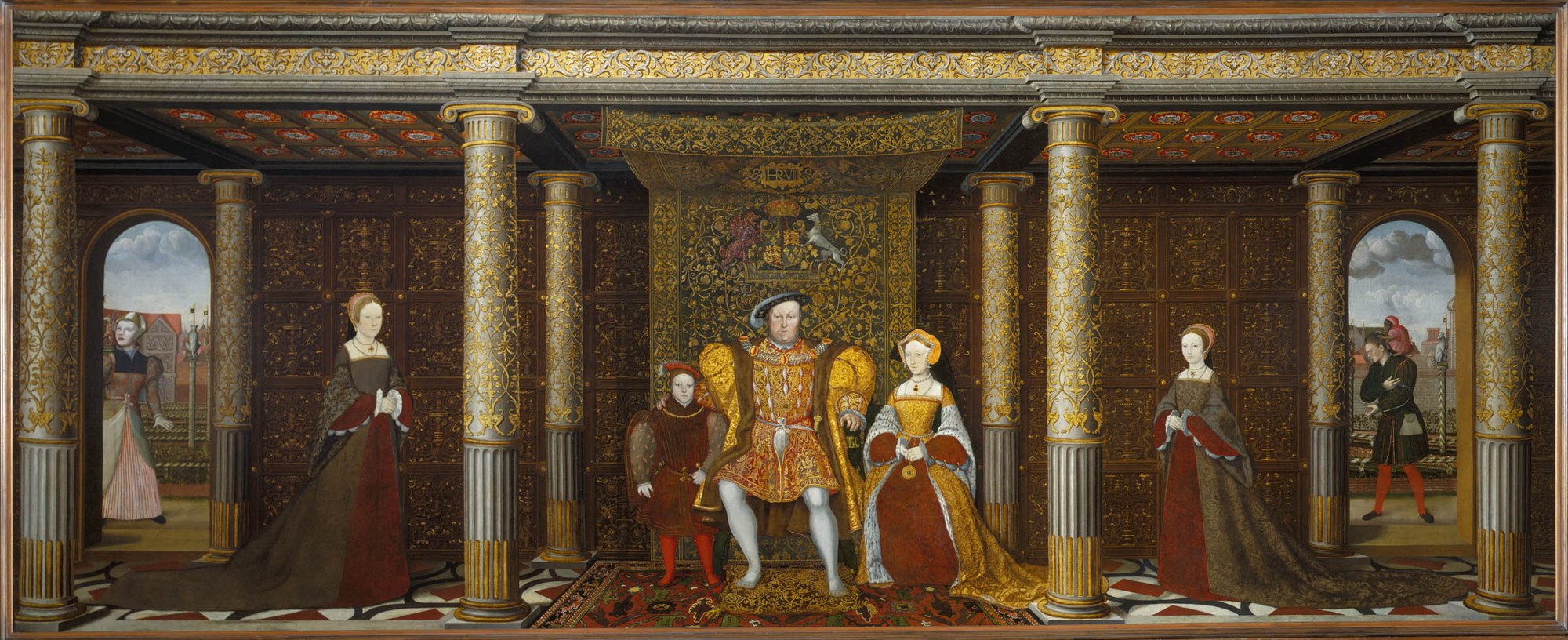
We even know what Somers looked like. The first depiction was in Henry VIII's personal psalter and demonstrates their intimate relationship. This book contains eight miniatures, one of which shows Somers listening as Henry VIII plays the harp. Another potential depiction is in Whitehall Palace. In ~1545, an unknown painter completed a group portrait of Henry and his family. On the left and right are two figures that have been identified as Will Somers and Jane the Foole. Somers is shown in red hose and a monkey on his (possibly hunched) back. Jane became Mary I's favorite jester.
To sum up, jesters were one of many types of entertainers at the Tudor court. Their main function was to perform different types of comedy, including the unique ability to "roast" court figures. Some, such as Will Somers, parlayed this work into a more intimate relationship with their employer.
To add on, what was the general social status of a Jester when they weren't working? Did they have many luxuries?
Follow up question, how historically accurate is Lagerkvist's The Dwarf? Would a court jester/fool/dwarf have that close of a relationship to members of the court?
Follow up questions: what were common dangers of the job? What training, if any, was required?
Hi, friends,
AskHistorians is a subreddit where people with questions about history can get answers from those with expert-level knowledge in the topic at hand. Therefore, we ask that answers be in-depth, comprehensive, and reflect current research on the subject. We do not allow answers from those who
make up false tales and make themselves into fools
when they have the wit and the will to do the work if they wished
And for those posting one-line jokes and complaints,
acting like fools and performing jests
against the laws of our lord...
saying mean things and mockeries against those who give them no gifts
(William Langland, 'Piers Plowman', late 14th century)
You may well find yourself treated like Borra the Fool in 1414, who, as the target of a jest, was suddenly hoisted into the air by a costumed Grim Reaper--at which point, terrified, he urinated all over the Aragonese courtiers.
Thanks!