Update: Thankyou everyone for their responses. I had speculations that wooden frames were used in construction. But in the end i though it was just stone that supported the whole structure. I knew stone didnt burn, but i didnt know if something like a house fire wouldve been hot enough to compromise the structeral integrity of the building.
Stone might not burn by fire and smoke as wooden structures do - but stone can still take extensive structural damage by the heat, as Heras et al. argue in a paper studying the damage of fire to heritage buildings. Yes, the heritage buildings studied are not Roman-era, but the paper's still very relevant for the question.
As for the fire's immediate effects: while stone is not as vurnerable to fire as biodegradable materials are, the heat still threatens stone by causing the stone's inner structure to fluctuate. Sandstone and similar material are more porous and contain mineral structures that assimilate the heat. So even as the structure break down, the inner parts remain cold and intact - the outer layers take the brunt. So even a localized fire can fracture the outer layer of sandstone due to the structural collapse, as shown in the paper's Figure 2. Meanwhile, marble and similar material does not have a matrix and are less porous - so they're more prone to complete mechanical breakdown when extreme heat's applied to it.
But as always with fires, that's not all:
" Fumes and ashes also introduce new elements to the stone, such as carbon, sulphur, nitrogen and phosphorus and organic compounds, such as oil and waxes, that can coat the stone surface and fill near-surface pores. The combination of these elements with other products from the alteration of the stone may generate salts, such as sulphates, nitrates or phosphates."
The fumes, ashes and soot can further damage the stone, regardless of type, via flaking. And even when the soot's removed, the newly exposed surfaces might weaken the stone's structure further.
So, can this accurately describe the Roman fires - lets say Nero's Great Fire and the destruction the flames brought? Even as the surviving Roman accounts chronicling the fire - I'll mention Tacitus, Suetonius and Cassius Dio - are only secondary (since they lived a few generations after Nero), it's the closest to primary sources we have. Any potential primary - those who were contemporary with the Fire, such as Pliny the Elder - source have not survived. Lets have a look:
It destroyed parts of Nero's own palace - Domus Transitoria - several temples and three of Rome's then fourteen districts - only four of them came away unscathed, according to Tacitus. Suetonius doesn't mention the districts - but does agree that temples burned alongside its trophies from the Punic (Hannibal's, Scipio Africanus', etc.) and Gallic (Julius Caesar's) wars. Meanwhile, Cassius Dio mentions the general devastation, but doesn't go into specifics. So stone buildings were very likely at the very least affected, maybe even consumed by the fire.
The fire raged for almost a week - both Suetonius and Tacitus agree on this. Suetonius implies that it was continuous - Tacitus implies that it restarted after a small breather. Cassius Dio, meanwhile, mentions that it took place over several days and nights.
Both Cassius Dio and Suetonius argue that Nero (indirectly) caused the fire. Tacitus, meanwhile, is much more uncertain regarding its cause - to qoute him: " as authors have given both accounts".
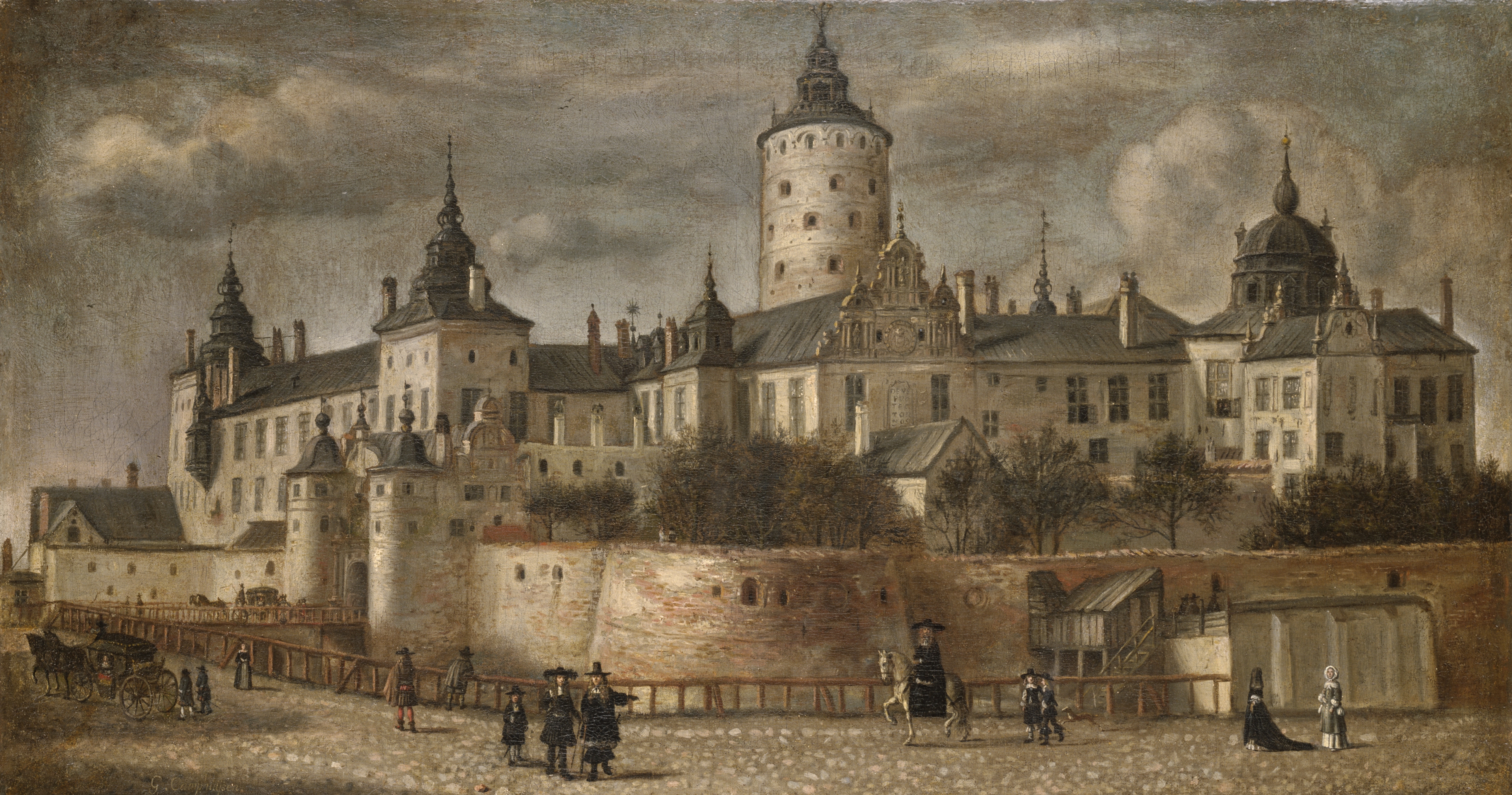
So, what can we tell? Honestly, I'll mention two much later fires - the Great Fire of London in 1666 - which torched St. Paul's Cathedral to the ground - and when a fire caused the Swedish castle Tre Kronor to pretty much evaporate in 1697. Although the former torched St. Paul's only when it had already burnt down a lot of London's wooden houses and grown to massive proportions according to Samuel Pepys (a primary source and an eyewitness! Yay!), the latter started inside the stone castle. Just look at Tre Kronor in this painting painted 36 years before the destruction. With possible help, yes, since the two suspects in the Swedish fire were sentenced to death and the third to five runs around the gauntlet (in which the party judged guilty is forced to run between two rows of soldiers who strike out and attack them).
So with the two latter fires in mind, the Great Fire in Rome is very likely - given the sources that survive and the implied ones that have not survived to present day - to have caused at the very least significant structural damage to Rome's stone and marble structures. It may not have started inside a stone building, but once it got hot enough - nothing was really safe from its burning heat.
Suetonius' The Lives of Twelve Caesars, the Life of Nero, 38