So, I understand that while being very deadly by any standard, smallpox still left many survivors (at least in populations where there was established exposure and immunity to it, i.e. not the Americas).
I've been trying to find out how disfiguring the disease was for those who survived it. Would survivors have had fully pock-marked faces? Was it uniformly disfiguring, or did some people get off easier? Did it matter the age at which you contracted smallpox -- e.g. the younger you are when you get a scar, the more successfully the scar will heal/disappear with time? And did these outcomes vary based on time period, location or treatment techniques?
It depended a lot on how serious the disease was - lighter cases of smallpox were not at all as disfiguring as worse cases.
The Swedish King Karl XII contracted smallpox at the age of 13, but it is noted as a ligth case which he soon recovered from. History records him as proud of his pockmarks, as he thought they made him look more mature and grown up.
This seems to have been the case later in his life as well. When Johann David Swartz, court painter in Sweden pictured the King at the camp in Altranstädt 1707, after the victory against August the Strong of Saxony and Poland-Lithuania, the King posed with uncombed hair and specifically asked Schwartz to count and make sure all his pockmarks were included in the picture.
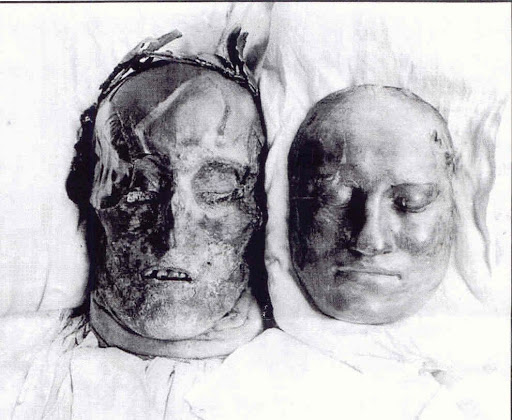
Unfortunately, the pciture itself is in private hands and what you can find online are copies made of the portrait - where the King's hair has been 'corrected' and the pockmarks replaced by smooth skin like the tradition was at the time (to flatter the subject of the portrait or to show him as a vital and healthy ruler for propaganda reasons). Likewise, the death masks of the King are not actual death masks but rather sculptures made in his likeness - they also lack pockmarks. See this 1917 side by side comparison of the King's cranium and his supposed death mask - they don't fit.
The King himself found the portrait excellent and having a "scary resemblance". However, his grandmother, Hedvig Eleonora, to which he gifted it, found it too realistic and not very beautiful.
Source: Karl XII: En biografi by Bengt Liljegren