National pride and historical treasures are of course highly variable concepts and near impossible to quantify. For example, it is not an unreasonable proposition that most French people in 2016 would consider the Mona Lisa a national treasure, but da Vinci's painting had a circuitous route on the way to national fame. The painting's much publicized theft in 1911 built on the valorization of Italian Renaissance painting among bourgeois intellectuals as a masterpieces of global culture. Fame and reputation built up from there where the Mona Lisa is now one of the centerpieces of the Louvre, while in 1911, it was another just another Renaissance masterwork.
In the case of Napoleon, his reputation in the twentieth and twenty-first centuries has ebbed and flowed. French Marxists and the left tended to dismiss Napoleon as the end of the Revolution and the start of the age of the bourgeoisie. Monarchists, fascists, and various other fellow travelers on the French right tended to view Napoleon's ordered state and contributions to French power favorably, but not his connections to the egalitarianism of the Revolution. Gaullists and state authorities in both the Third and Fifth Republics celebrated Napoleon as a state-builder and law-giver. And of course, Napoleonic wargaming, military history, reenactment, and miniatures have found durable niches within French, as well as European and American, popular culture.
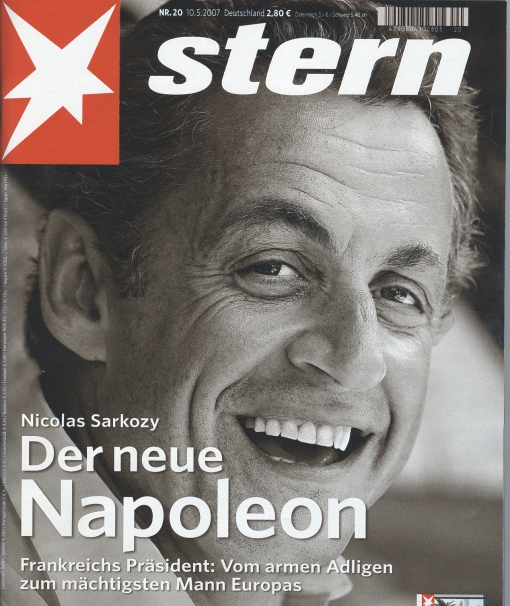
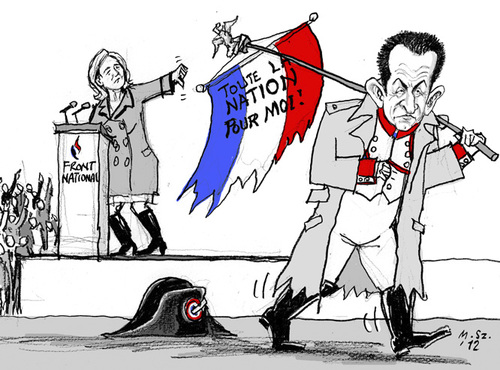
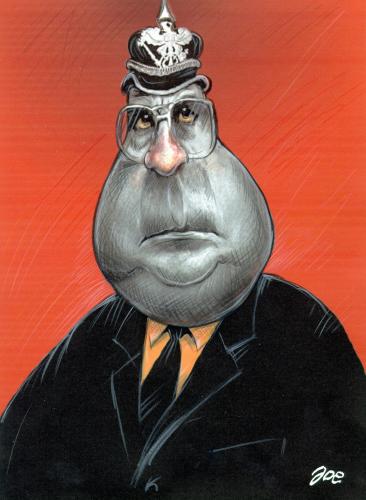
One of the salient features of the modern French relationship with Napoleon is that he is very much depoliticized. The press sometimes labeled French political leaders like De Gaulle or Sarkozy as the new Napoleon, but these analogies tend to be ambiguous. The German magazine Stern had a cover drawing the analogy, but denuded of any real political aspersions. Other images tend to portray being a Napoleon as an element of political theater, as this cartoon showing Sarkozy's rejection by the French right, orthis Andrew Davey cartoon showing him either wanting to put on De Gaulle or Napoleon's uniform. Napoleon is adapted by politicians, not intrinsic. In contrast, analogies to Bismarck usually directly connect current policies to the Iron Chancellor. The common trope of Merkel in a pickelhaube, as seen in this Marianne cover is much more innate, as this caricature of Helmut Kohl coexists with his modern dress. While the Napoleonic bicorne and great coat work as a symbolic shorthand for Napoleon and his vices, its larger meaning is more variable than imperial German regalia like the spiked helmet.
The current depoliticized and variable nature of Napoleon's symbolism was a stark contrast to earlier iterations of the Napoleonic legends. During the nineteenth century, the Napoleonic legacy was more politically contentious as it directly connected into various aspects of French politics. There was a Bonapartist party in France during the Restoration and July Monarchy and even the Bourbons sought on some level to claim the gloire of Napoleon's empire away from the great man and onto France. After the brief White Terror that followed the Hundred Days, the Bourbons engaged in a sort of amnesty fever for the military men who rallied to Napoleon and escaped the immediate retribution of the Restoration. For the emerging middle classes in the West, Napoleon was a class hero of sorts in that he represented the possibilities of a career open to talent. The American nouveau riche were particularly keen on collecting Napoleonic memorabilia and art and a number of American industrial magnates likened themselves to Napoleon.
The larger importance and cultural relevance of Napoleon though has largely passed, both for France and the West. One French joke popular during the Second World War was that when Hitler returned the body of Napoleon II in a spirit of post-1940 Franco-German reconciliation, some wagged "the Germans have taken our coal, but have returned the ashes." Such dismissals of Napoleon are partly a function of one of the cornerstones of his legacy, Napoleon's military accomplishments, was not as romantic in the shadow of two world wars. Napoleon's dictatorship also became more problematic in light of fascism, which also stressed charismatic leadership and careers open to talent. While depictions of Napoleon as a precursor to Hitler and totalitarianism are largely in the anglosphere, these aspects of Napoleonic rule are much harder to celebrate as a positive legacy of Napoleon.
But part of the cultural irrelevance of Napoleon is the a function of the great man's political career itself. Napoleon wore many hats during his tenure at the head of the French state- warlord, law-giver, Father of the nation, savior of the Revolution, return to monarchical stability, etc. While some of these images are more durable than others, they diluted the actual meaning of "Napoleon" in a post-Napoleonic world. Other French historical figures have a much clearer symbolic language attached to them than Napoleon; Jeanne d'Arc is a vision of French resistance, De Gaulle Gaullism and post-1945 étatisme, Louis XIV represents French absolutism and old glory, and so on. Napoleon as a national symbol, in contrast, is more hazy and ill-defined. This symbolic shapelessness of Napoleon makes it hard to be proud of Napoleon, but also puts barriers in the way of a complete rejection of him as well.
Sources
Alexander, R. S. Napoleon. London: Arnold, 2001.
Hazareesingh, Sudhir. The Legend of Napoleon. London: Granta Books, 2004.