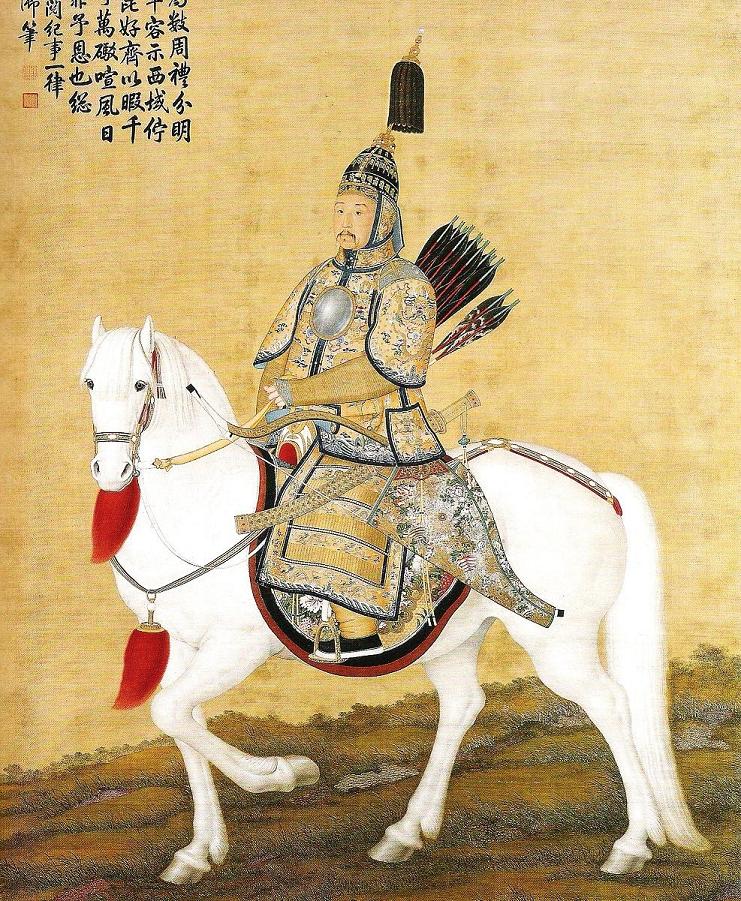
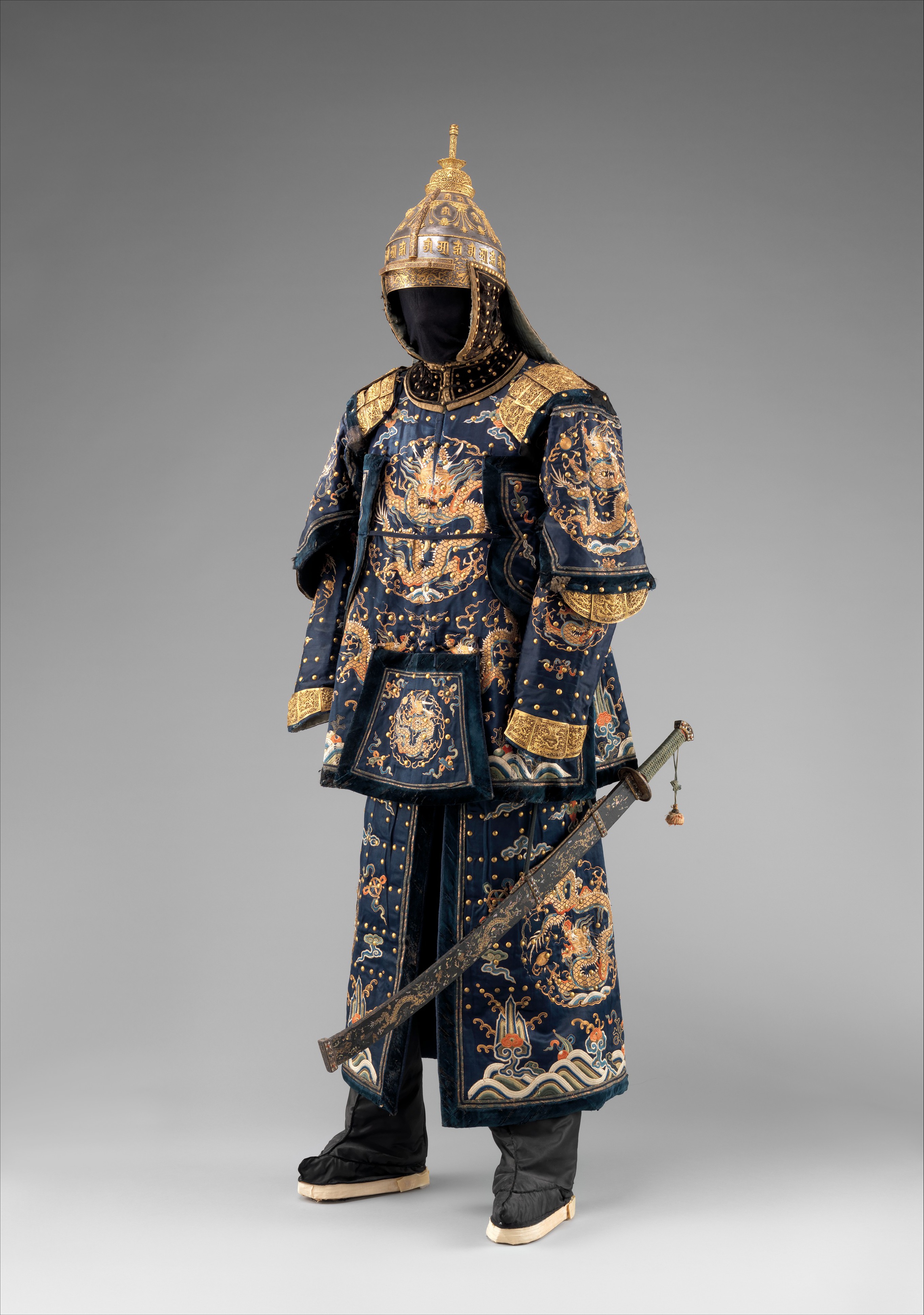
In many Qing dynasty paintings (and the rare photos), soldiers are depicted with their sabres hung from the belt, to the left side, with the grip pointing to the back. This seems like a very awkward way to wear a sword for a right-handed person.
Does anyone know why they wore their sabres this way?
See: http://theqingdynasty.com/thecontent/images/2014/02/Qing%20Dynasty%20warrior.jpg https://upload.wikimedia.org/wikipedia/commons/4/4d/Su_Yuanchun.jpg http://images.metmuseum.org/CRDImages/aa/original/DP277203.jpg
If you look at the first two pictures, note that the bow is also carried on the left side. If the saber hilt is pointing forward, then it could easily get tangled up with the bow, which was the primary weapon of a Qing cavalryman on horseback. To draw, the left hand would rotate the saber so that the hilt would point forward. The right hand would draw the blade edge up, which allows for a much quicker draw. This is also why samurai typically wore their blades edge up. An alternative draw method would be for the right hand to reach behind the back to draw the blade and then swing it in a wide arc to an opponent on the right side.
Thanks for the answers. However they still leave some doubts:
I'm not convinced about the bow obstruction theory. The Manchus are hardly the first horse archers out there. Their equipment isn't significantly different from the other steppe cavalry. Why didn't any other cavalry throughout history see the same need?
If bow obstruction is the issue, why not wear the sword on the right side with the grip pointing back, or wear the sword on the back with the grip pointing right, or simply wear the sword more vertically, like many other cavalry?
Wearing the sword backward on the left makes it very awkward to draw, especially on horseback. In order to present the grip to the right hand, the left hand needs to 1) reach downward and backward with palm facing outward--awkward! 2) grab the hilt that is generally outside your field of view--awkward! 3) lift the sword up and rotate the sword 120° vertically--awkward! (You can't rotate it horizontally since the horse gets in the way). 4) once the sword is drawn, do you have to intentionally return it to its original position, or just let go and risk letting the lanyard tangle up the bow? awkward!
This is just my deduction, of course. It seems dumb to me, but I'm sure there's a good reason I haven't thought of. I'd really like to see some historical document that comments about this.
Perhaps it's just a ceremonial thing, and they don't wear it this way on the battlefield? I should note that there are also contemporary paintings depicting swords worn on the common left-forward position.