I mean, what happened to them after the war? How were they treated?
Generally speaking, not much happened to the personnel or leadership of the Deutsche Reichsbahn (DRB/German National Railways) or any of its other subsidiaries for their actions in enabling the Holocaust. The DRB was very much an institution that prided itself on the professionalism and completing the job, and this sense of Beamtenpflicht (bureaucratic duty and probity) prevented any real postwar coming to terms with the past and the DRB's roll in genocide.
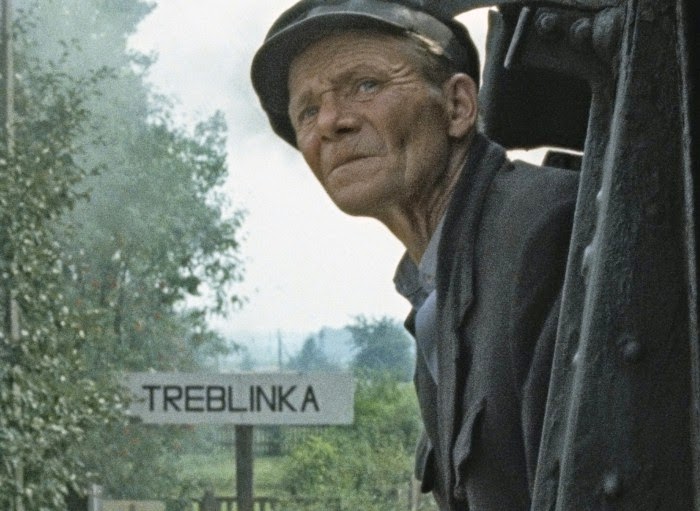
The DRB was a preexisting state rail monopoly that dated from the Weimar period and the DRB habituated itself to the new order rather well. The Third Reich's conquest of Europe between 1939-41 allowed the DRB to assume a leadership position over Western European railways, many of whom remained intact, or enfold existing concerns into new entities subordinate to the DRB. The latter fate was that of the Polish railway system as Polish rail workers, locomotives, and rolling stock in the General Government fell under the purview of the Ostbahn (Eastern railways) which split control over the rail between the occupation government and the DRB. Thus Polish railway workers like Henryk Gawkowski (featured quite prominently in the posters for Claude Lanzmann's documentary Shoah ) ran transport operations for the Ostbahn to the killing zones, albeit under German supervision (a detail Shoah fudges). The DRB managed to run the transports efficiently and within the existing rolling stock capacities of the Third Reich and occupied Europe, and even worked out complicated fare arrangements to charge the SS a discount rate for guards and passengers, implying that many within the DRB leadership knew that this was a one-way trip for many of the trains' passengers.
Most DRB personnel did their duty accordingly and helped the various transports reach their destinations. Alfred Mierzejewski, a historian specializing in the DRB, has found only a handful of cases in which DRB personnel refused to participate in transport actions. In line with other work on perpetrators like Christopher Browning, refusal to participate in genocide was not punished and these DRB personnel were shunted off into other components of this rail empire. Most DRB personnel managed to connect the dots between the transports and genocide, even though they were typically not allowed on site of the camps. Most of the camps borrowed DRB equipment so that the very final terminus was handled by SS or camp personnel as the SS was leery of letting another rival agency from staking a claim on its own turf in addition to existing security needs.
The DRB was one of the state agencies targeted by the Allied occupation postwar for denazification, and there was some headway made in clearing out NSDAP loyalists from its ranks in the early years of the occupation. But the DRB personnel had the advantage of having expertise and experience with railways that prevented any thorough investigation of the agency. The four occupying powers quickly realized that getting Germany back on its feet was necessary for the emerging Cold War and that a strong rail network eased occupation duties far more than a purged one. The American military government argued that Julius Dorpmüller, the General Manager of the DRB, retain his status as head of the German rail network because of his allegedly apolitical stance and the need to keep German trains in the Western zone running. As early as 1948, the Soviet zone had exempted railway personnel from denazifcation procedures and investigation and there were similar expedients in the Western zones. Although German division created two DRBs, there was still a continuity of personnel between the wartime and postwar periods.
The most serious attempt to bring a DRB member to justice was that of Albert Ganzenmüller, who was state secretary in the Reich Transportation Ministry and assistant general director of the Deutsche Reichsbahn from 1942-45. Ganzenmüller was very much a liaison to Himmler in these capacities and was thus deeply involved in sorting out problems with the trains and mass extermination. Ganzenmüller had managed to squeeze through the denazification process with the general amnesty for minor offenders in 1952 and the IMT initially sought him out for the Nuremberg Tribunals, but could not find him because of confusion over his name and position. After working in Argentina for its rail system, he returned to the FRG in 1955 and assumed work in Hoesch AG. State prosecutors in Dortmund and Düsseldorf began two cases against Ganzenmüller for his complicity in the Holocaust transports, but as with the case with many of the attempts to punish genocide with criminal law, the cases fell apart. Ganzenmüller would maintain that a July 1942 letter he wrote to SS General Karl Wollf promising more trains to enable the Treblinka operations was a mere formality he never read, just signed. His defense would also argue that the transport trains were only one of many responsibilities he had in middle of the war and they escaped his notice. Beamtenpflicht meant he did what he was ordered, and the West German criminal law, which is based heavily on intents for charges of murder or accessory to murder, could not really nail him and the cases fell apart. Ganzenmüller's allegedly ill-health proved a further pretext not to investigate further.
This sorry state of affairs underscores the difficulties in prosecuting so-called desk-murderers and other cogs in the machine of genocide. Although some DRB personnel evinced doubts about their wartime activities, there was very little incentive for them to do so. Indeed, the opposite was likely true and the need to get the trains running back on time again meant these enablers of genocide were able to indulge into a fit of collective amnesia about their responsibility for mass murder.
Sources
Mierzejewski, Alfred C. The Most Valuable Asset of the Reich: A History of the German National Railway. Chapel Hill: University of North Carolina Press, 1999.
_."A public enterprise in the service of mass murder: The Deutsche Reichsbahn and the Holocaust." Holocaust and Genocide Studies 15, no. 1 (2001): 33-46.
Stone, Dan. The Historiography of the Holocaust. New York: Palgrave Macmillan, 2004.