I'm trying to find out for a history project, but the only results I can find are either alternate history or belonging the the Palaiologos dynasty, who to my knowledge were the empire's final ruling family.
Before I get into the meat of your question, I feel it's important to point out that specifically "National Flags" are a relatively modern invention dating to the 18th/19th Centuries, and was a result of the birth of nationalism. Before this Kingdoms and Empires had either Royal/Imperial seals/symbols, regional symbols or naval jacks used to easily identify different ships. So to say any banner prior to the late 18th Century qualifies as a national flag can be a bit sketchy.
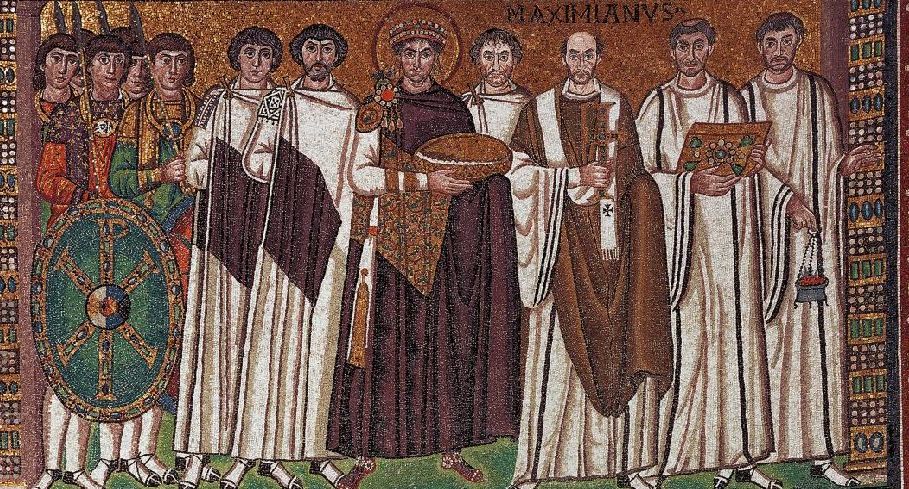
Now onto the question, the Byzantines (or Romans) had a myriad of symbols to represent their Empire. At the beginning of the Byzantine period (4th Century) until around the 11th Century there were two symbols which were quite common. The first one was the Chi-Rho (a P superimposed on top of an X (☧), which represented the two first letters of Christ (ΧΡΙΣΤΟΣ) in Greek. This symbol was commonly found on many coins and military banners (Labarum). It was adopted by Constantine in the 4th Century A.D prior to the Battle of the Milvian Bridge, where he supposedly saw a light in the sky (or had a dream, the sources are a bit unclear) that showed the Chi Rho along with a message that said "with this sign, you will conquer" which he subsequently did. Until the adoption of the Tetragramic Cross during the Palaiologos Dynasty, this symbol was one of the more common ways to represent the Empire and would still be used periodically until atleast the 14th Century.
Another common symbol was one which was borrowed directly from the Roman era, that being the Imperial single-headed Eagle. This would often be found on statues, jewels, coins, regalia, furniture and at times banners (although not as common as the Chi Rho). Although as is typical of Late Antique art, the Imperial Eagle would over time become less realistic, and more stylized as time went on.
This Imperial single-headed Eagle would eventually be replaced (possibiliy by Alexios I Komnenos, although it's quite uncertain) with a Double Headed Eagle. The Double Headed Eagle was used during the period of the Crusades, so this might be the symbol you're looking for. This symbol was used on both regalia, coins and manuscripts and was later slightly remodelled by the Palaiologos Dynasty to include an emblem on it's chest with the superimposed letters of their dynastys name.
This symbol would probably have the biggest impact, as it has been adopted my multiple Eastern European nations today, either to represent the Orthodox faith or Imperial Heritage/Might.
These nations include Serbia, Montenegro, Albania and most famously Russia who adopted it as their national symbol shortly after the Russian Tsar's marriage to a Byzantine princess, further solidifying their claim as the "Third Rome". The idea of Moscow as the Third Rome died out after the October Revolution in 1917, but the symbol was still readopted in 1993 by the Russian Federation. The Double Headed Eagle is also notably still used as the flag of the Greek Orthodox Church, to represent their Roman/Byzantine heritage.
Finally there is the last known symbol to represent the Empire in the period you're looking for. That would be, suprisingly the Crescent Moon used by Turkey and other Islamic nations today. This symbol, while commonly associated with Islam, was originally not an Islamic symbol and was used as the flag of the Ancient Greek town of Byzantium (later Constantinople). There is some contemporary evidence (mostly paintings and coins) that suggest it may have been used to atleast represent Constantinople. The star unlike the modern symbol had eight points instead of five, and the background may have been blue instead of red.
It should also be noted that the primary colors used in most Imperial ingsignia would be red and yellow. Red and yellow had been associated with Rome since Ancient times and can still be found on the flags of the cities of Rome and Ravenna today. Purple may also be used, but that was usually meant to represent the Emperor or the Imperial Family.
I hope my late answer may be useful, or at the very least informative to those interested, here are some visual sources:
Chi-Rho/Labarum: https://upload.wikimedia.org/wikipedia/commons/1/10/As-Constantine-XR_RIC_vII_019.jpg https://upload.wikimedia.org/wikipedia/commons/d/d0/Maiorina-Vetranio-siscia_RIC_281.jpg http://www.saintwiki.com/images/8/8c/Labarum.jpg http://albertis-window.com/wp-content/uploads/2012/05/Justinian-San-Vitale-detail-2.jpeg
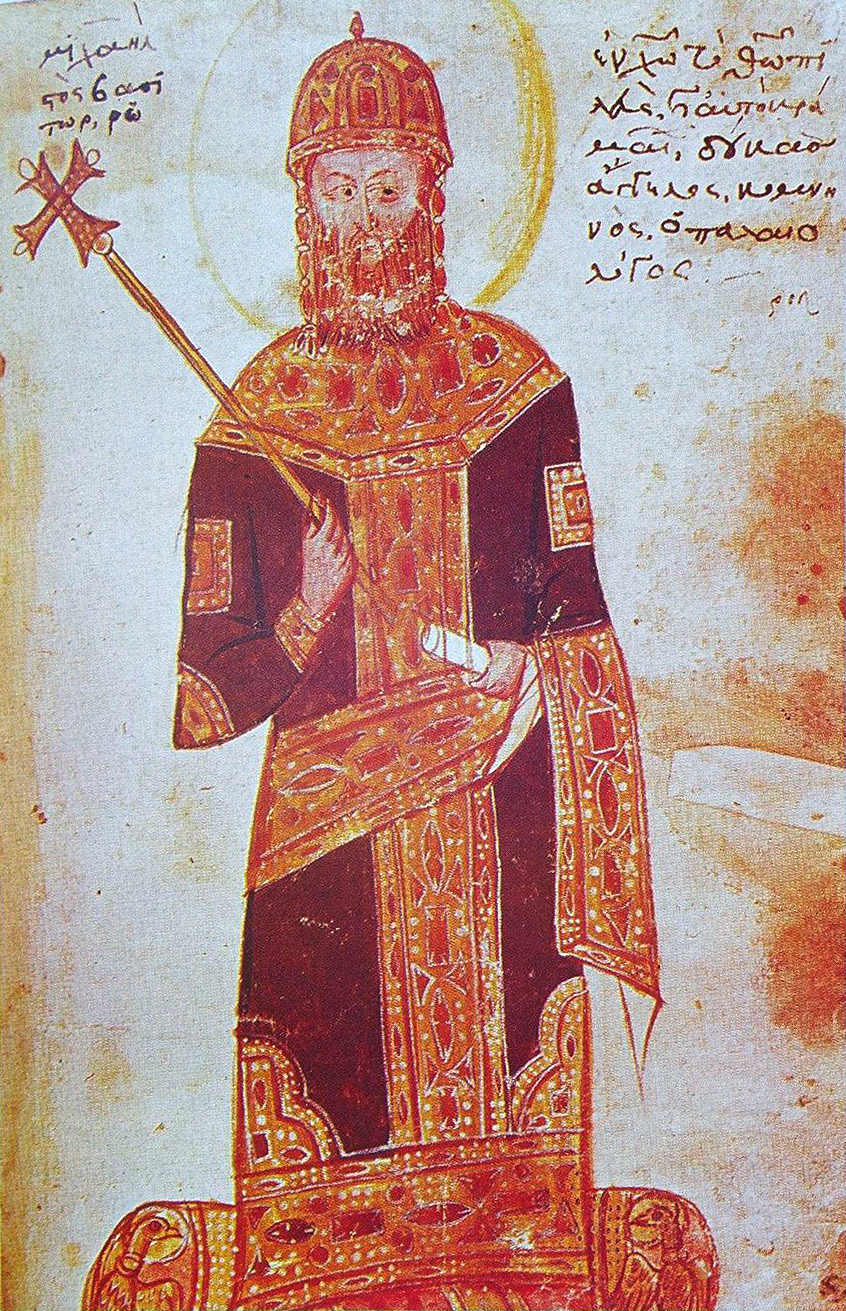
Imperial (single-headed) Eagle: https://upload.wikimedia.org/wikipedia/commons/4/4e/Michael_VIII_Palaiologos.jpg https://s-media-cache-ak0.pinimg.com/originals/cf/85/49/cf8549ad357efee17f8a2cb8075aac47.jpg http://www.hubert-herald.nl/EspanVisigoth_bestanden/image046.jpg
Imperial (double-headed) Eagle: http://www.romeacrosseurope.com/wp-content/uploads/2016/01/double-headedeagleintheChurchofStDemetriosinMystras.jpg http://l7.alamy.com/zooms/3c09e3f2688442889d408f82240ade0a/christian-religious-image-holding-furniture-with-byzantine-eagle-symbol-ac0467.jpg https://upload.wikimedia.org/wikipedia/commons/f/f1/Greek_Orthodox_flag.jpg
(as modified by the Palaiologi) https://upload.wikimedia.org/wikipedia/commons/0/00/Palaeologoi_eagle.jpg (Russian version) https://upload.wikimedia.org/wikipedia/commons/2/29/Coat_of_Arms_of_the_Russian_Federation_2.svg
Crescent Moon: http://www.livius.org/a/turkey/istanbul/byzantium_coin_sIbce.jpg https://upload.wikimedia.org/wikipedia/commons/4/4f/Stefan_Lochner_-Adoration_of_the_Magi-_WGA13342.jpg