Apologize if this doesn't fit ask historians, it didn't seem right to put it on ask science or physics. I was doing a history lesson that involved WW2 a little while back, and my teacher drifted to the Manhattan Project. He said that he loved the history of it because humans had little to no knowledge of that field, and the scientist behind it had to learn everything for the first time. I just find it hard to believe that we didn't have any prior information of nuclear energy before. Was the Manhattan Project the thing that gave us that knowledge, or did we have an understanding of it before the project started?
Nuclear fission was discovered in late 1938/early 1939. The knowledge that it might be useful in a weapon led several scientists to start looking into the phenomena and petitioning governments to officially organize the research on the topic. The US government set up a Uranium Committee in late 1939 to coordinate research. The Manhattan Project itself, the attempt to make actual atomic bombs you could use in war, did not start until late 1942, after several years of further research and work.
So while the time between discovery (1939), development (1942), and use (1945) is incredibly compressed by any standard (usually it takes at least a decade for a significant new military technology to emerge out of a discovery, sometimes far longer), it wasn't the case that they didn't have information about nuclear energy before starting the project. The project was a consequence of their having gotten information about it.
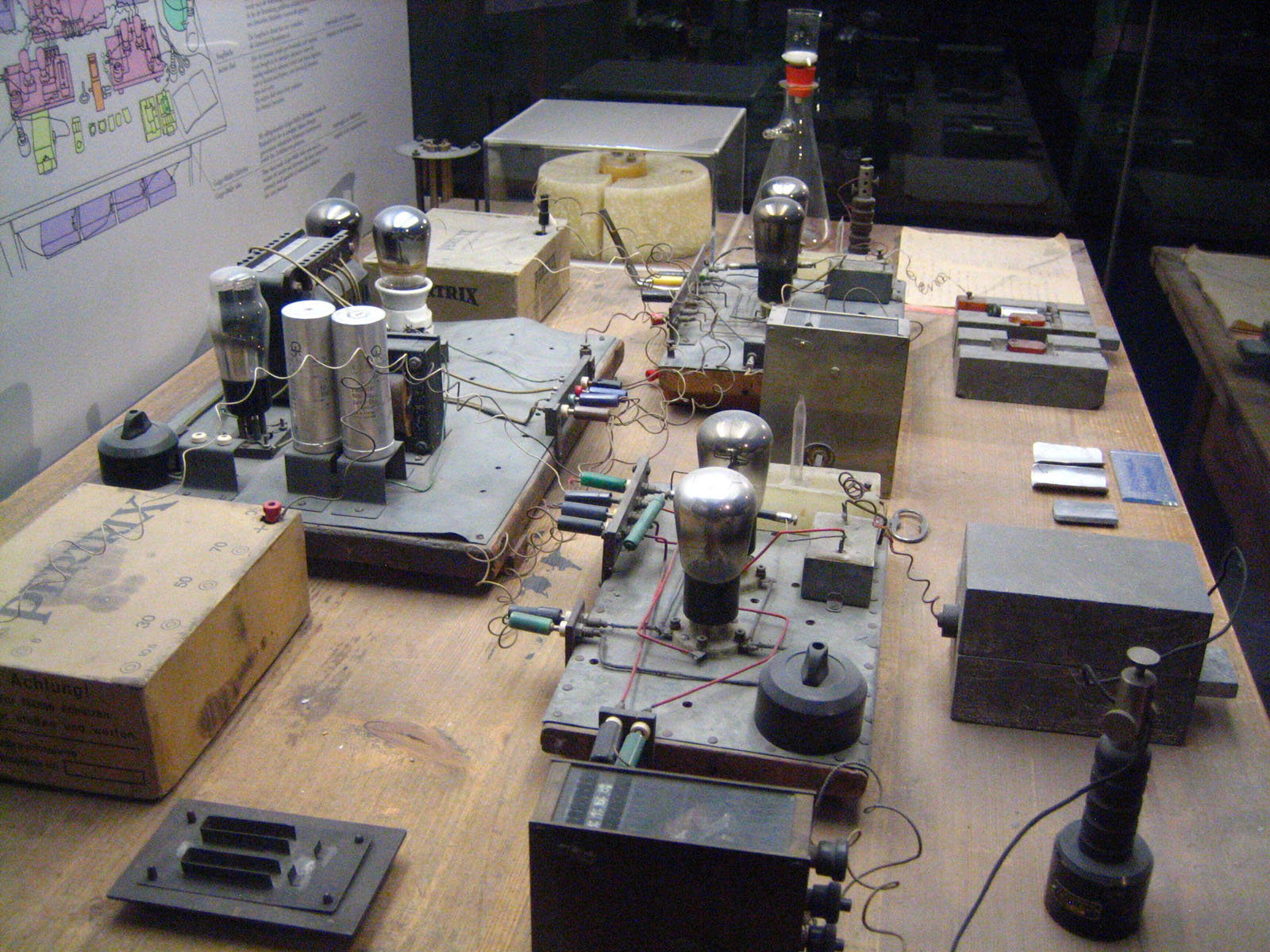
It gets trickier if you get into what one means by "nuclear energy," but the work in the project was the result of about 30 years of breakthroughs in physics on the topic of the structure and behavior of the atom, radioactivity, and many allied fields (e.g. radiochemistry) necessary to actually produce the weapon. But the specific phenomena that allows for the bomb — nuclear fission — was only discovered a few years prior, with a literal table-top experiment. From these humble beginnings, within a few years an enterprise that "turn[ed] an entire country into a factory" (as Niels Bohr put it) took off.
(Separately, in a very, very pedantic way: the term "split the atom" was originally used to talk about the Cockroft-Walton experiment in 1932, whereby particle accelerators were used to disintegrate lithium atoms with proton beams. Even before this, there were speculative discussions about "atomic energy" being used in weapons as early as the 1910s, esp. in the 1920s, after the discovery and understanding of radioactivity and the amount of energy that atoms contained. These sorts of things "set the stage" for the understanding of nuclear fission. But it is only the discovery of fission that allowed for the atomic bomb.)
!["turn[ed] an entire country into a factory"](http://blog.nuclearsecrecy.com/wp-content/uploads/2015/06/Manhattan-Project-sites-2015-06-version.jpg)